1. Specifications Comparison
| Feature | Category | Samsung Galaxy Tab S9 FE | Huawei Pura 70 | Practical Impact |
|---|---|---|---|---|
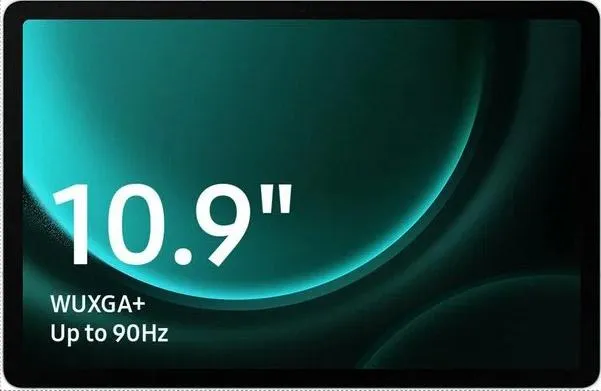
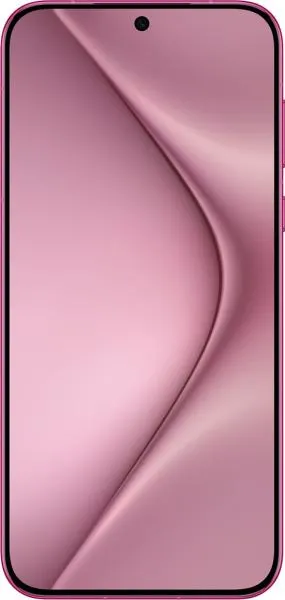
| Display Size | Display | 10.9" | 6.6" | The Tab S9 FE is significantly larger, suited for media consumption and productivity, while the Pura 70 is a more pocketable size for one-handed use. |
| Display Type | Display | IPS LCD, 90Hz | LTPO OLED, 1B colors, HDR, 120Hz | The Pura 70's OLED offers superior contrast, deeper blacks, and potentially longer battery life due to LTPO. Its higher refresh rate will result in smoother animations. The Tab S9 FE's LCD might be preferable in bright sunlight due to higher potential peak brightness (unspecified). |
| Resolution | Display | 1440 x 2304 | 1256 x 2760 | Despite the smaller size, the Pura 70 boasts a higher pixel density (460 ppi vs 249 ppi), resulting in sharper visuals. |
| Peak Brightness | Display | Not specified | 2500 nits | The Pura 70's exceptional peak brightness ensures excellent outdoor visibility. Lack of data for the Tab S9 FE prevents direct comparison. |
| Chipset | Performance | Exynos 1380 (5 nm) | Kirin 9000S1 | Performance comparison is difficult without benchmark data for the Kirin chip. Both are likely powerful enough for everyday tasks. |
| CPU | Performance | Octa-core (4x2.4 GHz Cortex-A78 & 4x2.0 GHz Cortex-A55) | Octa-core | Specific core configuration for the Kirin chip is lacking, preventing detailed CPU performance comparison. |
| GPU | Performance | Mali-G68 MP5 | 8 | The vague "8" GPU specification for the Pura 70 prevents meaningful comparison. |
| RAM/Storage | Performance | 8GB/256GB | 12GB/512GB | The Pura 70 offers significantly more RAM and storage, enabling smoother multitasking and ample space for files and apps. |
| Battery Capacity | Battery | 8000 mAh | 4900 mAh | The Tab S9 FE's larger battery likely offers significantly longer battery life, especially considering its larger display. |
| Dimensions | Design | 254.3 x 165.8 x 6.5 mm | 157.6 x 74.3 x 8 mm | Reinforces the size difference: Tab S9 FE is a tablet, Pura 70 is a phone. |
| Weight | Design | 523g | 207g | The Tab S9 FE is much heavier, reflecting its larger size. |
| OS | Software | Android 13 | Unspecified | The Pura 70's lack of OS information is a major omission, preventing any meaningful software comparison. |
| NFC | Connectivity | No | Yes | The Pura 70 supports contactless payments and data transfer via NFC. |
| USB | Connectivity | USB Type-C 2.0 | USB Type-C 3.1, OTG, DisplayPort 1.2 | Pura 70's USB 3.1 offers faster data transfer and DisplayPort 1.2 allows for video output. |
2. Key Differences Analysis
Samsung Galaxy Tab S9 FE Advantages:
- Larger Display: Better for media consumption and productivity.
- Larger Battery: Significantly longer battery life.
Huawei Pura 70 Advantages:
- Superior Display Quality: OLED with higher resolution, refresh rate, and brightness.
- More RAM and Storage: Smoother multitasking and ample storage space.
- More Advanced Connectivity: USB 3.1, NFC, DisplayPort.
3. User Profiles & Recommendations
Samsung Galaxy Tab S9 FE: Ideal for users who prioritize a large screen for media consumption, note-taking, drawing, or productivity tasks and require long battery life. Students, artists, and frequent travelers might find this appealing.
Huawei Pura 70: Ideal for users who prioritize a premium display, smooth performance, and ample storage in a pocketable form factor. Power users who value vibrant visuals and fast data transfer speeds would be well-suited. However, the lack of clear OS information makes a strong recommendation difficult.
4. Decision Framework
Key Questions for Buyers:
- What is your primary use case? (Media consumption, productivity, gaming, communication)
- What screen size do you prefer? (Tablet vs. phone)
- Which features are most important to you? (Display quality, battery life, performance, connectivity)
My Choice:
I would lean towards the Samsung Galaxy Tab S9 FE, primarily due to the known and reliable Android OS, larger battery, and clear use case as a tablet. The Pura 70's lack of OS information is a significant red flag, making it impossible to assess its software experience, app availability, and security updates. While the Pura 70 boasts impressive display and storage specifications, the uncertainty surrounding its software makes it a risky choice. The Tab S9 FE's larger display and battery are well-suited to my personal preference for media consumption and productivity on a larger screen. However, if the Pura 70 ran a well-supported and fully functional version of Android with access to Google services, and benchmarks proved its superior performance, it would be a much stronger contender.
