1. Specifications Comparison
| Feature | Samsung Galaxy Tab S9 FE | Huawei nova 12i | Practical Impact |
|---|---|---|---|
| Design | |||
| Dimensions | 254.3 x 165.8 x 6.5 mm | 163.3 x 74.7 x 8.4 mm | The Tab S9 FE is significantly larger, reflecting its tablet nature, while the nova 12i is a more pocketable smartphone. |
| Weight | 523g | 199g | The Tab S9 FE is much heavier, less suitable for one-handed use and extended holding. |
| Display | |||
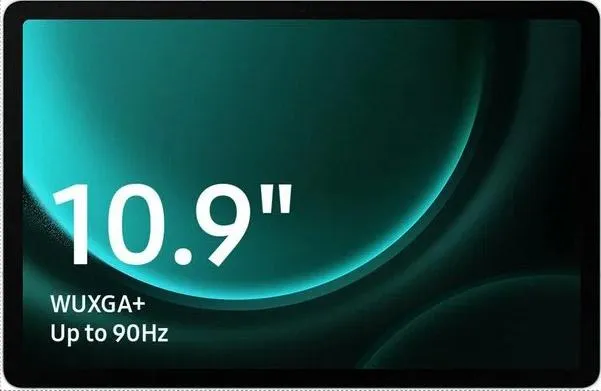
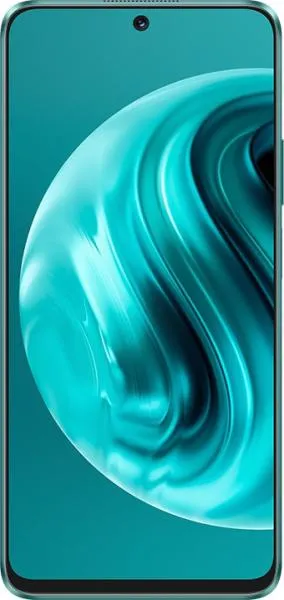
| Size | 10.9" | 6.7" | Larger display on the Tab S9 FE offers more immersive content consumption but reduced portability. |
| Type | IPS LCD, 90Hz | IPS LCD, 90Hz | Both offer smooth scrolling and animations, but IPS LCD may have limitations in color accuracy and viewing angles compared to AMOLED. |
| Resolution | 1440 x 2304 | 1080 x 2388 | Higher resolution on Tab S9 FE results in sharper text and images, especially beneficial on a larger screen. |
| PPI | 249 | 391 | Despite lower PPI, the Tab S9 FE's larger screen provides more overall detail. Nova 12i's higher PPI results in sharper individual elements. |
| Performance | |||
| Chipset | Exynos 1380 (5nm) | Snapdragon 680 4G (6nm) | Exynos 1380 generally offers better performance in demanding tasks and multitasking. |
| CPU | Octa-core (4x2.4 GHz Cortex-A78 & 4x2.0 GHz Cortex-A55) | Octa-core (4x2.4 GHz Cortex-A73 & 4x1.9 GHz Cortex-A53) | Tab S9 FE likely has a performance advantage due to newer CPU architecture. |
| GPU | Mali-G68 MP5 | Adreno 610 | Mali-G68 MP5 offers better gaming and graphics performance. |
| RAM | 8GB | 8GB | Both offer ample RAM for smooth multitasking. |
| Storage | 256GB | 256GB | Both offer the same storage capacity. |
| Battery | |||
| Capacity | 8000 mAh | 5000 mAh | Significantly larger battery in the Tab S9 FE should provide much longer battery life. |
| Other | |||
| OS | Android 13 | Missing OS information for the nova 12i hinders comparison. | |
| NFC | No | Yes | Nova 12i supports contactless payments and data transfer via NFC. |
2. Key Differences Analysis
Samsung Galaxy Tab S9 FE Advantages:
- Larger, higher-resolution display: Better for media consumption, multitasking, and creative work.
- More powerful processor and GPU: Smoother performance for demanding tasks and gaming.
- Significantly longer battery life: Ideal for extended use without frequent charging.
Huawei nova 12i Advantages:
- More portable and lightweight: Easier to carry and use one-handed.
- NFC support: Enables contactless payments and data transfer.
- Potentially lower price: While both are mid-range, the nova 12i might be more budget-friendly.
Trade-offs:
- Tab S9 FE: Larger size and weight compromise portability. Lack of NFC is a notable omission.
- Nova 12i: Smaller display and less powerful performance limit productivity and entertainment capabilities.
3. User Profiles & Recommendations
Samsung Galaxy Tab S9 FE: Ideal for users who prioritize a large screen for media consumption, creative work (with a stylus), multitasking, and long battery life. Students, artists, and entertainment enthusiasts would benefit.
Huawei nova 12i: Suitable for users who value portability, one-handed use, and NFC functionality for daily tasks and communication. Suitable for users prioritizing a balanced smartphone experience without demanding high performance.
4. Decision Framework
Key Questions for Buyers:
- What is your primary use case? (Media consumption, productivity, gaming, communication)
- How important is portability? (Do you need a device that easily fits in a pocket?)
- What is your budget? (Consider the price difference between the two devices.)
Scenario-Based Recommendations:
- Frequent traveler: Nova 12i for its portability and NFC for mobile payments.
- Student needing a device for note-taking and media consumption: Tab S9 FE for its larger screen and long battery life.
- Casual gamer: Tab S9 FE for its superior performance.
My Choice: Samsung Galaxy Tab S9 FE
While I acknowledge the portability advantage of the Huawei nova 12i, I would choose the Samsung Galaxy Tab S9 FE. The significantly larger and higher resolution display, coupled with the more powerful processor and substantially longer battery life, are compelling advantages for my usage. I prioritize media consumption, productivity tasks, and having a device that can handle demanding applications without frequent charging. The lack of NFC is a drawback, but the overall benefits of the Tab S9 FE outweigh this inconvenience for me. I would likely use this device primarily at home or in settings where portability is less critical, making the larger size less of an issue.
