1. Specifications Comparison
| Feature | Samsung Galaxy Tab S9 FE | Apple iPhone 16 | Practical Impact |
|---|---|---|---|
| Design | |||
| Dimensions | 254.3 x 165.8 x 6.5 mm | 147.6 x 71.6 x 7.8 mm | The Tab S9 FE is significantly larger, geared towards media consumption and productivity on the go; the iPhone 16 is pocketable for everyday use. |
| Weight | 523g | 170g | The Tab S9 FE is much heavier, less suitable for one-handed use or extended holding. |
| Display | |||
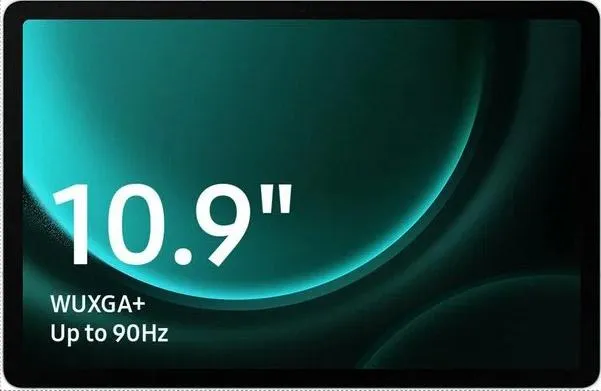
| Size | 10.9" | 6.1" | Larger screen of the Tab S9 FE offers more immersive experience for media and multitasking but less portability. |
| Type | IPS LCD, 90Hz | Super Retina XDR OLED, HDR10, Dolby Vision | OLED offers superior contrast, deeper blacks, and potentially higher brightness. The specific nit values for iPhone 16 are missing, limiting a full brightness comparison. 90Hz on Tab S9 FE provides smoother scrolling than a standard 60Hz display (assuming iPhone 16 is 60Hz as refresh rate is not specified). |
| Resolution | 1440 x 2304 | 1179 x 2556 | Higher pixel density (PPI) of the iPhone 16 (460 vs 249) results in sharper text and images. |
| Performance | |||
| Chipset | Exynos 1380 (5 nm) | Apple A18 (3 nm) | A18, being a newer generation chip built on a smaller process node, is expected to significantly outperform the Exynos 1380 in speed and efficiency. |
| CPU | Octa-core (4x2.4 GHz Cortex-A78 & 4x2.0 GHz Cortex-A55) | Hexa-core (2x4.04 GHz + 4x2.20 GHz) | Raw clock speeds suggest A18's performance advantage, but architectural differences make direct comparison difficult without benchmarks. |
| GPU | Mali-G68 MP5 | Apple GPU (5-core graphics) | Apple's custom GPUs are generally known for strong performance; however, a direct comparison is difficult without specific benchmarks. |
| RAM | 8GB | 8GB | Both offer ample RAM for multitasking. |
| Other | |||
| Battery | 8000 mAh | 3561 mAh | Significantly larger battery in Tab S9 FE should provide much longer battery life, crucial for a tablet. |
| OS | Android 13 | iOS 18 | Different operating systems cater to different preferences in terms of user interface, app ecosystem, and customization. |
| NFC | False | True | iPhone 16 supports contactless payments and data transfer via NFC, while the Tab S9 FE does not. |
| Price Range | Medium | Medium | Suggests comparable pricing, but actual price needs to be considered. |
2. Key Differences Analysis
Samsung Galaxy Tab S9 FE Advantages:
- Larger Display: More immersive for media consumption, multitasking, and creative tasks.
- Longer Battery Life: Significantly larger battery capacity ensures extended usage without frequent charging.
- Expandable Storage (Potentially): Specification sheet doesn't clarify, but some Samsung tablets offer expandable storage via microSD. This would be a significant advantage if true.
Apple iPhone 16 Advantages:
- Superior Performance: The A18 chip is expected to offer significantly faster processing and graphics performance.
- Higher Quality Display: OLED technology delivers better contrast, colors, and potentially higher brightness. Sharper screen due to higher PPI.
- More Compact and Portable: Easier to carry and use one-handed.
- NFC Functionality: Enables contactless payments and data transfer.
3. User Profiles & Recommendations
Samsung Galaxy Tab S9 FE: Ideal for users who prioritize media consumption, multitasking, note-taking, drawing, and other productivity tasks on a larger screen. Students, artists, and professionals who need a portable workstation would benefit.
Apple iPhone 16: Suitable for users who prioritize portability, performance, a premium display, and a seamless integration within the Apple ecosystem. Individuals who primarily use their phone for communication, social media, browsing, and casual gaming would find this a good fit.
4. Decision Framework
Key Questions for Buyers:
- What is your primary use case? (Media consumption, productivity, communication, gaming)
- How important is portability? (Pocketability vs. larger screen)
- What is your budget and preferred operating system?
My Choice: Apple iPhone 16
While the Samsung Galaxy Tab S9 FE offers a compelling larger display and impressive battery life, I would choose the Apple iPhone 16. My primary use case revolves around communication, browsing, photography, and occasional gaming, all of which benefit from the iPhone's expected superior performance, pocketability, and premium display quality. The A18 chip's efficiency and performance are major draws. While I appreciate the Tab S9 FE's larger screen for media, I prioritize a device that seamlessly integrates into my daily life without being cumbersome. The lack of NFC on the Samsung tablet is also a drawback for me. Finally, the higher PPI on the iPhone will deliver a noticeably sharper image, something I value. The lack of specific brightness data on the iPhone 16 is a concern, but OLED technology generally delivers great results.
