
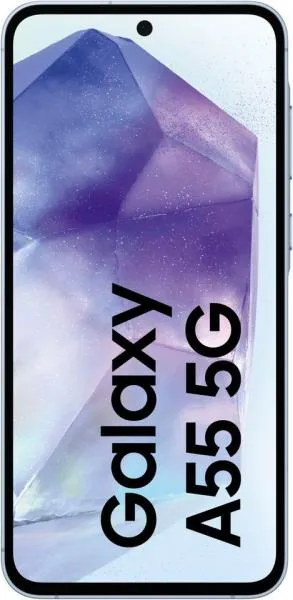
1. Specifications Comparison
| Feature | Samsung Galaxy Tab S9 FE+ | Samsung Galaxy A55 | Practical Impact |
|---|---|---|---|
| Design | |||
| Dimensions | 285.4 x 185.4 x 6.5 mm | 161.1 x 77.4 x 8.2 mm | Tab S9 FE+ significantly larger; A55 more pocketable. Impacts portability and one-handed use. |
| Weight | 627g | 213g | Tab S9 FE+ much heavier; noticeable difference in prolonged use. A55 better for portability and comfort. |
| Build | Material specifications missing for both, hindering durability comparison. | ||
| Display | |||
| Size | 12.4" | 6.6" | Tab S9 FE+ offers a much larger screen for media consumption and multitasking; A55 is a typical smartphone size. |
| Type | IPS LCD, 90Hz | Super AMOLED, 120Hz, HDR10+ | A55 provides superior contrast, richer colors, and smoother scrolling thanks to AMOLED and 120Hz. Tab S9 FE+'s LCD might appear washed out in comparison. HDR10+ on the A55 further enhances video quality. |
| Resolution | 1600 x 2560 | 1080 x 2340 | Tab S9 FE+ has a higher resolution, resulting in sharper text and images on its larger display. However, A55's pixel density is higher (390 vs 243 PPI), making individual pixels less discernible at typical viewing distances for a phone. |
| Peak Brightness | Not specified | Not specified | Cannot compare maximum brightness for outdoor visibility. |
| Performance | |||
| Chipset | Exynos 1380 (5 nm) | Exynos 1480 (4 nm) | A55 likely performs better due to newer and potentially more powerful chipset (4nm vs 5nm suggests better efficiency and performance). |
| CPU | Octa-core (4x2.4 GHz Cortex-A78 & 4x2.0 GHz Cortex-A55) | Octa-core (4x2.75 GHz Cortex-A78 & 4x2.0 GHz Cortex-A55) | A55 has faster prime cores (2.75 GHz vs 2.4 GHz), potentially offering better performance in demanding tasks. |
| GPU | Mali-G68 MP5 | Xclipse 530 | Difficult to compare GPU performance without benchmarks. Different architectures make direct comparison challenging. |
| RAM | 12GB | 8GB/12GB | Tab S9 FE+ offers 12GB RAM in the specified configuration, potentially providing better multitasking capabilities than the 8GB A55 variant. However, a 12GB A55 variant exists. |
| Storage | 256GB | 256GB | Comparable storage capacity. |
| Battery | |||
| Capacity | 10090 mAh | 5000 mAh | Tab S9 FE+ has a significantly larger battery, expected to provide much longer usage time given its larger display. |
| Other | |||
| OS | Android 13 | Android 14 | A55 ships with a newer Android version, offering potential feature and security advantages. |
| NFC | No | Yes | A55 supports contactless payments and data transfer via NFC, while Tab S9 FE+ does not. |
2. Key Differences Analysis
Samsung Galaxy Tab S9 FE+ Advantages:
- Larger Display: Superior for media consumption, multitasking, and creative tasks.
- Higher Resolution: Sharper image quality on the larger display.
- Significantly Larger Battery: Much longer battery life.
- More RAM in the specified configuration: Better for multitasking and demanding applications.
Samsung Galaxy A55 Advantages:
- Superior Display Technology: AMOLED offers better contrast, colors, and viewing angles. Higher refresh rate (120Hz) makes scrolling smoother.
- Newer and potentially more Powerful Processor: Likely faster and more efficient.
- More Compact and Lighter: Easier to carry and use one-handed.
- NFC: Enables contactless payments and data transfer.
- Newer OS: Access to the latest Android features and security updates.
3. User Profiles & Recommendations
Samsung Galaxy Tab S9 FE+: Ideal for users who prioritize a large screen for media consumption, productivity (with keyboard accessory), creative work, or note-taking. Excellent for students, artists, and those who consume a lot of video content.
Samsung Galaxy A55: Best suited for users who prefer a pocketable phone with a great display, good performance, and all-around functionality. Suitable for everyday use, social media, gaming, and photography.
4. Decision Framework
Key Questions for Buyers:
- What screen size do you need? Large tablet for productivity and media or a pocketable phone?
- What is your budget? Consider the price difference between the two devices.
- What features are most important? Prioritize battery life, performance, display quality, or portability.
My Choice: Samsung Galaxy A55
While the Tab S9 FE+ offers a compelling large screen experience and exceptional battery life, I would choose the Samsung Galaxy A55. As someone who prioritizes portability and a premium display experience in a smartphone, the A55's AMOLED screen, 120Hz refresh rate, and compact form factor are more appealing. The newer processor and inclusion of NFC further solidify my preference. While I acknowledge the Tab S9 FE+'s strengths in productivity and media consumption, my daily usage revolves around a device that is easy to carry and provides a smooth, visually engaging experience, which the A55 delivers more effectively. The larger battery of the Tab S9 FE+ is tempting, but I'm willing to sacrifice some battery life for the significant gains in portability and display quality.
