
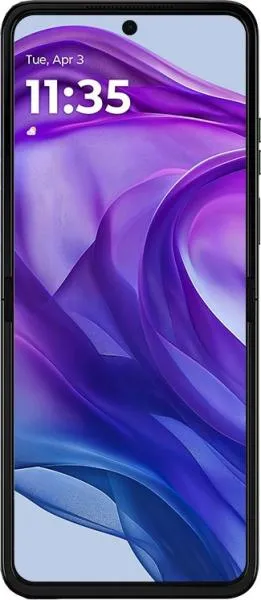
1. Specifications Comparison
| Feature | Category | Samsung Galaxy Tab S9 FE+ | Motorola Razr 50 Ultra | Practical Impact |
|---|---|---|---|---|
| Dimensions | Design | 285.4 x 185.4 x 6.5 mm | 171.4 x 74 x 7.1 mm (folded) | The Razr is significantly more pocketable due to its folding design; the Tab S9 FE+ is a large tablet. |
| Weight | Design | 627g | 189g | The Razr is much lighter and easier to hold, despite the Tab S9 FE+'s thin profile. |
| Build | Design | Foldable | The Razr's foldable design offers a unique form factor and a larger screen in a smaller device. | |
| Display Type | Display | IPS LCD, 90Hz | Foldable LTPO AMOLED, 1B colors, Dolby Vision, 165Hz, HDR10+ | The Razr offers superior image quality with vibrant colors, deeper blacks, and smoother motion. The Tab S9 FE+'s LCD is less impressive. |
| Display Size | Display | 12.4" | 6.9" (main) | The Tab S9 FE+ provides a much larger screen for media consumption and multitasking; the Razr offers a more standard smartphone screen size. |
| Resolution | Display | 1600 x 2560 | 1080 x 2640 | Despite the lower resolution, the Razr has a higher pixel density (413 ppi vs 243 ppi) due to its smaller screen, resulting in sharper images. |
| Refresh Rate | Display | 90Hz | 165Hz | The Razr provides a noticeably smoother scrolling and gaming experience thanks to its higher refresh rate. |
| Peak Brightness | Display | Not specified | 3000 nits | The Razr's significantly higher peak brightness ensures excellent outdoor visibility. Lack of data for the Tab S9 FE+ prevents direct comparison. |
| Chipset | Performance | Exynos 1380 (5 nm) | Snapdragon 8+ Gen 1(4 nm) | The Razr boasts a more powerful and efficient flagship-level processor, resulting in better performance for demanding tasks and gaming. |
| CPU | Performance | Octa-core (4x2.4 GHz Cortex-A78 & 4x2.0 GHz Cortex-A55) | Octa-core (1x3.0 GHz Cortex-X4 & 4x2.8 GHz Cortex-A720 & 3x2.0 GHz Cortex-A520) | The Razr's CPU architecture provides a significant performance advantage, especially in single-core performance crucial for responsive UI and app loading. |
| GPU | Performance | Mali-G68 MP5 | Adreno 735 | The Razr offers a more powerful GPU, leading to smoother gaming and faster graphics rendering. |
| RAM | Performance | 12GB | 12GB | Both devices offer ample RAM for multitasking. |
| Storage | Performance | 256GB | 256GB | Both devices offer the same storage capacity. |
| Battery Capacity | Battery | 10090 mAh | 4000 mAh | The Tab S9 FE+ has a significantly larger battery capacity, expected to provide much longer battery life. However, its larger display also consumes more power. |
| OS | Software | Android 13 | Android 14 | The Razr ships with a newer version of Android, potentially offering newer features and longer software support. |
| NFC | Connectivity | False | True | The Razr supports NFC for contactless payments and other functionalities, while the Tab S9 FE+ does not. |
2. Key Differences Analysis
Samsung Galaxy Tab S9 FE+ Advantages:
- Larger Display: Ideal for media consumption, multitasking, and productivity.
- Significantly Larger Battery: Potentially much longer battery life.
Motorola Razr 50 Ultra Advantages:
- More Powerful Processor and GPU: Superior performance for demanding tasks and gaming.
- Higher Quality Display: More vibrant colors, deeper blacks, smoother motion, and better outdoor visibility.
- Foldable Design: Increased portability and unique form factor.
- Newer Android Version: Potentially longer software support and newer features.
- NFC: Enables contactless payments.
3. User Profiles & Recommendations
Samsung Galaxy Tab S9 FE+: Ideal for users who prioritize a large screen for media consumption, note-taking, drawing, and multitasking. Students, artists, and professionals who need a portable productivity device might prefer this.
Motorola Razr 50 Ultra: Ideal for users who value portability, style, and performance. The foldable design and powerful hardware cater to users who want a flagship smartphone experience in a compact form factor.
4. Decision Framework
Key Questions for Buyers:
- What screen size do you need? A large tablet screen or a standard smartphone size?
- What is your priority: portability or battery life? The Razr is more portable, while the Tab S9 FE+ likely has longer battery life.
- What level of performance do you require? The Razr offers significantly better performance for demanding tasks and gaming.
My Choice: Motorola Razr 50 Ultra
While the Tab S9 FE+ offers a tempting large screen and massive battery, the Motorola Razr 50 Ultra aligns better with my personal needs and preferences. I prioritize portability and a premium user experience. The Razr's powerful processor, stunning display, and innovative foldable design outweigh the benefits of the Tab S9 FE+'s larger screen and battery. The inclusion of NFC further enhances its practicality for daily use. While battery life might be a concern, the trade-off for portability and performance is worthwhile for me. Ultimately, the Razr offers a more cutting-edge and feature-rich experience that fits my mobile lifestyle.
