
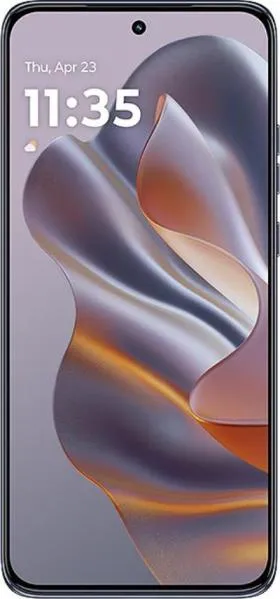
1. Specifications Comparison
| Feature | Samsung Galaxy Tab S9 FE+ | Motorola Edge 50 Neo | Practical Impact |
|---|---|---|---|
| Design | |||
| Dimensions | 285.4 x 185.4 x 6.5 mm | 154.1 x 71.2 x 8.1 mm | The Tab S9 FE+ is significantly larger, indicating a tablet form factor, while the Edge 50 Neo is a standard smartphone size. |
| Weight | 627g | 171g | The Tab S9 FE+ is much heavier, impacting portability for one-handed use. |
| Display | |||
| Size | 12.4" | 6.4" | The Tab S9 FE+ offers a much larger screen for media consumption and multitasking but less pocketable. |
| Type | IPS LCD, 90Hz | LTPO P-OLED, 120Hz, HDR10+ | The Edge 50 Neo boasts superior display technology with deeper blacks, richer colors, and smoother scrolling thanks to OLED and a higher refresh rate. HDR10+ support enhances video quality. |
| Resolution | 1600 x 2560 | 1256x2760 | Despite the larger size, the Tab S9 FE+ has a lower pixel density (243 ppi vs 474 ppi), resulting in less sharp visuals compared to the Edge 50 Neo. |
| Peak Brightness | Not specified | 3000 nits | The Edge 50 Neo's significantly higher peak brightness ensures excellent outdoor visibility. The lack of data for the Tab S9 FE+ makes direct comparison impossible. |
| Performance | |||
| Chipset | Exynos 1380 (5 nm) | Mediatek Dimensity 7300 (4 nm) | Both chipsets target mid-range performance. The Dimensity 7300, being newer and built on a smaller process node, might offer slightly better power efficiency and performance. |
| CPU | Octa-core (4x2.4 GHz Cortex-A78 & 4x2.0 GHz Cortex-A55) | Octa-core (4x2.5 GHz Cortex-A78 & 4x2.0 GHz Cortex-A55) | The Edge 50 Neo has a slightly faster CPU clock speed, potentially resulting in minor performance gains in demanding tasks. |
| GPU | Mali-G68 MP5 | Mali-G615 MC2 | While both GPUs are capable, the Mali-G68 MP5 in the Tab S9 FE+ is generally considered more powerful, offering a better gaming experience. |
| RAM | 12GB | 12GB | Both devices offer ample RAM for smooth multitasking. |
| Storage | 256GB | 512GB | The Edge 50 Neo offers double the internal storage. |
| Battery | |||
| Capacity | 10090 mAh | 4310 mAh | The Tab S9 FE+ has a vastly larger battery, expected given its tablet form factor. This likely translates to significantly longer battery life. |
| Other | |||
| OS | Android 13 | Android 14 | The Edge 50 Neo ships with a newer Android version, offering potential feature and security advantages. |
| NFC | No | Yes | The Edge 50 Neo supports NFC for contactless payments and other functionalities. |
2. Key Differences Analysis
Samsung Galaxy Tab S9 FE+ Advantages:
- Larger Display: Ideal for media consumption, multitasking, and creative tasks.
- Significantly Larger Battery: Offers much longer battery life.
- More Powerful GPU: Potentially better for gaming.
Motorola Edge 50 Neo Advantages:
- Superior Display Quality: OLED technology offers richer colors, deeper blacks, and higher brightness. Higher refresh rate delivers smoother scrolling.
- More Compact and Portable: Easier to carry and use one-handed.
- Newer Android Version: Access to the latest features and security updates.
- NFC Support: Enables contactless payments.
- Larger Internal Storage: More space for apps, photos, and videos.
3. User Profiles & Recommendations
Samsung Galaxy Tab S9 FE+: Ideal for users who prioritize a large screen for entertainment, productivity, or creative work and value long battery life. Use cases include: watching movies, playing games, taking notes, drawing, and reading e-books.
Motorola Edge 50 Neo: Suitable for users who prefer a compact and portable smartphone with a high-quality display, good performance, and modern features like NFC. Use cases include: everyday communication, social media, web browsing, light gaming, and mobile photography.
4. Decision Framework
Key Questions for Buyers:
- What screen size do you need? Tablet or smartphone form factor?
- How important is display quality and portability?
- What is your budget and what features are essential?
My Choice: Motorola Edge 50 Neo
While the Tab S9 FE+ offers a compelling large screen and massive battery, I would choose the Motorola Edge 50 Neo. As someone who values portability and a high-quality display, the Edge 50 Neo's OLED screen, compact form factor, and modern features like NFC outweigh the benefits of the larger tablet. The newer Android version and larger internal storage are also significant advantages. While the Tab S9 FE+ excels in specific use cases, the Edge 50 Neo provides a more well-rounded and practical experience for everyday use. The lack of brightness information for the Tab S9 FE+ is also concerning. A bright display is crucial for outdoor usage, and the Edge 50 Neo excels in this area.
