1. Specifications Comparison
| Feature | Samsung Galaxy Tab S9 FE+ | Google Pixel 8a | Practical Impact |
|---|---|---|---|
| Design | |||
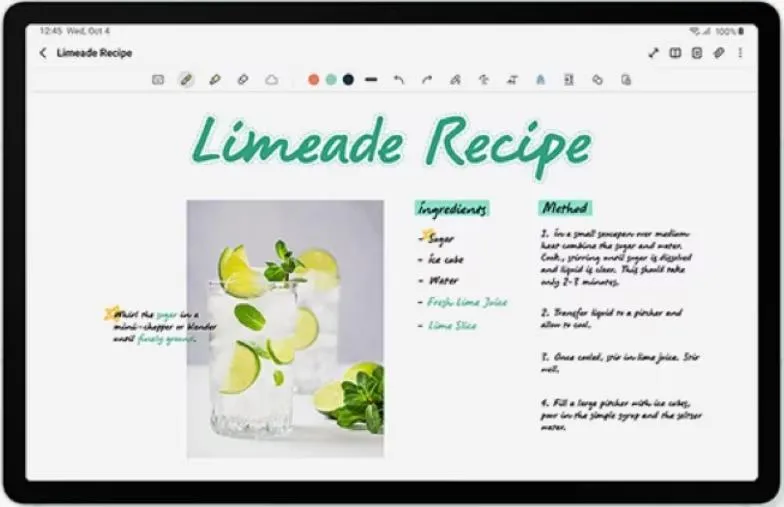
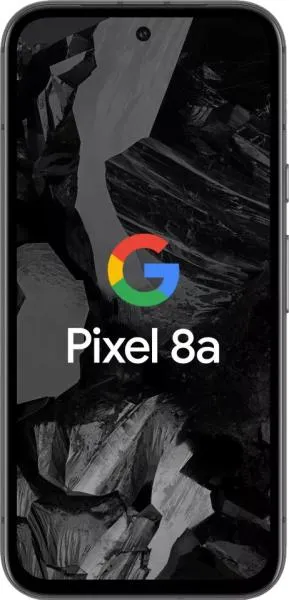
| Dimensions | 285.4 x 185.4 x 6.5 mm | 152.1 x 72.7 x 8.9 mm | The Tab S9 FE+ is significantly larger, indicating a tablet form factor compared to the Pixel 8a's smartphone size. Portability and one-handed use are major differentiators. |
| Weight | 627g | 188g | The Tab S9 FE+ is much heavier, impacting portability and prolonged handheld usage. |
| Build | Build quality cannot be compared due to missing information for the Tab S9 FE+. | ||
| Display | |||
| Size | 12.4" | 6.1" | The Tab S9 FE+ offers a much larger screen for media consumption, multitasking, and creative work, while the Pixel 8a is more pocketable. |
| Type | IPS LCD | OLED | OLED generally offers better contrast, deeper blacks, and potentially higher power efficiency compared to IPS LCD. |
| Resolution | 1600 x 2560 | 1080 x 2400 | While the Tab S9 FE+ has a higher resolution, its larger screen size results in a similar pixel density (PPI) to the Pixel 8a. Sharpness should be comparable. |
| Refresh Rate | 90Hz | 120Hz | The Pixel 8a's 120Hz display will provide smoother animations and scrolling compared to the 90Hz on the Tab S9 FE+. |
| Peak Brightness | Not specified | 2000 nits | The Pixel 8a's high peak brightness ensures excellent outdoor visibility. The Tab S9 FE+'s unspecified brightness limits this comparison. |
| Performance | |||
| Chipset | Exynos 1380 (5nm) | Google Tensor G3 (4nm) | The Tensor G3 is generally expected to offer better performance and potentially improved power efficiency due to the more advanced manufacturing process and architectural design, but real-world benchmarks are needed for a definitive comparison. |
| CPU | Octa-core (4x2.4 GHz Cortex-A78 & 4x2.0 GHz Cortex-A55) | Nona-core (1x3.0 GHz Cortex-X3 & 4x2.45 GHz Cortex-A715 & 4x2.15 GHz Cortex-A510) | The Tensor G3's CPU architecture suggests superior performance, especially in demanding tasks. |
| GPU | Mali-G68 MP5 | Immortalis-G715s MC10 | The Immortalis-G715s MC10 is expected to deliver significantly better graphics performance than the Mali-G68 MP5, benefiting gaming and other graphically intensive tasks. |
| RAM | 12GB | 8GB | The Tab S9 FE+'s higher RAM capacity might offer better multitasking capabilities and prevent apps from closing in the background. |
| Storage | 256GB | 256GB | Storage capacity is equal. |
| Battery | |||
| Capacity | 10090 mAh | 4492 mAh | The Tab S9 FE+ has a much larger battery, likely providing significantly longer battery life, crucial for a tablet. However, screen size and usage patterns heavily influence actual battery life. |
| Other | |||
| OS | Android 13 | Android 14 | The Pixel 8a launches with a newer Android version, potentially offering newer features and longer software support. |
| NFC | No | Yes | NFC enables contactless payments and other functionalities like quick pairing with compatible devices, absent in the Tab S9 FE+. |
| USB | USB Type-C 2.0 | USB Type-C 3.2 | USB 3.2 on the Pixel 8a offers significantly faster data transfer speeds compared to USB 2.0 on the Tab S9 FE+. |
| Video Capabilities | 4K@30fps, 1080p@30fps | 4K@30/60fps, 1080p@30/60/120/240fps (OIS) | The Pixel 8a offers more versatile video recording options, including higher frame rates and optical image stabilization (OIS) for smoother footage. OIS is a significant advantage. |
2. Key Differences Analysis
Samsung Galaxy Tab S9 FE+ Advantages:
- Larger Display: Ideal for media consumption, multitasking, and creative tasks.
- Higher RAM: Potentially better multitasking performance.
- Significantly Larger Battery: Expected to provide much longer battery life.
Google Pixel 8a Advantages:
- Superior Performance: Faster processor and GPU for demanding tasks and gaming.
- Higher Quality Display: OLED technology with better contrast, higher refresh rate, and significantly higher brightness.
- More Compact and Portable: Easier to carry and use one-handed.
- Newer OS and Longer Software Updates: More up-to-date features and security patches.
- NFC: Enables contactless payments and device pairing.
- Faster Data Transfer: USB 3.2 offers significantly quicker speeds.
- Superior Video Recording: More versatile options with higher frame rates and OIS.
3. User Profiles & Recommendations
Samsung Galaxy Tab S9 FE+: Users who prioritize a large screen for media consumption, note-taking, drawing, or multitasking. Students, artists, and professionals who need a portable workstation might find it appealing.
Google Pixel 8a: Users who value a compact, powerful smartphone with a great camera and display. Ideal for everyday use, gaming, photography, and staying connected.
4. Decision Framework
Key Questions:
- What is your primary use case? (Media consumption, productivity, communication, gaming)
- Do you prioritize portability or screen size?
- What is your budget? (While both are "medium price," actual pricing needs to be considered)
My Choice: Google Pixel 8a
While the Tab S9 FE+ offers a compelling large screen experience and longer battery life, I would choose the Google Pixel 8a. The Pixel 8a offers a more powerful and versatile package for everyday use. Its superior performance, higher quality display, compact form factor, newer OS with longer software updates, NFC functionality, faster data transfer, and significantly better video recording capabilities outweigh the benefits of the Tab S9 FE+'s larger screen for my personal needs. I prioritize portability, performance, and a well-rounded feature set in a smartphone. The Tab S9 FE+ feels more niche for specific use cases centered around its large display. The lack of key features like NFC further diminishes its appeal compared to the more feature-rich Pixel 8a.
