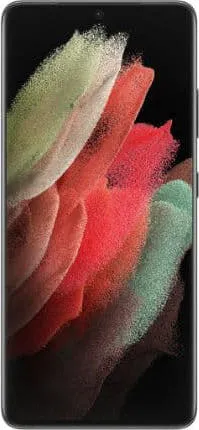
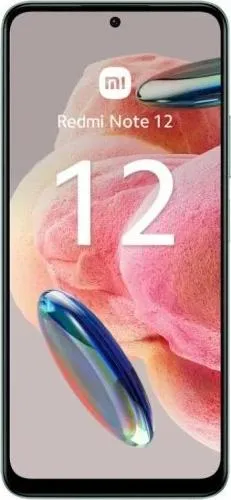
1. Specifications Comparison
| Feature | Samsung Galaxy S21 Ultra 5G | Xiaomi Redmi Note 12 4G | Practical Impact |
|---|---|---|---|
| Design | |||
| Launch Date | 2021-01-29 | 2023-03-30 | The Redmi Note 12 is newer, potentially having more up-to-date software and features |
| Dimensions | 165.1 × 75.6 × 8.9 mm | 165.7 × 76 × 7.9 mm | The S21 Ultra is slightly thicker, potentially feeling bulkier |
| Weight | 227g | 183.5g | The Redmi Note 12 is significantly lighter, making it more comfortable for long use |
| Display | |||
| Size | 6.8" | 6.67" | S21 Ultra has a slightly larger screen, better for media consumption |
| Resolution | 1440x3200 | 1080x2400 | S21 Ultra has a much sharper display with significantly more detail |
| PPI | 515 | 395 | S21 Ultra has a much crisper display with noticeably finer details |
| Technology | AMOLED | AMOLED | Both have vibrant colors and deep blacks |
| Refresh Rate | 120Hz | 120Hz | Both offer smooth scrolling and animations |
| Brightness | 1500 nits | 1200 nits | S21 Ultra has better outdoor visibility in bright sunlight |
| Performance | |||
| Chipset | Exynos 2100 (5 nm) | Snapdragon 685 (6 nm) | S21 Ultra's chipset is much more powerful, handling demanding tasks with ease |
| AnTuTu Score | 749,000 | 338,900 | S21 Ultra is significantly faster, loading apps and games much faster |
| GPU | Mali-G78 MP14 | Adreno 610 | S21 Ultra’s GPU offers vastly superior graphics performance for gaming and GPU-intensive apps |
| Camera | |||
| Main Camera | 108MP, f/1.8, 1/1.33" | 50MP, f/1.8, 1/2.76" | S21 Ultra has a higher-resolution sensor with a larger size, potentially better low-light performance and detail |
| Telephoto + Portrait | 10.8MP, f/2.4, 1/2.65" | Not Available | S21 Ultra has dedicated telephoto lenses for zooming and portrait shots. |
| Selfie Camera | 44MP, f/2.2, 1/2.65" | 13MP, f/2.45 | S21 Ultra captures higher-resolution selfies with better low light performance |
| Telephoto Lens | 10.8MP, f/4.9, 1/2.65" | Not Available | S21 Ultra offers an additional telephoto lens for greater zoom capabilities. |
| Wide Angle Lens | Not Available | 8MP, f/2.2, 1/4" | Redmi Note 12 captures wide shots with a dedicated lens. |
| Macro Lens | Not Available | 2MP, f/2.4 | Redmi Note 12 can take close-up macro shots with a dedicated lens. |
| Wide Angle + Macro | 12.2MP, f/2.2, 1/2.55" | Not Available | S21 Ultra has an ultrawide lens for capturing wide shots that also can be used for macro shots |
| Video | Up to 8K@24fps | Up to 1080p@30fps | S21 Ultra offers much higher video resolution, better video recording features, and slow-motion. |
| DxOMark Mobile | 115 (Main), 135 (Selfie) | 63 | S21 Ultra's camera system performs significantly better based on DXOMark scores |
| Camera Features | Extensive, including OIS, RAW, 8K Video | Basic features | S21 Ultra offers advanced camera features for more professional photography |
| Battery | |||
| Capacity | 5000mAh | 5000mAh | Both offer similar battery life based on capacity alone, real world usage will vary |
| Charging | 25W Fast Charging | 33W Fast Charging | Redmi Note 12 charges slightly faster |
| Features | Wireless charging, reverse wireless charging, no charger | Reverse charging | S21 Ultra offers wireless and reverse wireless charging |
| Software | |||
| OS | Android 11, upgradable to 15 | Android 13, upgradable to 14 | Redmi Note 12 comes with a newer Android version out of the box, but the S21 Ultra can be upgraded to a newer version of android |
| Connectivity | |||
| WiFi | WiFi 6 (802.11ax) | 802.11ac | S21 Ultra has the latest Wi-Fi standard for faster and more stable connections |
| Bluetooth | 5.2 | 5.0 | S21 Ultra has a newer Bluetooth version for better connectivity |
| GPS | Dual-band GPS | Standard GPS | S21 Ultra supports dual-band GPS for higher location accuracy |
| SIM | Dual SIM | Dual SIM | Both offer dual SIM support |
| Storage | |||
| Internal | 128/256/512 GB | 64/128/256 GB | S21 Ultra offers a larger maximum storage option |
| RAM | 12GB/16 GB | 4GB/6GB/8 GB | S21 Ultra has much more RAM for smoother performance |
| Expandable | No | No | Neither phone has expandable storage |
| Audio | |||
| Quality | Dolby Atmos, Hi-Res Audio, Stereo Speakers | Basic audio | S21 Ultra has higher-quality audio with better clarity |
| Security | |||
| Features | Basic Fingerprint sensor | Side-mounted fingerprint sensor | Redmi Note 12 has a more convenient side-mounted fingerprint sensor |
| Build Quality | |||
| Protection | Corning Gorilla Glass Victus | Corning Gorilla Glass 3 | S21 Ultra has much better screen protection |
| Sensors | |||
| List | Barometer, Accelerometer, Compass, Gyroscope, Proximity, Fingerprint | Accelerometer, Compass, Gyroscope, Proximity, Fingerprint | S21 Ultra has a barometer sensor which gives information about the surrounding pressure |
2. Key Differences Analysis
Samsung Galaxy S21 Ultra 5G Advantages:
- Superior Display: Much higher resolution and pixel density, significantly sharper, and brighter for outdoor visibility.
- Flagship Performance: Significantly more powerful chipset and GPU, leading to smoother multitasking and gaming.
- Advanced Camera System: Superior camera hardware with multiple dedicated lenses, higher resolution sensors, and advanced features like 8K video and OIS.
- Enhanced Audio: Higher quality audio with Dolby Atmos, Hi-Res Audio, and stereo speakers.
- Faster Wireless: The latest Wi-Fi and Bluetooth standards.
- Premium Build: Better screen protection with Gorilla Glass Victus.
- Wireless Charging: Offers wireless and reverse wireless charging, useful for topping up other devices.
- More RAM: Up to 16 GB of RAM for smoother multitasking
Practical Implications for S21 Ultra 5G:
- Users will experience richer visual details, and be able to see the screen clearly even in bright sunlight.
- Users will be able to perform demanding tasks smoothly and faster.
- Users will capture photos and videos with better quality, more detail and more flexibility.
- Users will enjoy a more immersive audio experience.
- Users will have faster and more stable wireless connections.
Xiaomi Redmi Note 12 4G Advantages:
- Lighter Design: More comfortable for extended use.
- Faster Charging: Faster wired charging capabilities.
- Newer OS out of the box: Comes with a newer Android version pre-installed.
- Macro Camera: Has a dedicated macro lens for close-up photography.
- Wide-Angle lens: Has a dedicated ultrawide lens for better landscape photography
- Side-mounted fingerprint sensor: Generally considered more convenient than in-screen sensors
- Lower Cost: Generally much more affordable than the S21 Ultra.
Practical Implications for Redmi Note 12 4G:
- Users will be able to comfortably hold the device for extended periods.
- Users will experience a slightly faster charging time for the battery.
- Users have access to some of the latest Android features out of the box, though this can be achieved on the S21 Ultra through an upgrade
- Users can take closeup macro photos using the dedicated macro lens.
- Users can capture wider photos thanks to the ultrawide camera
- Users will find the fingerprint reader to be more conveniently placed
Significant Trade-offs:
- S21 Ultra 5G: Higher price, heavier, and slightly older.
- Redmi Note 12 4G: Significantly lower performance, lower screen quality, a lower camera system, and lacks premium features like wireless charging.
3. User Profiles & Recommendations
Samsung Galaxy S21 Ultra 5G Ideal Users:
- Power Users: Those who demand top performance for demanding apps, multitasking, and gaming.
- Photography Enthusiasts: Users who prioritize high-quality photos and videos with advanced features.
- Multimedia Consumers: Those who value a large, high-resolution display for media consumption and content creation.
- Tech Enthusiasts: Users who want the latest features and technology, regardless of the price.
- Business Professionals: Users who need reliable performance, clear communication, and advanced features.
Specific Use Cases for S21 Ultra 5G:
- High-end mobile gaming with demanding graphics and high frame rates.
- Professional photography and videography with detailed images and 8K video.
- Content creation and editing on the go.
- Resource-intensive tasks like video conferencing and large document handling.
- Professional graphic design work
Xiaomi Redmi Note 12 4G Ideal Users:
- Budget-Conscious Buyers: Those seeking a capable smartphone without breaking the bank.
- Casual Users: Those who primarily use their phone for communication, social media, and light media consumption.
- Users who prioritize battery and fast charging: Users looking for fast charging and decent battery life.
- Users who value lightweight and comfortable devices: Users looking for an easy to use daily device
Specific Use Cases for Redmi Note 12 4G:
- Everyday social media browsing and communication.
- Basic mobile gaming with less demanding titles.
- Casual photography and video recording.
- Reliable communication and navigation.
- Users looking for a lightweight daily device
Price-to-Value Ratio:
- The S21 Ultra 5G offers a premium experience with top-tier performance and features but comes at a higher price.
- The Redmi Note 12 4G provides good value for the price, focusing on essential features and decent performance at a more accessible cost.
4. Decision Framework
Key Questions for Buyers:
- What is your budget? The S21 Ultra is significantly more expensive.
- How important is performance? If you need top performance, the S21 Ultra is superior.
- What is your primary use case? Casual users will find the Redmi Note 12 sufficient, while power users will benefit from the S21 Ultra.
Scenario-Based Recommendations:
- Scenario 1: If you need a device for high-end gaming, video editing, and professional photography, the Samsung Galaxy S21 Ultra 5G is the clear choice.
- Scenario 2: If you need a reliable smartphone for everyday use, with social media and some light gaming, and prefer a lightweight design, the Xiaomi Redmi Note 12 4G provides a better price-to-value ratio.
- Scenario 3: If you are looking for the best possible display, the Samsung Galaxy S21 Ultra 5G will offer a crisper and brighter experience.
My Choice
If I were choosing between these two phones, I would pick the Samsung Galaxy S21 Ultra 5G. While it is an older phone, its flagship specs still significantly outperform the Redmi Note 12 in almost every category. The superior display, powerful chipset, and advanced camera system are features that I value, and the enhanced performance is ideal for handling demanding tasks. Although it is heavier, the premium features it offers justifies the tradeoff in weight and potentially higher price. For my specific needs, which include mobile gaming, photography, and demanding apps, the S21 Ultra is the better choice. While the Redmi Note 12 offers more convenient charging and a lighter design, it falls short in key areas like performance and camera quality, making it less suitable for my use case.
