1. Specifications Comparison
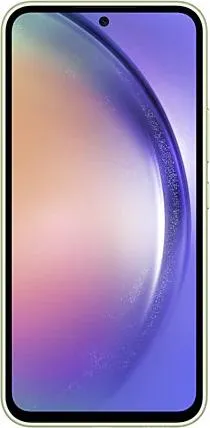
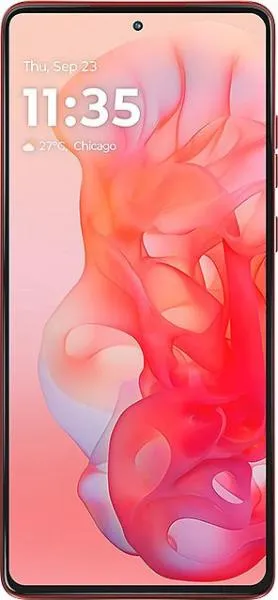
| Feature | Samsung Galaxy A54 | Motorola Moto G Stylus 5G (2024) | Practical Impact |
|---|---|---|---|
| Design | |||
| Dimensions (mm) | 158.2 x 76.7 x 8.2 | 162.6 x 74.8 x 8.3 | Moto G Stylus is slightly larger and may be less comfortable for one-handed use. |
| Weight (g) | 202 | 190 | Moto G Stylus is slightly lighter. |
| Build | Unspecified | Unspecified | Build materials impact durability and premium feel; information lacking for both. |
| Display | |||
| Display Type | Super AMOLED | P-OLED | Both offer vibrant colors and deep blacks, but AMOLED generally has slightly better outdoor visibility. P-OLED might be more power efficient in some scenarios. |
| Size (inches) | 6.4 | 6.7 | Moto G Stylus offers a larger screen for media consumption and multitasking. |
| Resolution | 1080 x 2340 | 1080 x 2400 | Very similar pixel density; sharpness will be nearly identical on both. |
| Refresh Rate (Hz) | 120 | 120 | Both offer smooth scrolling and animations. |
| Peak Brightness (nits) | 1000 (HBM) | 1200 | Moto G Stylus likely has better visibility in direct sunlight. |
| Performance | |||
| Chipset | Exynos 1380 (5 nm) | Snapdragon 6 Gen 1 (4 nm) | Snapdragon 6 Gen 1 generally provides better performance and efficiency. |
| CPU | Octa-core (4x2.4 GHz A78 & 4x2.0 GHz A55) | Octa-core (4x2.2 GHz A78 & 4x1.8 GHz A55) | Exynos 1380 may offer slightly faster peak performance, but real-world difference could be minimal. |
| GPU | Mali-G68 MP5 | Adreno 710 | Adreno 710 generally offers stronger graphics performance for gaming. |
| RAM (GB) | 8 | 8 | Both offer ample RAM for multitasking. |
| Storage (GB) | 128/256 | 256 | Moto G Stylus offers more base storage. |
| Camera | |||
| Main Camera (MP) | 50 (Sony IMX766) | 50 (Sony LYT-700C) | Both utilize 50MP sensors; image quality will depend on processing. IMX766 is generally regarded as a higher-end sensor. |
| Ultrawide (MP) | 13 | 13 | Similar ultrawide capabilities. |
| Macro (MP) | 5 | 13 (shared with ultrawide) | A54 has dedicated Macro lens, Moto G Stylus shares macro functionality with the ultrawide, potentially impacting macro image quality. |
| Selfie (MP) | 32 | 32 | Similar selfie camera resolution. |
| Video | 4K@30fps with EIS | 4K@30fps | Both can record 4K video; EIS performance is crucial for stability and needs further review. |
| Battery | |||
| Capacity (mAh) | 5000 | 5000 | Similar battery capacity. |
| Fast Charging (W) | 25 | 30 | Moto G Stylus offers faster wired charging. |
| Wireless Charging | No | Yes (15W) | Moto G Stylus supports wireless charging, a significant convenience advantage. |
2. Key Differences Analysis
Samsung Galaxy A54 Advantages:
- Potentially slightly better main camera sensor (IMX766).
- Dedicated macro lens.
- Potentially slightly faster peak CPU performance.
Motorola Moto G Stylus 5G (2024) Advantages:
- Larger display.
- Higher peak brightness for better outdoor visibility.
- Generally better GPU performance.
- More base storage.
- Faster charging.
- Wireless charging.
- Stylus support for note-taking and drawing (not explicitly in specs but implied by name).
- Newer Android version (14 vs 13).
3. User Profiles & Recommendations
Samsung Galaxy A54: Users prioritizing a potentially slightly better main camera and a more compact size.
Motorola Moto G Stylus 5G (2024): Users who value a large screen, stylus support, faster charging, wireless charging, and better gaming performance. Good for productivity, media consumption, and mobile gaming.
4. Decision Framework
Key Questions:
- How important is stylus support? If crucial, the Moto G Stylus is the clear choice.
- What's your budget and storage needs? The Moto G Stylus offers more base storage but might be more expensive. Consider the price difference for the storage tier you need.
- Do you prioritize camera quality or other features like a larger display and wireless charging?
Scenario-Based Recommendations:
- Student needing note-taking: Moto G Stylus 5G (2024)
- Gamer on a budget: Moto G Stylus 5G (2024)
- User prioritizing camera and compactness: Samsung Galaxy A54
My Choice: Motorola Moto G Stylus 5G (2024)
The Moto G Stylus 5G (2024) offers a compelling combination of features for my needs. The larger display, stylus support (implied), wireless charging, faster wired charging, and strong performance outweigh the potential camera advantage of the A54. While the A54 might have a marginally better main camera sensor, the overall package of the Moto G Stylus, including the newer Android version, makes it a more future-proof and versatile device. The larger battery capacity and faster charging are also significant advantages for daily use. Finally, the price difference, considering the increased base storage in the Moto G Stylus, makes it a better value proposition in my opinion.
