1. Specifications Comparison
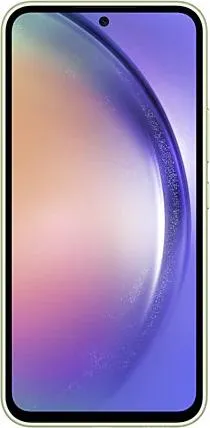
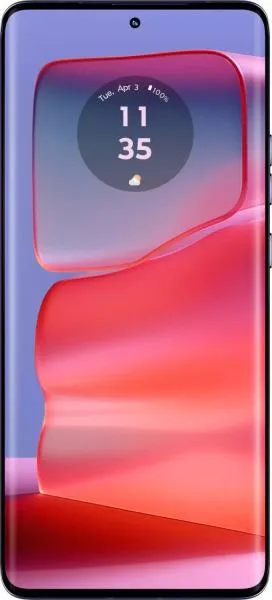
| Feature | Samsung Galaxy A54 | Motorola Edge 50 Pro | Practical Impact |
|---|---|---|---|
| Design | |||
| Dimensions (mm) | 158.2 x 76.7 x 8.2 | 161.2 x 72.4 x 8.2 | Edge 50 Pro is slightly taller and narrower. A54 might feel slightly more compact in hand. |
| Weight (g) | 202 | 186 | Edge 50 Pro is noticeably lighter, improving one-handed use. |
| Display | |||
| Size (inches) | 6.4 | 6.7 | Edge 50 Pro offers a larger screen for media consumption and multitasking. |
| Resolution (px) | 1080 x 2340 | 1220 x 2712 | Edge 50 Pro has a sharper display (higher pixel density). |
| Panel Type | Super AMOLED | P-OLED | Both offer excellent contrast and vibrant colors, though individual preferences may vary. |
| Refresh Rate (Hz) | 120 | 144 | Edge 50 Pro's higher refresh rate results in smoother animations and scrolling. |
| Peak Brightness (nits) | 1000 (HBM) | 2000 | Edge 50 Pro is significantly brighter, improving outdoor visibility. |
| Performance | |||
| Chipset | Exynos 1380 (5 nm) | Snapdragon 7 Gen 3 (4 nm) | Snapdragon 7 Gen 3 generally offers better performance and efficiency. |
| CPU | Octa-core (4x2.4 GHz A78 & 4x2.0 GHz A55) | Octa-core (1x2.63 GHz A715 & 4x2.4 GHz A715 & 3x1.8 GHz A510) | Edge 50 Pro has a more powerful CPU architecture, leading to faster app loading and multitasking. |
| RAM (GB) | 8 | 12 | Edge 50 Pro has significantly more RAM, enabling better multitasking and preventing app closures. |
| GPU | Mali-G68 MP5 | Adreno 720 | Adreno 720 generally provides superior gaming performance. |
| Camera | |||
| Main Camera (MP) | 50 | 50 | Both have similar resolution, but sensor specifics and image processing will determine real-world performance. Edge 50 Pro has a wider aperture (f/1.4 vs f/1.8), potentially capturing more light in low-light conditions. |
| Ultrawide (MP) | 13 | 13 | Similar resolution, but practical performance depends on lens quality and software processing. |
| Telephoto (MP) | N/A | 10 | Edge 50 Pro offers optical zoom capability, absent in the A54. |
| Selfie (MP) | 32 | 50 | Edge 50 Pro has a higher resolution front camera. |
| Battery | |||
| Capacity (mAh) | 5000 | 4500 | A54 has a larger battery capacity, potentially offering longer battery life. |
| Charging (W) | 25 | 125 | Edge 50 Pro supports significantly faster charging. |
2. Key Differences Analysis
Samsung Galaxy A54 Advantages:
- Longer Battery Life: Larger 5000 mAh battery.
- More Compact: Slightly smaller and potentially easier to handle.
Motorola Edge 50 Pro Advantages:
- Significantly Faster Performance: More powerful CPU, GPU, and more RAM.
- Smoother Display: Higher refresh rate (144Hz).
- Brighter Display: Much higher peak brightness for better outdoor visibility.
- Faster Charging: 125W fast charging.
- Optical Zoom: Dedicated telephoto lens.
3. User Profiles & Recommendations
Samsung Galaxy A54:
- Ideal User: Budget-conscious users prioritizing battery life and a compact form factor. Users who primarily use their phone for basic tasks like calling, texting, social media, and light web browsing.
- Use Cases: Everyday tasks, casual photography, long battery life scenarios.
Motorola Edge 50 Pro:
- Ideal User: Users who demand high performance for gaming, multitasking, and demanding applications. Users who value a bright, smooth display and fast charging. Photography enthusiasts who want optical zoom capability.
- Use Cases: Mobile gaming, demanding applications, media consumption, photography with zoom capabilities.
4. Decision Framework
Key Questions for Buyers:
- What is your budget? The Edge 50 Pro is significantly more expensive.
- What are your performance needs? For demanding tasks, the Edge 50 Pro is the clear winner.
- How important is battery life and charging speed? The A54 offers longer battery life, but the Edge 50 Pro charges much faster.
My Choice: Motorola Edge 50 Pro
While the Samsung Galaxy A54 offers a compelling combination of battery life and affordability, the Motorola Edge 50 Pro is the superior device overall. The significantly improved performance, smoother and brighter display, faster charging, and the addition of an optical zoom camera make it a more versatile and future-proof option. The higher price is justified by the substantial upgrades. While I appreciate long battery life, the 125W fast charging on the Edge 50 Pro mitigates the smaller battery capacity. For me, the overall user experience offered by the Edge 50 Pro would be significantly better.
