1. Specifications Comparison
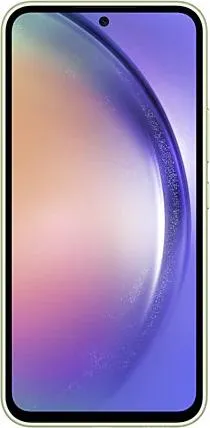
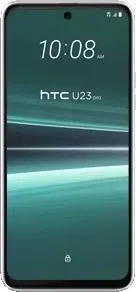
| Feature | Samsung Galaxy A54 | HTC U23 Pro | Practical Impact |
|---|---|---|---|
| Design | |||
| Dimensions (mm) | 158.2 x 76.7 x 8.2 | 166.6 x 77.1 x 8.9 | The A54 is noticeably smaller and thinner, making it more pocketable and easier to handle. |
| Weight (g) | 202 | 205 | Negligible weight difference. |
| Fingerprint Sensor | Under display | Side-mounted | Preference-based; under-display is modern, side-mounted can be faster. |
| Display | |||
| Display Size (inches) | 6.4 | 6.7 | The U23 Pro offers a larger screen for more immersive media consumption. |
| Resolution (px) | 1080 x 2340 | 1080 x 2400 | Similar sharpness due to comparable pixel density. |
| Display Type | Super AMOLED, 120Hz | OLED, 120Hz | Both offer smooth scrolling and vibrant colors; AMOLED generally has better contrast and power efficiency. The A54's Super AMOLED with HDR10+ offers a superior HDR experience compared to the standard OLED on the U23 Pro. |
| Performance | |||
| Chipset | Exynos 1380 (5 nm) | Snapdragon 7 Gen 1 (4 nm) | Snapdragon 7 Gen 1 generally offers better performance and efficiency than the Exynos 1380. |
| CPU | Octa-core (4x2.4 GHz Cortex-A78 & 4x2.0 GHz Cortex-A55) | Octa-core (1x2.4 GHz Cortex-A710 & 3x2.36 GHz Cortex-A710 & 4x1.8 GHz Cortex-A510) | The Snapdragon 7 Gen 1's architecture is more modern and likely to deliver better sustained performance. |
| GPU | Mali-G68 MP5 | Adreno 644 | Adreno 644 generally provides superior graphics performance for gaming. |
| RAM (GB) | 8 | 8/12 | The U23 Pro offers a 12GB RAM option, enabling smoother multitasking and better handling of demanding applications. |
| Camera | |||
| Main Camera (MP) | 50 (Sony IMX766) | 108 | The U23 Pro boasts higher resolution, but sensor size and image processing are crucial for overall quality. The A54 utilizes a known high-quality sensor (IMX766), while the U23 Pro's sensor details are missing, making a direct comparison difficult. |
| Video Recording | 4K@30fps, 1080p@60fps with EIS | 4K@30fps with EIS | A54 offers more video recording options, including 1080p at 60fps, beneficial for smoother footage. |
| Battery | |||
| Capacity (mAh) | 5000 | 4600 | A54 has a larger battery, potentially leading to longer battery life. |
| Fast Charging (W) | 25 | 30 | U23 Pro offers faster wired charging. It also includes wireless and reverse wireless charging, features absent in the A54. |
2. Key Differences Analysis
Samsung Galaxy A54 Advantages:
- More Compact: Easier to handle and carry.
- Potentially Better Battery Life: Larger battery capacity.
- Proven Main Camera Sensor: Sony IMX766 is known for good performance.
- More Affordable: Generally lower price point across various storage options.
- More Video Recording Options: Including 1080p@60fps.
HTC U23 Pro Advantages:
- Larger Display: More immersive for media.
- Faster Performance: Snapdragon 7 Gen 1 generally outperforms Exynos 1380.
- More RAM in Top Variant: 12GB option for smoother multitasking.
- Faster Charging: 30W wired charging and the inclusion of wireless charging.
- Higher Resolution Main Camera: 108MP sensor, although image quality depends on other factors.
3. User Profiles & Recommendations
Samsung Galaxy A54: Users prioritizing affordability, compact size, all-day battery life, and a reliable camera experience. Ideal for everyday use, social media, web browsing, and casual photography.
HTC U23 Pro: Users who value performance, a larger display for media consumption or gaming, faster charging, and the convenience of wireless charging. Suitable for power users, mobile gamers, and those who consume a lot of media on their phones.
4. Decision Framework
Key Questions for Buyers:
- What is your budget? The A54 generally offers better value for its price.
- Do you prioritize performance or portability? U23 Pro for performance; A54 for portability.
- What are your primary use cases? Gaming and media consumption favor the U23 Pro; everyday tasks and casual photography favor the A54.
My Choice: Samsung Galaxy A54
While the HTC U23 Pro offers better performance and a larger display, the Samsung Galaxy A54 is my choice due to its compelling combination of factors: Its smaller size makes it more comfortable for daily use, the battery life is likely to be better, and the proven Sony IMX766 camera sensor instills more confidence in image quality than the U23 Pro's unspecified 108MP sensor. The A54 also comes at a more affordable price, making it a better value proposition for my needs. The slightly slower performance and lack of wireless charging are trade-offs I'm willing to make for the A54's advantages in other areas. Ultimately, this choice aligns better with my priorities for a compact, reliable, and affordable smartphone with good battery life and a capable camera.
