1. Specifications Comparison
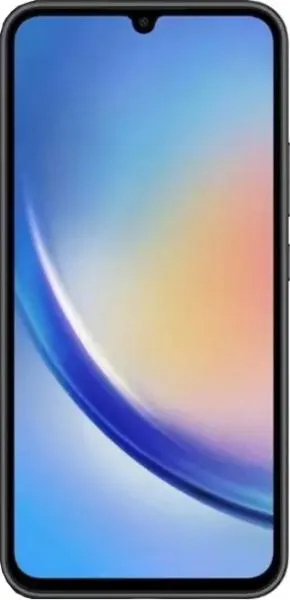
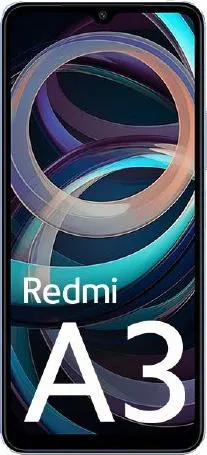
| Feature | Samsung Galaxy A34 | Xiaomi Redmi A3 | Practical Impact |
|---|---|---|---|
| Design | |||
| Dimensions (mm) | 161.3 x 78.1 x 8.2 | 168.3 x 76.3 x 8.3 | A34 is slightly smaller and may feel more comfortable in hand. |
| Weight (g) | 199 | 193 | Negligible weight difference. |
| Build Materials | Not specified | Not specified | Cannot compare build quality and durability. |
| Display | |||
| Display Type | Super AMOLED | IPS LCD | A34 will likely have more vibrant colors, deeper blacks, and better outdoor visibility. |
| Display Size (inches) | 6.6 | 6.71 | Redmi A3 has a slightly larger screen. |
| Resolution | 1080 x 2340 | 720 x 1650 | A34 has a significantly sharper display, resulting in clearer text and images. |
| Refresh Rate (Hz) | 120 | 90 | A34 will offer smoother scrolling and animations. |
| Performance | |||
| Chipset | Mediatek Dimensity 1080 (6 nm) | Mediatek Helio G36 (12 nm) | A34's chipset is built on a smaller process node, indicating better power efficiency and performance. |
| CPU | Octa-core (2x2.6 GHz Cortex-A78 & 6x2.0 GHz Cortex-A55) | Octa-core (4x2.2 GHz Cortex-A53 & 4x1.6 GHz Cortex-A53) | A34 has a more powerful CPU architecture, enabling faster multitasking and smoother performance in demanding applications. |
| GPU | Mali-G68 MC4 | PowerVR GE8320 | A34's GPU is significantly more powerful, providing a better gaming and graphics-intensive application experience. |
| RAM | 6/8 GB | 3/4/6 GB | A34 offers more RAM in some variants, leading to better multitasking performance. |
| Camera | |||
| Rear Camera | 48MP Main, 8MP Ultrawide, 5MP Macro, 5MP Depth | 8MP Main, 0.3MP Unknown | A34 has a vastly superior camera system with higher resolution and more versatile lenses. The 0.3MP sensor on the Redmi A3 is practically useless. |
| Front Camera | 13MP | 5MP | A34 offers a higher resolution front camera for better selfies. |
| Video Recording | 4K@30fps | 1080p@30fps | A34 can record higher resolution video. |
| Battery | |||
| Capacity (mAh) | 5000 | 5000 | Similar battery capacities. |
| Fast Charging | 25W | 10W | A34 supports significantly faster charging. |
2. Key Differences Analysis
Samsung Galaxy A34 Advantages:
- Significantly better display: Sharper, more vibrant, and smoother.
- Superior performance: More powerful CPU and GPU for demanding tasks and gaming.
- More versatile and higher quality camera system.
- Faster charging.
Xiaomi Redmi A3 Advantages:
- Lower price: Significantly more affordable.
- Slightly larger display (though lower resolution).
3. User Profiles & Recommendations
Samsung Galaxy A34: Users who prioritize display quality, performance, camera capabilities, and a smoother user experience. Suitable for gaming, content consumption, and photography.
Xiaomi Redmi A3: Budget-conscious users who primarily need a basic smartphone for calling, texting, and light web browsing. Not recommended for demanding tasks or photography enthusiasts.
4. Decision Framework
Key Questions for Buyers:
- What is your budget? The Redmi A3 is significantly cheaper.
- What are your primary use cases? Gaming, photography, and demanding apps will benefit from the A34's superior performance.
- How important is display quality? The A34's AMOLED display is a major advantage.
Scenario-Based Recommendations:
- Limited budget, basic usage: Redmi A3
- Balanced budget, all-around performance: Galaxy A34
My Choice: Samsung Galaxy A34
While the Xiaomi Redmi A3 is significantly cheaper, the Samsung Galaxy A34 offers a vastly superior user experience across the board. The sharper display, more powerful performance, versatile camera system, and faster charging make it a much more compelling device. The price difference is justified by the significant improvements in key areas that impact daily usage. For a long-term investment, the A34 is the clear winner. The Redmi A3's extremely low resolution display and weak processor make it feel outdated even for a budget device.
