1. Specifications Comparison
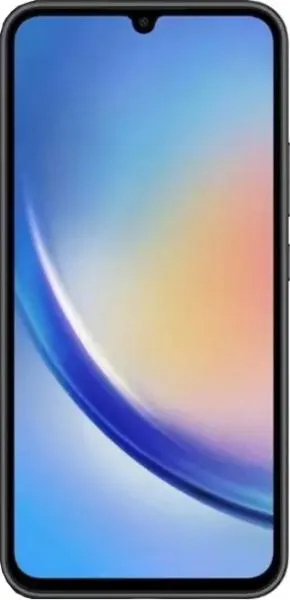
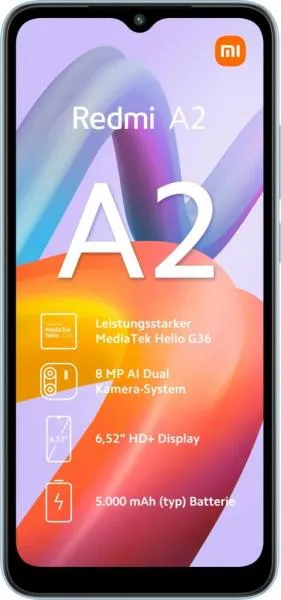
| Feature | Samsung Galaxy A34 | Xiaomi Redmi A2 | Practical Impact |
|---|---|---|---|
| Design | |||
| Dimensions (mm) | 161.3 x 78.1 x 8.2 | 164.9 x 76.8 x 9.1 | A34 is slightly smaller and thinner. |
| Weight (g) | 199 | 192 | Negligible weight difference. |
| Build | Not specified | Not specified | Build quality and materials unknown, impacting durability. |
| Display | |||
| Display Type | Super AMOLED, 120Hz | IPS LCD | A34 offers significantly better colors, contrast, and smoother scrolling with 120Hz. |
| Display Size (inches) | 6.6 | 6.52 | Negligible size difference. |
| Resolution | 1080 x 2340 | 720 x 1600 | A34 has a much sharper and more detailed display. |
| PPI | 390 | 269 | A34's higher pixel density results in sharper text and images. |
| Brightness (nits) | 1000 (HBM) | 400 (typ) | A34 should be much more visible in sunlight. |
| Performance | |||
| Chipset | Mediatek Dimensity 1080 (6nm) | Mediatek Helio G36 (12nm) | A34's 6nm chipset offers significant performance and efficiency advantages over the 12nm Helio G36. Expect smoother multitasking and gaming. |
| CPU | Octa-core (2x2.6 GHz Cortex-A78 & 6x2.0 GHz Cortex-A55) | Octa-core (4x2.2 GHz Cortex-A53 & 4x1.7 GHz Cortex-A53) | A34 has more powerful cores, leading to better performance in demanding tasks. |
| GPU | Mali-G68 MC4 | PowerVR GE8320 | A34 provides substantially better graphics performance for gaming. |
| RAM | 6GB/8GB | 2GB/3GB | A34 offers more RAM, enabling smoother multitasking and better handling of demanding applications. |
| OS | Android 13 | Android 12 | A34 comes with a newer Android version and longer software support. |
| Camera | |||
| Rear Camera | 48MP (Main) + 8MP (Ultrawide) + 5MP (Macro) + 5MP (Depth) | 8MP (Main) + 0.3MP(Unspecified) | A34 boasts a higher resolution main sensor and a versatile camera system including ultrawide and macro lenses, leading to superior image quality and flexibility. |
| Front Camera | 13MP | 5MP | A34 offers higher resolution for selfies. |
| Video Recording | 4K@30fps | 1080p@30fps | A34 can record higher resolution video. |
| Battery | |||
| Capacity | 5000 mAh | 5000 mAh | Similar battery capacity. |
| Fast Charging | 25W | 10W | A34 charges significantly faster. |
| Battery Type | Li-Polymer | Li-Ion | Li-Polymer batteries generally degrade slower than Li-Ion. |
2. Key Differences Analysis
Samsung Galaxy A34 Advantages:
- Superior Display: AMOLED with 120Hz refresh rate offers vibrant colors, deeper blacks, smoother scrolling, and better outdoor visibility.
- Significantly Better Performance: More powerful processor, GPU, and ample RAM ensure a smooth and responsive user experience, especially for gaming and multitasking.
- More Versatile Camera System: Higher resolution sensors, ultrawide lens, and dedicated macro lens offer greater flexibility and better image quality.
- Faster Charging: 25W fast charging significantly reduces downtime.
- Newer Software: Android 13 with longer update support.
Xiaomi Redmi A2 Advantages:
- Lower Price: Significantly more affordable.
- Slightly Lighter: Negligible difference in real-world usage.
Trade-offs:
- The Redmi A2 sacrifices performance, display quality, camera versatility, and charging speed for affordability. The A34 commands a higher price for its superior features.
3. User Profiles & Recommendations
Samsung Galaxy A34: Suitable for users who prioritize performance, display quality, camera versatility, and a smooth user experience. Ideal for gaming, media consumption, photography enthusiasts, and those who desire a future-proof device with longer software support.
Xiaomi Redmi A2: Best suited for budget-conscious users who primarily use their phone for basic tasks like calling, texting, web browsing, and social media. Appropriate for users who prioritize affordability over performance and features.
4. Decision Framework
Key Questions for Buyers:
- What is your budget? The Redmi A2 is significantly cheaper.
- What are your primary phone usage patterns? For basic tasks, the Redmi A2 might suffice. For demanding tasks and multimedia consumption, the A34 is much better.
- How important are display quality, camera performance, and overall speed? The A34 excels in these areas.
Scenario-Based Recommendations:
- Tight Budget, Basic Usage: Redmi A2
- Balanced Budget, Versatile Usage: Galaxy A34
- Power User, Demanding Tasks: Galaxy A34
My Choice: Samsung Galaxy A34
While the Redmi A2 offers an enticing price point, the Galaxy A34 provides a significantly superior user experience across the board. The vastly improved display, performance, camera system, and faster charging justify the higher price for most users. The A34's longer software support also ensures a more future-proof device. The Redmi A2's compromises in crucial areas like performance and display would likely lead to frustrations in the long run, making the A34 a much better value proposition for my needs.
