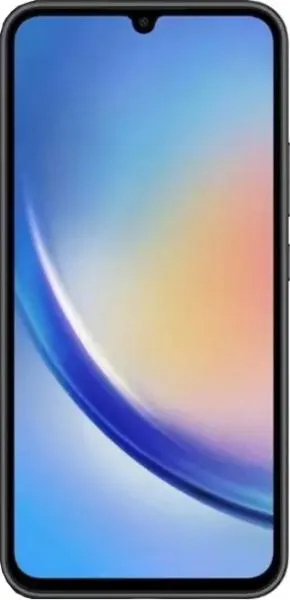
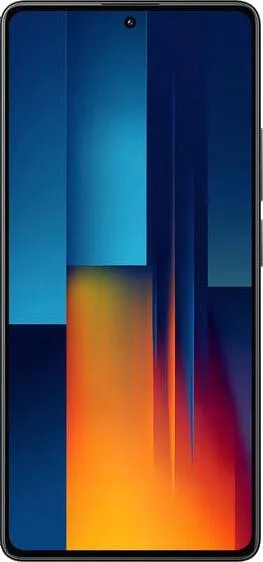
1. Specifications Comparison
| Feature | Samsung Galaxy A34 | Xiaomi Poco M6 Pro | Practical Impact |
|---|---|---|---|
| Design | |||
| Dimensions (mm) | 161.3 x 78.1 x 8.2 | 161.1 x 75 x 8 | Poco M6 Pro is slightly narrower and thinner. Negligible difference in daily use. |
| Weight (g) | 199 | 179 | Poco M6 Pro is noticeably lighter, improving one-handed use and reducing pocket bulk. |
| Display | |||
| Size (inches) | 6.6 | 6.67 | Negligible difference in screen real estate. |
| Resolution (pixels) | 1080 x 2340 | 1080 x 2400 | Virtually identical sharpness. |
| Type | Super AMOLED | AMOLED | A34's Super AMOLED likely offers better color accuracy, contrast, and outdoor visibility. |
| Refresh Rate (Hz) | 120 | 120 | Both offer smooth scrolling and animations. |
| Peak Brightness (nits) | 1000 (HBM) | 1000 (HBM), 1300 (peak) | Poco M6 Pro may be slightly more readable in direct sunlight due to higher peak brightness. |
| Performance | |||
| Chipset | Mediatek Dimensity 1080 (6 nm) | Mediatek Helio G99 Ultra | Dimensity 1080 generally offers better performance in demanding tasks and gaming due to its superior GPU. |
| CPU | Octa-core (2x2.6 GHz Cortex-A78 & 6x2.0 GHz Cortex-A55) | Octa-core (2x2.2 GHz Cortex-A76 & 6x2.0 GHz Cortex-A55) | A34 has a slight edge in CPU performance due to faster clock speeds and more powerful cores. |
| GPU | Mali-G68 MC4 | Mali-G57 MC2 | A34's GPU provides significantly better graphics performance for gaming and visually intensive applications. |
| RAM (GB) | 6/8 | 8/12 | More RAM in Poco M6 Pro (in certain variants) enables better multitasking and app switching. |
| Camera | |||
| Main Camera (MP) | 48 | 64 | Poco M6 Pro boasts higher resolution, potentially capturing more detail. However, sensor size and image processing are crucial for overall image quality. |
| Video Recording | 4K@30fps | 1080p@60fps | A34 offers 4K video recording, while Poco M6 Pro is limited to 1080p. A34's slow-motion capabilities are also superior (480fps vs 240fps). |
| Battery | |||
| Capacity (mAh) | 5000 | 5000 | Similar battery life expected. |
| Fast Charging (W) | 25 | 67 | Poco M6 Pro charges significantly faster, minimizing downtime. |
2. Key Differences Analysis
Samsung Galaxy A34 Advantages:
- Superior Performance: The Dimensity 1080 and Mali-G68 MC4 offer a noticeable performance advantage, especially for gaming and demanding applications.
- Better Display Quality: Super AMOLED generally delivers richer colors and deeper blacks compared to standard AMOLED.
- Higher Resolution Video Recording: 4K recording capability provides more detailed videos.
Xiaomi Poco M6 Pro Advantages:
- Faster Charging: 67W fast charging significantly reduces charging time compared to 25W.
- Lighter Weight: Noticeably lighter, improving handling comfort.
- Higher Resolution Main Camera: Potentially captures more detailed photos, although overall image quality depends on other factors.
- Potentially Lower Price: Depending on the specific RAM/storage configuration, the Poco M6 Pro might offer a lower entry price.
3. User Profiles & Recommendations
Samsung Galaxy A34: Users who prioritize performance, display quality, and video recording capabilities. Suitable for mobile gaming, media consumption, and content creation.
Xiaomi Poco M6 Pro: Users who value fast charging, a lightweight design, and a high-resolution main camera. Ideal for users who prioritize quick charging and general everyday use.
4. Decision Framework
Key Questions for Buyers:
- What is your budget and desired storage capacity?
- What are your primary smartphone usage patterns (gaming, photography, social media, etc.)?
- How important is fast charging to you?
Scenario-Based Recommendations:
- Gamer: Samsung Galaxy A34 for its superior performance.
- Photography Enthusiast: While Poco M6 Pro has a higher resolution main camera, more information (sensor size, aperture, image processing capabilities) is needed for a conclusive recommendation. Consider A34 if 4K video is crucial.
- On-the-Go User: Xiaomi Poco M6 Pro for its fast charging and lighter weight.
My Choice: Samsung Galaxy A34
While the Poco M6 Pro offers appealing features like faster charging and a lighter build, the Samsung Galaxy A34's superior performance and display quality are more significant factors for me. The Dimensity 1080 provides a smoother and more responsive user experience, particularly in demanding tasks and games. The Super AMOLED display is also likely to offer better visuals for media consumption. The 4K video recording is another significant advantage. While 25W charging is slower, I prioritize overall performance and visual quality over slightly faster charging times. The slightly heavier weight is a negligible trade-off for these advantages.
