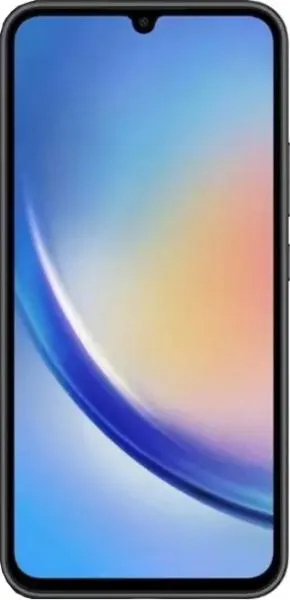
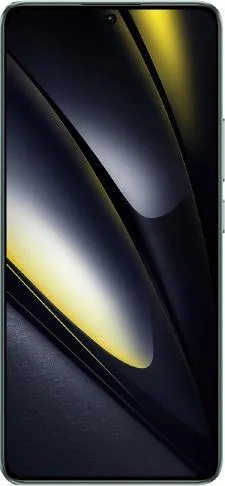
1. Specifications Comparison
| Feature | Samsung Galaxy A34 | Xiaomi Poco F6 | Practical Impact |
|---|---|---|---|
| Design | |||
| Dimensions (mm) | 161.3 x 78.1 x 8.2 | 160.5 x 74.5 x 8.0 | Poco F6 is slightly shorter, narrower, and thinner. Negligible difference in hand feel. |
| Weight (g) | 199 | 179 | Poco F6 is noticeably lighter, improving one-handed use and reducing pocket bulk. |
| Build | Unspecified | Unspecified | Build materials impact durability and premium feel. Lack of information limits comparison. |
| Display | |||
| Size (inches) | 6.6 | 6.67 | Negligible difference in screen real estate. |
| Resolution (pixels) | 1080 x 2340 | 1220 x 2712 | Poco F6 has a sharper, more detailed display due to higher resolution. Noticeable in media consumption. |
| Display Type | Super AMOLED, 120Hz | AMOLED, 120Hz, HDR10+, Dolby Vision | Both offer smooth scrolling with 120Hz. Poco F6 supports HDR10+ and Dolby Vision, resulting in significantly better video quality with richer colors and contrast. |
| Peak Brightness (nits) | 1000 (HBM) | 2400 (peak) | Poco F6 achieves much higher peak brightness, ensuring superior outdoor visibility. |
| Performance | |||
| Chipset | Mediatek Dimensity 1080 (6 nm) | Qualcomm Snapdragon 8s Gen 3 (4 nm) | Poco F6 boasts a significantly more powerful processor built on a smaller node, translating to faster performance, smoother multitasking, and better gaming capabilities. |
| CPU | Octa-core (2x2.6 GHz Cortex-A78 & 6x2.0 GHz Cortex-A55) | Octa-core (1x3.0 GHz Cortex-X4 & 4x2.8 GHz Cortex-A720 & 3x2.0 GHz Cortex-A520) | Poco F6's newer CPU architecture offers substantial performance gains, especially in demanding tasks. |
| GPU | Mali-G68 MC4 | Adreno 735 | Poco F6 has a more powerful GPU, delivering smoother gaming and faster graphics rendering. |
| RAM | 6/8 GB | 8/12 GB | Poco F6 offers higher RAM options, enabling better multitasking and app performance. |
| Camera | |||
| Main Camera (MP) | 48 | 50 | While megapixels aren't everything, the Poco F6 likely captures more detail. |
| Sensor | Sony IMX582 | Sony IMX882 | Poco F6 utilizes a more advanced sensor, potentially leading to better low-light performance and dynamic range. |
| Video Recording | 4K@30fps | 8K Video, 4K@60fps with EIS | Poco F6 offers superior video recording capabilities, including higher resolution (8K) and frame rates (4K@60fps) with Electronic Image Stabilization (EIS) for smoother footage. |
| Battery | |||
| Capacity (mAh) | 5000 | 5000 | Both phones have the same battery capacity, suggesting similar battery life. |
| Fast Charging (W) | 25 | 90 | Poco F6 supports significantly faster charging, drastically reducing downtime. |
2. Key Differences Analysis
Poco F6 Advantages:
- Significantly faster performance: Due to a much more powerful processor and GPU.
- Sharper and brighter display: Higher resolution and peak brightness, with HDR10+ and Dolby Vision support.
- Superior camera capabilities: More advanced sensor, 8K video recording, and better stabilization.
- Much faster charging: 90W vs 25W.
- Lighter: Noticeably lighter for improved handling.
Samsung Galaxy A34 Advantages:
- Potentially lower price: Depending on configuration and market. No specific price comparison available.
Trade-offs:
- Performance vs. Price: Poco F6 offers significant performance advantages but may come at a higher price.
3. User Profiles & Recommendations
Poco F6 Ideal User:
- Power users who demand top-tier performance for gaming, demanding apps, and multitasking.
- Content creators and consumers who prioritize a high-quality display and camera.
- Users who value fast charging.
Samsung Galaxy A34 Ideal User:
- Budget-conscious users who prioritize affordability over top-end performance.
- Users with moderate usage patterns who don't require the absolute best performance or camera.
4. Decision Framework
Key Questions for Buyers:
- What is your budget? The Poco F6 is likely more expensive.
- What are your performance needs? For demanding tasks, the Poco F6 is superior.
- How important is display and camera quality? The Poco F6 excels in these areas.
My Choice: Xiaomi Poco F6
The Xiaomi Poco F6 is the clear winner for me. While pricing information isn't complete, the substantial upgrades in performance, display, camera, and charging outweigh the potential price difference. The Snapdragon 8s Gen 3 chip, coupled with the higher RAM options, provides a future-proof device capable of handling demanding tasks and games with ease. The superior display with HDR10+ and Dolby Vision enhances media consumption significantly. Furthermore, the faster charging drastically reduces downtime. While the A34 might be a suitable option for budget-conscious users with light to moderate usage, the Poco F6 offers a significantly better overall user experience.
