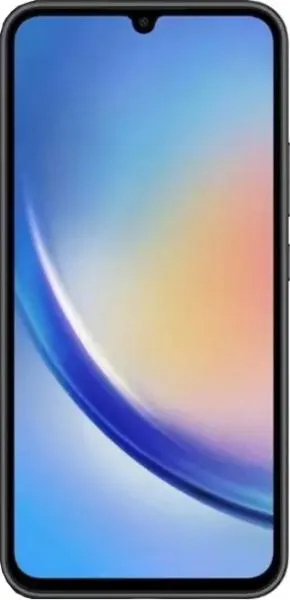

1. Specifications Comparison
| Feature | Samsung Galaxy A34 | vivo V30 | Practical Impact |
|---|---|---|---|
| Design | |||
| Dimensions (mm) | 161.3 x 78.1 x 8.2 | 164.4 x 75.1 x 7.5 | Vivo V30 is slightly taller and narrower, but noticeably thinner. |
| Weight (g) | 199 | 186 | Vivo V30 is lighter, potentially more comfortable for extended use. |
| Display | |||
| Size (inches) | 6.6 | 6.78 | Vivo V30 offers a larger screen for more immersive content consumption. |
| Resolution (pixels) | 1080 x 2340 | 1260 x 2800 | Vivo V30 has a sharper display with higher pixel density (453 vs 390 ppi), resulting in crisper text and images. |
| Type | Super AMOLED, 120Hz | AMOLED, 120Hz, HDR10+ | Both offer smooth scrolling with 120Hz. V30 supports HDR10+ for better dynamic range in compatible content. |
| Peak Brightness (nits) | 1000 (HBM) | 1200 (HBM), 2800 (peak) | V30's significantly higher peak brightness ensures better visibility in direct sunlight. |
| Performance | |||
| Chipset | Mediatek Dimensity 1080 (6nm) | Qualcomm Snapdragon 7 Gen 3 (4nm) | Snapdragon 7 Gen 3 is generally more powerful and power-efficient due to the smaller 4nm process. |
| CPU | Octa-core (2x2.6 GHz A78 & 6x2.0 GHz A55) | Octa-core (1x2.63 GHz A715 & 3x2.4 GHz A715 & 4x1.8 GHz A510) | V30's CPU architecture is newer and likely offers better performance, especially in demanding tasks. |
| GPU | Mali-G68 MC4 | Adreno 720 | Adreno 720 generally offers better gaming performance than Mali-G68 MC4. |
| RAM (GB) | 6/8 | 8/12 | V30 offers more RAM in its base configuration, leading to better multitasking and app performance. |
| Camera | |||
| Rear Camera | 48MP Main, 8MP Ultrawide, 5MP Macro, 5MP Depth | 50MP Main, 8MP Ultrawide | Both offer similar camera setups, although specific sensor performance details are incomplete. V30's main sensor has slightly higher resolution. |
| Front Camera | 13MP | 50MP | V30 boasts a much higher resolution selfie camera. |
| Video | 4K@30fps | 4K@30fps with EIS | Both record 4K video; V30 likely has better stabilization (EIS). |
| Battery | |||
| Capacity (mAh) | 5000 | 5000 | Both have the same battery capacity. |
| Fast Charging | 25W | 80W | V30 offers significantly faster charging, minimizing downtime. |
2. Key Differences Analysis
Samsung Galaxy A34 Advantages:
- Potentially Lower Price: Likely more affordable given historical pricing of the A-series.
vivo V30 Advantages:
- Superior Performance: Newer, more powerful chipset and more RAM.
- Sharper Display: Higher resolution and HDR10+ support.
- Brighter Display: Much brighter for outdoor visibility.
- Faster Charging: Significantly faster 80W charging.
- Higher Resolution Selfie Camera: 50MP vs 13MP.
- More Recent OS: Launched with a newer Android version, potentially longer software support lifespan.
3. User Profiles & Recommendations
Samsung Galaxy A34: Budget-conscious users who prioritize basic smartphone functionality, casual gaming, and all-day battery life.
vivo V30: Users who value performance, a high-quality display, fast charging, and a good selfie camera. Suitable for demanding tasks, mobile gaming, and content consumption.
4. Decision Framework
Key Questions for Buyers:
- What is your budget? The A34 is likely more affordable.
- What are your performance needs? The V30 offers superior performance for demanding tasks and gaming.
- How important is display quality and brightness? The V30 has a noticeably better display.
Scenario-Based Recommendations:
- Limited Budget: Samsung Galaxy A34
- Power User: vivo V30
- Emphasis on Media Consumption: vivo V30
My Choice: vivo V30
While pricing information is incomplete, the vivo V30 offers significant advantages in performance, display quality, charging speed, and camera capabilities. The Snapdragon 7 Gen 3, coupled with ample RAM and a higher resolution display, makes it a more future-proof device. The significantly faster charging is a major convenience. Even if the V30 is more expensive, the overall value proposition seems stronger for most users beyond those extremely budget-conscious.
