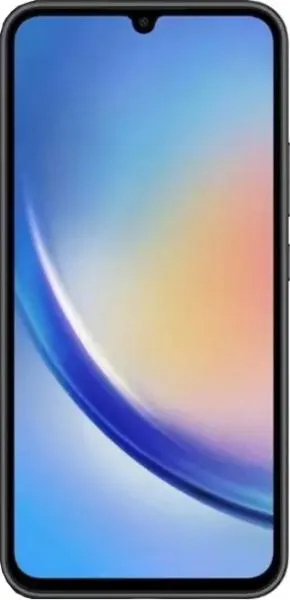
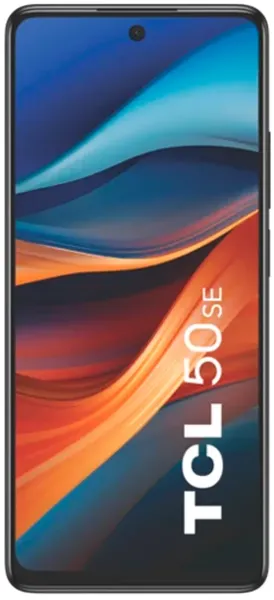
1. Specifications Comparison
| Feature | Samsung Galaxy A34 | TCL 50 SE | Practical Impact |
|---|---|---|---|
| Design | |||
| Dimensions (mm) | 161.3 x 78.1 x 8.2 | 168.2 x 75.5 x 8.1 | A34 is slightly smaller and potentially more pocketable. |
| Weight (g) | 199 | 195 | Negligible weight difference. |
| Fingerprint Sensor | Under Display | Side-mounted | Personal preference; under-display is often perceived as more modern. |
| Display | |||
| Display Type | Super AMOLED | IPS LCD | A34 offers more vibrant colors, deeper blacks, and better power efficiency. |
| Display Size (inches) | 6.6 | 6.78 | TCL 50 SE has a slightly larger screen. |
| Resolution | 1080 x 2340 | 1080 x 2460 | Similar sharpness due to similar pixel density, despite TCL's slightly larger screen size. |
| Refresh Rate (Hz) | 120 | 90 | A34 provides smoother scrolling and animations. |
| Pixel Density (PPI) | 390 | 396 | Virtually identical pixel density, resulting in similar sharpness. |
| Performance | |||
| Chipset | Mediatek Dimensity 1080 (6nm) | Mediatek Helio G88 (12nm) | A34's 6nm chipset offers significantly better performance and power efficiency. |
| CPU | Octa-core (2x2.6 GHz Cortex-A78 & 6x2.0 GHz Cortex-A55) | Octa-core (2x2.0 GHz Cortex-A75 & 6x1.8 GHz Cortex-A55) | A34 has a more powerful CPU architecture, leading to faster processing speeds. |
| GPU | Mali-G68 MC4 | Mali-G52 MC2 | A34's GPU is significantly more powerful, enabling smoother gaming and graphics-intensive tasks. |
| RAM | 6GB/8GB | 4GB/6GB | A34 offers configurations with more RAM, leading to better multitasking performance. |
| Camera | |||
| Main Camera (MP) | 48 | 50 | While TCL has a higher megapixel count, sensor quality details are missing, making a direct comparison difficult. |
| Video Recording | 4K@30fps | 1080p@30fps | A34 offers superior video recording capabilities with 4K resolution. |
| Optical Image Stabilization | Yes | No | A34's OIS results in sharper images and steadier videos. |
| Battery | |||
| Capacity (mAh) | 5000 | 5010 | Negligible difference in battery capacity. |
| Fast Charging | 25W | 33W | TCL 50 SE offers faster charging speeds. |
2. Key Differences Analysis
Samsung Galaxy A34 Advantages:
- Superior Performance: The Dimensity 1080 chipset, coupled with more RAM options, provides a noticeably smoother user experience, particularly in demanding tasks and gaming.
- Better Display: The Super AMOLED display delivers richer colors, deeper blacks, and improved power efficiency compared to the TCL's IPS LCD. The higher refresh rate of 120Hz also provides a more fluid user experience.
- Superior Camera Features: OIS and 4K video recording are significant advantages for users who prioritize photo and video quality.
TCL 50 SE Advantages:
- Faster Charging: 33W fast charging will top up the battery quicker than the A34's 25W.
- Slightly Larger Display: Offers a marginally larger screen for those who prioritize screen real estate.
- Potentially Lower Price: Depending on the specific configuration and retailer, the TCL 50 SE might offer a lower entry price point.
3. User Profiles & Recommendations
Samsung Galaxy A34: Suitable for users who prioritize performance, display quality, and camera features. Ideal for gaming, media consumption, and mobile photography.
TCL 50 SE: Best suited for budget-conscious users who prioritize a large screen and fast charging. Suitable for casual use, web browsing, and social media.
4. Decision Framework
Key Questions for Buyers:
- What is your budget? The price difference between specific configurations could be a deciding factor.
- What are your primary use cases? Gamers and multimedia enthusiasts will benefit from the A34's superior performance and display.
- How important is camera quality? The A34 clearly offers better camera features with OIS and 4K video recording.
Scenario-Based Recommendations:
- Heavy User: For gaming, multitasking, and media consumption, the Galaxy A34 is recommended.
- Budget-Conscious User: For basic tasks and a large screen, the TCL 50 SE might suffice if the price is significantly lower.
- Photography Enthusiast: The A34 is the better choice due to OIS and 4K video recording.
My Choice: Samsung Galaxy A34
Reasoning: While the TCL 50 SE offers a larger screen and faster charging, the Samsung Galaxy A34's significant advantages in performance, display quality, and camera features make it the superior overall device. The Dimensity 1080 provides a much smoother user experience, the Super AMOLED display is visually more appealing, and the inclusion of OIS significantly improves camera performance. The slightly higher price for the A34 is justified by these substantial improvements in key areas. For my personal use, which involves gaming, photography, and general productivity, the A34 would be a significantly better choice.
