
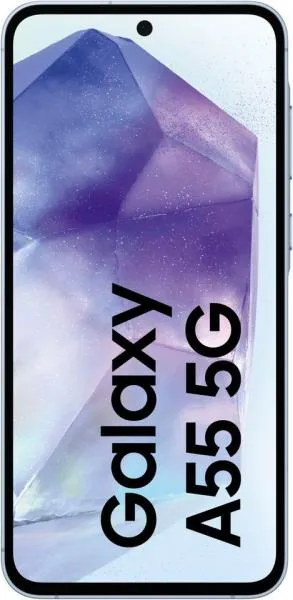
1. Specifications Comparison
| Feature | Samsung Galaxy A34 | Samsung Galaxy A55 | Practical Impact |
|---|---|---|---|
| Design | |||
| Dimensions (mm) | 161.3 x 78.1 x 8.2 | 161.1 x 77.4 x 8.2 | Virtually identical dimensions; negligible difference in hand feel. |
| Weight (g) | 199 | 213 | A55 is slightly heavier, but the difference is unlikely to be noticeable in everyday use. |
| Display | |||
| Size (inches) | 6.6 | 6.6 | Same screen size. |
| Resolution (pixels) | 1080 x 2340 | 1080 x 2340 | Identical resolution; sharpness and clarity will be the same. |
| Type | Super AMOLED, 120Hz | Super AMOLED, 120Hz, HDR10+ | Both offer smooth scrolling and vivid colors thanks to AMOLED and 120Hz. A55 supports HDR10+ for a wider dynamic range in compatible content, resulting in better visuals. |
| Performance | |||
| Chipset | Mediatek Dimensity 1080 (6 nm) | Exynos 1480 (4 nm) | A55's 4nm process suggests better power efficiency and potentially improved performance over A34's 6nm chipset. |
| CPU | Octa-core (2x2.6 GHz Cortex-A78 & 6x2.0 GHz Cortex-A55) | Octa-core (4x2.75 GHz Cortex-A78 & 4x2.0 GHz Cortex-A55) | A55 has faster and more powerful cores, leading to noticeably better performance in demanding tasks and multitasking. |
| GPU | Mali-G68 MC4 | Xclipse 530 | A55's GPU is expected to offer superior graphics performance, beneficial for gaming and visually intensive applications. Direct comparison is difficult without benchmark data. |
| RAM | 6/8 GB | 8/12 GB | A55 offers more RAM in higher-end configurations, allowing for better multitasking and smoother performance with multiple apps open. |
| Camera | |||
| Main Camera (MP) | 48 | 50 | A55's slightly higher resolution main camera may offer marginally better detail. More significant is the sensor difference (IMX582 vs. IMX906), with the IMX906 in the A55 generally considered superior in low light and overall image quality. |
| Selfie Camera (MP) | 13 | 32 | A55's significantly higher resolution selfie camera will produce much more detailed self-portraits. |
| Video Recording | 4K@30fps | 4K@30fps with EIS | Both offer 4K recording, but A55 features Electronic Image Stabilization (EIS) for smoother video footage. |
| Battery | |||
| Capacity (mAh) | 5000 | 5000 | Same battery capacity; expected similar battery life, though A55's more efficient processor could provide a slight edge. |
| Charging | 25W Fast Charging | 25W Fast Charging | Identical charging speeds. |
2. Key Differences Analysis
Samsung Galaxy A55 Advantages:
- Superior Performance: The Exynos 1480 (4nm) chipset, faster CPU cores, and more RAM options offer a significant performance advantage over the Galaxy A34, making it better for demanding tasks and gaming.
- Improved Camera System: The A55 boasts a better main camera sensor (IMX906), a higher resolution selfie camera, and Electronic Image Stabilization (EIS) for video recording.
- HDR10+ Display: Support for HDR10+ provides a wider dynamic range and better visual experience when viewing compatible content.
- Software Updates: Launched with a newer Android version and guaranteed longer updates, ensuring feature support and security patches for a longer period.
Samsung Galaxy A34 Advantages:
- Potentially Lower Price: As an older model, the A34 might be available at a lower price point.
3. User Profiles & Recommendations
Samsung Galaxy A55: Ideal for users who prioritize performance, a good camera, and long-term software support. Suitable for gaming, content creation, and multitasking.
Samsung Galaxy A34: Best for budget-conscious users who primarily use their phone for basic tasks like browsing, social media, and light photography.
4. Decision Framework
Key Questions for Buyers:
- What is your budget? The A34 likely offers better value if price is a primary concern.
- What are your primary phone usage patterns? For demanding tasks, the A55's performance advantage is crucial. For basic use, the A34 is sufficient.
- How important are camera quality and software updates? The A55 offers notable improvements in both areas.
My Choice: Samsung Galaxy A55
While the price difference might be significant, the Samsung Galaxy A55 offers a substantial upgrade in performance, camera quality, and display technology. The more efficient processor and longer software support also contribute to a better long-term ownership experience. For me, these improvements outweigh the potential cost savings of the A34. The A55 provides a more future-proof device that can handle demanding tasks and deliver a better overall user experience. The superior camera is also a deciding factor for capturing high-quality photos and videos.
