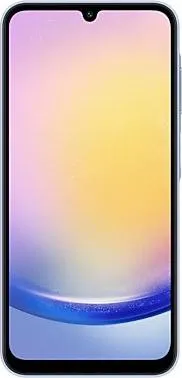
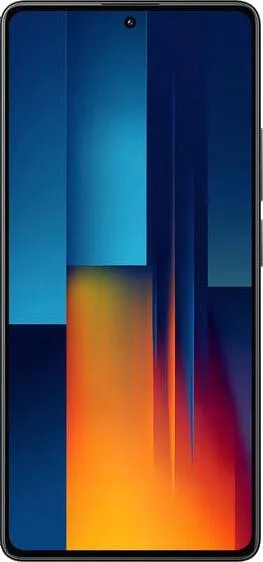
1. Specifications Comparison
| Feature | Category | Samsung Galaxy A25 | Xiaomi Poco M6 Pro | Practical Impact |
|---|---|---|---|---|
| Dimensions | Design | 161x76.5x8.3mm | 161.1x75x8mm | Virtually identical in size, minimal difference in hand feel. |
| Weight | Design | 197g | 179g | Poco M6 Pro is noticeably lighter, reducing hand fatigue during extended use. |
| Build Materials | Design | Not specified | Not specified | Cannot compare build quality and durability without this information. |
| Display Size | Display | 6.5" | 6.67" | Poco M6 Pro offers a slightly larger screen for more immersive media consumption. |
| Display Type | Display | Super AMOLED, 120Hz, 1000 nits (HBM) | AMOLED, 120Hz, 1000 nits (HBM), 1300 nits (peak) | Both offer smooth scrolling and vibrant colors. Poco M6 Pro has a higher peak brightness, improving outdoor visibility. |
| Resolution | Display | 1080x2340 | 1080x2400 | Negligible difference in sharpness at this screen size. |
| Chipset | Performance | Exynos 1280 (5 nm) | Mediatek Helio G99 Ultra | Exynos 1280 generally offers better overall performance and GPU capabilities, likely resulting in smoother gaming and faster app loading. "Ultra" designation on the Helio G99 does not provide concrete performance information and could be marketing jargon. |
| CPU | Performance | Octa-core (2x2.4 GHz Cortex-A78 & 6x2.0 GHz Cortex-A55) | Octa-core (2x2.2 GHz Cortex-A76 & 6x2.0 GHz Cortex-A55) | A25's Cortex-A78 cores offer a performance advantage over the Poco's A76 cores. |
| GPU | Performance | Mali-G68 | Mali-G57 MC2 | A25's Mali-G68 GPU provides significantly better graphical performance than the Poco M6 Pro's Mali-G57 MC2, particularly for demanding games. |
| RAM/Storage | Performance | 256GB/8GB RAM | 512GB/12GB RAM | Poco M6 Pro offers significantly more storage and RAM, enabling smoother multitasking and allowing users to store more apps and files. |
| OS | Software | Android 14 | Android 13 | A25 launches with a newer Android version, offering potential features and security updates not available on the Poco M6 Pro initially. It also has longer stated OS support. |
| Battery Capacity | Battery | 5000 mAh | 5000 mAh | Identical battery capacity, expected similar battery life. Real-world usage will depend on software optimization. |
| Main Camera | Camera | Not specified | Not specified | Cannot compare camera quality without detailed sensor and lens specifications. |
| Video Recording | Camera | 4K@30fps (EIS), 1080p@30fps (EIS) | 1080p@30fps (EIS), 1080p@60fps (EIS) | A25 can record in 4K resolution, while the Poco M6 Pro offers 60fps recording at 1080p, resulting in smoother slow-motion video. |
2. Key Differences Analysis
Samsung Galaxy A25 Advantages:
- Superior Performance: The Exynos 1280 and Mali-G68 offer a noticeable performance advantage for demanding tasks and gaming.
- Newer OS with Longer Support: Android 14 provides the latest features and security updates, with a longer update commitment.
- 4K Video Recording: Enables higher resolution video capture.
Xiaomi Poco M6 Pro Advantages:
- Larger Storage and RAM: Provides ample space for apps, files, and smoother multitasking.
- Lighter Weight: Enhances comfort during prolonged use.
- Higher Peak Brightness: Improves screen visibility in direct sunlight.
- 60fps Video Recording: Produces smoother slow-motion footage at 1080p.
Trade-offs:
- Performance vs. Storage: A25 prioritizes performance, while the Poco M6 Pro emphasizes storage capacity and RAM.
3. User Profiles & Recommendations
Samsung Galaxy A25: Suitable for users who prioritize performance for gaming, app usage, and a smoother overall experience. Good for those who value having the latest OS and longer software support.
Xiaomi Poco M6 Pro: Ideal for users who need ample storage space for media and files, value a lighter phone, and prioritize outdoor screen visibility. Good for users on a tighter budget who prioritize quantity (storage/RAM) over quality (processor/GPU).
4. Decision Framework
Key Questions for Buyers:
- What is your budget and storage needs? The Poco M6 Pro offers significantly more storage for a similar price.
- Do you prioritize performance or battery life/screen brightness? The A25 excels in performance; the Poco M6 Pro offers a brighter display and lighter weight which might indirectly lead to longer practical battery life.
- Is having the latest OS and features important? The A25 comes with Android 14 and longer stated support.
Scenario-Based Recommendations:
- Heavy gamer: Samsung Galaxy A25
- Media consumption and storage focused user: Xiaomi Poco M6 Pro
- User on a tight budget: Xiaomi Poco M6 Pro
My Choice: Samsung Galaxy A25
While the Poco M6 Pro offers tempting storage and RAM, I prioritize performance and software updates in a smartphone. The significantly better GPU and CPU in the A25, combined with the newer Android version and longer update commitment, make it a more future-proof choice for my needs. I often use demanding applications and value a smooth user experience, which the A25 is better equipped to deliver. The slightly heavier weight is a minor trade-off for the substantial performance gains. While the "Ultra" in the Poco's chipset name sounds impressive, without concrete benchmarks, I rely on the known performance advantages of the established Exynos chip. Finally, while I don't shoot a lot of video, the 4K capability of the A25 offers future flexibility.
