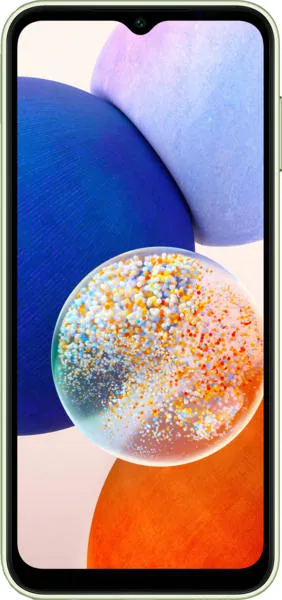

1. Specifications Comparison
| Feature | Samsung Galaxy A14 | ZTE nubia Z60 Ultra | Practical Impact |
|---|---|---|---|
| Design | |||
| Dimensions (mm) | 167.7 x 78 x 9.1 | 164 x 76.4 x 8.8 | Z60 Ultra is slightly shorter, narrower, and thinner. A14 might feel bulkier. |
| Weight (g) | 201 | 246 | Z60 Ultra is noticeably heavier, potentially impacting one-handed use. |
| Build Material | Not specified | Not specified | Cannot compare build quality and durability without material information. |
| Display | |||
| Display Type | PLS LCD | AMOLED | Z60 Ultra's AMOLED offers significantly better contrast, deeper blacks, and potentially brighter colors. |
| Display Size (inches) | 6.6 | 6.8 | Z60 Ultra provides a slightly larger viewing area. |
| Resolution | 1080 x 2408 | 1116 x 2480 | Both offer sharp displays, differences in pixel density are negligible. |
| Refresh Rate | Not specified | 120Hz | Z60 Ultra's 120Hz refresh rate will result in smoother animations and scrolling compared to the A14 (likely 60Hz). |
| Peak Brightness | Not specified | 1500 nits | Z60 Ultra should be significantly more visible in direct sunlight. Lack of A14 data prevents a direct comparison. |
| Performance | |||
| Chipset | Mediatek Helio G80 (12nm) | Snapdragon 8 Gen 3 (4nm) | Z60 Ultra's Snapdragon 8 Gen 3 offers vastly superior performance and power efficiency in demanding tasks and gaming. |
| CPU | Octa-core (2x2.0 GHz A75 & 6x1.8 GHz A55) | Octa-core (1x3.3 GHz X4 & 3x3.2 GHz A720 & 2x3.0 GHz A720 & 2x2.3 GHz A520) | Z60 Ultra's CPU boasts significantly faster clock speeds and a more modern architecture, resulting in much quicker app launches, multitasking, and overall responsiveness. |
| GPU | Mali-G52 MC2 | Adreno 750 | Z60 Ultra's Adreno 750 GPU will deliver a dramatically better gaming experience with higher frame rates and detail levels. |
| RAM | 4GB | 12GB (as tested) | Z60 Ultra's significantly larger RAM enables superior multitasking capabilities and prevents apps from closing in the background. |
| Camera | |||
| Main Camera | 50MP | 54MP (Sony IMX800) | Z60 Ultra's larger sensor with a wider aperture (f/1.6) potentially captures more light and detail, especially in low-light conditions. Sensor quality matters more than megapixel count. |
| Video Recording | 1080p@30fps | Up to 8K@30fps | Z60 Ultra offers far superior video recording capabilities with higher resolution and frame rate options. |
| Camera Features | Basic features | OIS, wider range of features | Z60 Ultra boasts Optical Image Stabilization (OIS) for steadier videos and advanced features for greater creative control. |
| Battery | |||
| Capacity | 5000 mAh | 6000 mAh | Z60 Ultra offers a larger battery capacity, potentially leading to longer battery life. |
| Fast Charging | 15W | 80W | Z60 Ultra charges significantly faster. |
2. Key Differences Analysis
ZTE nubia Z60 Ultra Advantages:
- Significantly faster performance: Snapdragon 8 Gen 3 chip provides a massive leap in processing power.
- Smoother display: 120Hz refresh rate ensures fluid visuals.
- Superior camera system: Higher resolution sensor, wider aperture, OIS, and 8K video recording.
- Faster charging: 80W fast charging drastically reduces charging times.
- Larger battery: Potentially longer battery life.
- Brighter Display: Better visibility outdoors.
Samsung Galaxy A14 Advantages:
- Potentially lower price: Positioned in the "medium price" range, likely more affordable than the Z60 Ultra.
- Lighter weight: More comfortable for extended use and one-handed operation.
3. User Profiles & Recommendations
ZTE nubia Z60 Ultra: Ideal for power users, gamers, photography enthusiasts, and those who demand the best performance and features.
Samsung Galaxy A14: Suitable for budget-conscious users who prioritize basic functionality, social media, and light tasks.
4. Decision Framework
Key Questions:
- What is your budget? The Z60 Ultra is significantly more expensive.
- What are your primary smartphone usage patterns? For basic tasks, the A14 might suffice. For demanding tasks, gaming, and photography, the Z60 Ultra is superior.
- How important are features like display quality, camera performance, and charging speed? The Z60 Ultra excels in these areas.
My Choice: ZTE nubia Z60 Ultra
While the Samsung Galaxy A14 might be a decent budget option, the ZTE nubia Z60 Ultra is the clear winner for me. Its superior performance, stunning display, advanced camera system, and fast charging capabilities make it a compelling device. The price difference is significant, but the value proposition of the Z60 Ultra is much higher for my needs. I prioritize a smooth user experience, high-quality photography, and future-proofing, which the Z60 Ultra delivers. The extra weight is a minor trade-off for the substantial performance gains.
