
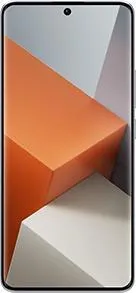
1. Specifications Comparison
| Feature | Samsung Galaxy A14 | Xiaomi Redmi Note 13 Pro+ | Practical Impact |
|---|---|---|---|
| Design | |||
| Dimensions (mm) | 167.7 x 78 x 9.1 | 161.4 x 74.2 x 8.9 | Redmi is slightly smaller and thinner, potentially improving one-handed use. |
| Weight (g) | 201 | 199 | Negligible weight difference. |
| Build Material | Not specified | Not specified | Build quality and durability cannot be compared without this information. |
| Display | |||
| Display Type | PLS LCD | AMOLED | AMOLED offers significantly better contrast, deeper blacks, and potentially brighter colors. Redmi's display will likely be more vibrant and power-efficient. |
| Display Size (inches) | 6.6 | 6.67 | Slight size difference, likely negligible in real-world usage. |
| Resolution | 1080 x 2408 | 1220 x 2712 | Redmi has a sharper display with higher pixel density, resulting in clearer text and images. |
| Refresh Rate | Not specified | 120Hz | Redmi's 120Hz refresh rate provides smoother scrolling and animations, leading to a more fluid user experience. A higher refresh rate on the A14 is possible but not confirmed. |
| HDR | No | HDR10+, Dolby Vision | Redmi supports HDR content, resulting in a wider dynamic range and more realistic visuals when viewing compatible content. |
| Performance | |||
| Chipset | Mediatek Helio G80 (12nm) | Mediatek Dimensity 7200 Ultra (4nm) | Redmi's processor is significantly more powerful and efficient due to its smaller manufacturing process and newer architecture. Expect noticeably faster performance in demanding tasks and games on the Redmi. |
| CPU | Octa-core (2x2.0 GHz Cortex-A75 & 6x1.8 GHz Cortex-A55) | Octa-core (2x2.8 GHz Cortex-A715 & 6x2.0 GHz Cortex-A510) | Redmi's CPU has faster clock speeds and more powerful cores, resulting in significantly better performance. |
| GPU | Mali-G52 MC2 | Mali-G610 MC4 | Redmi's GPU offers substantially improved graphics performance for gaming and other visually demanding applications. |
| RAM | 4GB | 8GB/12GB | Redmi offers more RAM, allowing for smoother multitasking and better performance with multiple apps open. |
| Camera | |||
| Main Camera | 50MP | 200MP | Redmi boasts a higher resolution main camera sensor. While higher resolution doesn't always equate to better image quality, it potentially offers more detail and flexibility for cropping. |
| Video Recording | 1080p@30fps | 4K@30fps | Redmi supports higher resolution video recording, providing more detailed videos. |
| Battery | |||
| Capacity | 5000mAh | 5000mAh | Similar battery capacity. |
| Fast Charging | 15W | 120W | Redmi offers significantly faster charging, drastically reducing charging time. |
2. Key Differences Analysis
Samsung Galaxy A14 Advantages:
- Potentially Lower Price: While not explicitly stated, A-series phones generally target a lower price point.
Xiaomi Redmi Note 13 Pro+ Advantages:
- Significantly Superior Performance: The Dimensity 7200 Ultra outclasses the Helio G80 in every aspect, resulting in a smoother and faster experience.
- Better Display: The AMOLED display with 120Hz refresh rate and HDR support offers a vastly improved visual experience.
- Faster Charging: 120W fast charging is a game-changer, minimizing downtime.
- More Feature-Rich: Better camera capabilities, including higher resolution and 4K video recording.
3. User Profiles & Recommendations
Samsung Galaxy A14: Budget-conscious users who prioritize basic functionality for everyday tasks like calling, texting, and web browsing.
Xiaomi Redmi Note 13 Pro+: Users who demand high performance for gaming, multimedia consumption, and demanding applications. Also suitable for photography enthusiasts.
4. Decision Framework
Key Questions for Buyers:
- What is your budget? The A14 likely offers a lower price point for budget-constrained buyers.
- What is your primary use case? For basic tasks, the A14 might suffice. For demanding tasks and multimedia, the Redmi is significantly better.
- How important is display quality and performance? The Redmi significantly outperforms the A14 in these areas.
My Choice: Xiaomi Redmi Note 13 Pro+
While pricing can be a deciding factor, the Xiaomi Redmi Note 13 Pro+ is the clear winner based on the provided specifications. The significant performance difference, superior display, faster charging, and better camera capabilities make it a much more compelling device. The Redmi offers a substantial upgrade in almost every aspect of the user experience, justifying the likely price difference for most users beyond those extremely budget conscious. Even if the price difference is substantial, the long-term value proposition of the Redmi, with its powerful processor and future-proof features, makes it a more worthwhile investment.
