
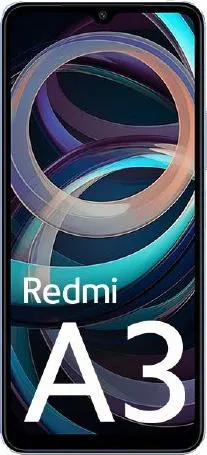
1. Specifications Comparison
| Feature | Samsung Galaxy A14 | Xiaomi Redmi A3 | Practical Impact |
|---|---|---|---|
| Design | |||
| Dimensions (mm) | 167.7 x 78 x 9.1 | 168.3 x 76.3 x 8.3 | Redmi A3 is slightly thinner and lighter. Negligible difference in daily use. |
| Weight (g) | 201 | 193 | Redmi A3 is slightly lighter, but the difference is minimal in practical terms. |
| Display | |||
| Size (inches) | 6.6 | 6.71 | Redmi A3 has a slightly larger display. |
| Resolution (px) | 1080 x 2408 | 720 x 1650 | A14 has significantly sharper and more detailed visuals. Redmi A3's lower resolution will be noticeable in everyday use. |
| Display Type | PLS LCD | IPS LCD | Both are LCD panels. PLS LCD generally offers slightly better color reproduction and viewing angles compared to standard IPS LCD. |
| Refresh Rate (Hz) | Not specified | 90 | Redmi A3's 90Hz refresh rate will result in smoother scrolling and animations, leading to a more fluid user experience. |
| Performance | |||
| Chipset | Helio G80 | Helio G36 | Both are entry-level chipsets; G80 is slightly more powerful, especially in graphics performance. |
| CPU | Octa-core (2x2.0 GHz Cortex-A75 & 6x1.8 GHz Cortex-A55) | Octa-core (4x2.2 GHz Cortex-A53 & 4x1.6 GHz Cortex-A53) | A14's CPU configuration provides a better balance of performance and efficiency. |
| GPU | Mali-G52 MC2 | PowerVR GE8320 | A14's GPU is significantly more powerful, enabling better gaming and smoother graphics-intensive tasks. |
| RAM | 4GB | 3GB | A14's 4GB RAM will provide slightly better multitasking performance. |
| Camera | |||
| Rear Camera (MP) | 50 MP Main | 8 MP Main | A14 has a vastly superior main camera in terms of resolution, likely resulting in significantly better image quality. |
| Front Camera (MP) | 13 MP | 5 MP | A14 offers a higher resolution front camera for better selfies. |
| Battery | |||
| Capacity (mAh) | 5000 | 5000 | Both have the same battery capacity. |
| Fast Charging | 15W | 10W | A14 supports faster charging. |
2. Key Differences Analysis
Samsung Galaxy A14 Advantages:
- Significantly better display: Higher resolution and potentially better color reproduction.
- More powerful performance: Stronger CPU and significantly better GPU.
- Superior camera system: Much higher resolution main and selfie cameras.
- Faster charging: 15W vs 10W.
Xiaomi Redmi A3 Advantages:
- Lower price: Belongs to a lower price range.
- Higher refresh rate display: Smoother scrolling and animations (90Hz).
- Slightly thinner and lighter: Negligible difference in practice.
Trade-offs:
- Redmi A3: Sacrifices display quality, performance, and camera quality for a lower price.
- A14: Costs more but provides a significantly better overall user experience.
3. User Profiles & Recommendations
Samsung Galaxy A14: Users who prioritize display quality, performance, camera capabilities, and a smoother overall experience. Suitable for gaming, media consumption, and photography.
Xiaomi Redmi A3: Budget-conscious users who primarily use their phones for basic tasks like calling, texting, and browsing. Less demanding users who prioritize affordability over performance and features.
4. Decision Framework
Key Questions for Buyers:
- What is your budget? The Redmi A3 is significantly cheaper.
- What are your primary phone usage patterns? Basic tasks vs. demanding applications.
- Which features are most important to you? Display, performance, camera, battery life.
Scenario-Based Recommendations:
- Tight budget and basic usage: Redmi A3
- Balanced budget and moderate usage: A14
- Prioritize performance and features: A14
My Choice: Samsung Galaxy A14
While the Redmi A3 offers a lower price, the compromises in display resolution, performance, and camera quality are too significant for me. The A14's superior screen, stronger processor, better GPU for gaming, and vastly improved camera system make it a much more compelling device. The slightly higher price is justified by the significantly enhanced user experience. The 90Hz refresh rate on the Redmi A3 is tempting, but the drastically lower resolution would be a constant annoyance. I value a sharp, vibrant display and smooth performance, making the A14 the clear winner for me.
