1. Specifications Comparison
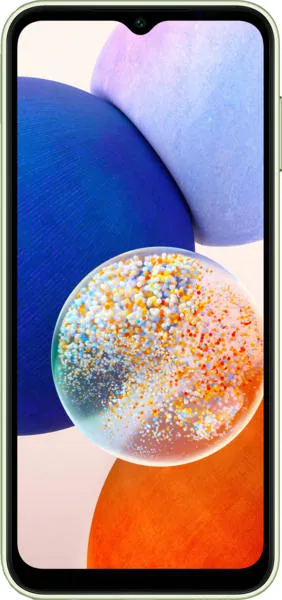
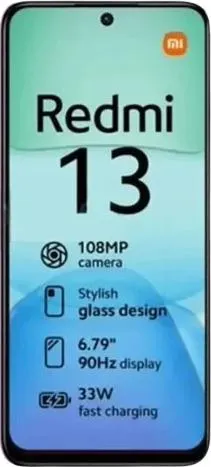
| Feature | Samsung Galaxy A14 | Xiaomi Redmi 13 | Practical Impact |
|---|---|---|---|
| Design | |||
| Dimensions (mm) | 167.7 x 78 x 9.1 | 168.6 x 76.3 x 8.3 | Redmi 13 is slightly thinner. Negligible difference in overall size. |
| Weight (g) | 201 | 205 | Negligible weight difference. |
| Build Materials | Not specified | Not specified | Cannot compare build quality and durability. |
| Display | |||
| Display Size (inches) | 6.6 | 6.79 | Redmi 13 offers a slightly larger screen for more immersive content consumption. |
| Resolution (pixels) | 1080 x 2408 | 1080 x 2460 | Very similar resolutions; both offer sharp visuals. Redmi has slightly taller aspect ratio. |
| Display Type | PLS LCD | IPS LCD | Both are LCD panels with good color reproduction. PLS LCD generally offers slightly wider viewing angles. |
| Refresh Rate (Hz) | Not specified | 90 | Redmi 13's 90Hz refresh rate delivers smoother scrolling and animations, improving the user experience. |
| Performance | |||
| Chipset | Mediatek Helio G80 | Mediatek Helio G91 | Helio G91 is more powerful, enabling faster app loading, smoother multitasking, and better gaming performance. |
| CPU | Octa-core (2x2.0 GHz A75 & 6x1.8 GHz A55) | Octa-core (2x2.0 GHz A75 & 6x1.8 GHz A55) | Similar CPU core configurations, but G91's higher clock speeds offer a performance advantage. |
| GPU | Mali-G52 MC2 | Mali-G52 MC2 | Same GPU, but potential performance difference due to chipset optimizations in the Redmi 13. |
| RAM | 4GB | 6GB/8GB | Redmi 13 offers significantly more RAM, greatly improving multitasking and overall responsiveness. |
| Camera | |||
| Main Camera (MP) | 50 | 108 | Redmi 13's 108MP sensor potentially captures more detail and offers better low-light performance. However, megapixels alone don't guarantee image quality. |
| Front Camera (MP) | 13 | 13 | Similar front camera resolution. |
| Camera Features | Triple camera, Ultra stable video | Dual Camera | A14 has a dedicated macro lens. Redmi 13 has a better main sensor. Practical image quality comparison requires real-world testing. |
| Battery | |||
| Capacity (mAh) | 5000 | 5030 | Negligible difference in battery capacity. |
| Fast Charging | 15W | 33W | Redmi 13's significantly faster charging significantly reduces downtime. |
2. Key Differences Analysis
Redmi 13 Advantages:
- More Powerful Processor and Higher RAM: Leads to smoother performance, better multitasking, and enhanced gaming capabilities.
- Faster Refresh Rate Display: Results in a more fluid and responsive user experience.
- Significantly Faster Charging: Reduces downtime considerably.
- Higher Resolution Main Camera: Potentially captures more detail, especially in good lighting conditions.
Samsung Galaxy A14 Advantages:
- Potentially Better Availability: Launched earlier, might be more widely available in certain regions.
- Slightly Wider Viewing Angles (PLS LCD): May offer a slightly better viewing experience for group viewing.
- Dedicated Macro Lens: Enables close-up photography, although practical image quality is unknown.
Trade-offs:
- Redmi 13: Newer model, potential software support longevity unknown. Lack of dedicated macro lens.
- A14: Lower performance and slower charging. Lower resolution main camera.
3. User Profiles & Recommendations
Redmi 13: Ideal for users who prioritize performance, a smooth display, fast charging, and a high-resolution camera. Suitable for gaming, multitasking, and content consumption. Excellent value proposition due to the "low price" category.
Samsung Galaxy A14: Suitable for budget-conscious users who prioritize basic functionality and reliability. Best for users with less demanding needs, like calling, texting, web browsing, and casual social media use.
4. Decision Framework
Key Questions for Buyers:
- What is your budget? Redmi 13 offers better value in the "low price" segment.
- What are your primary smartphone usage patterns? Redmi 13 for performance-intensive tasks; A14 for basic usage.
- How important is fast charging and a smooth display? Redmi 13 excels in both areas.
My Choice: Xiaomi Redmi 13
The Xiaomi Redmi 13 offers a significantly better overall package due to its superior performance, faster refresh rate display, and significantly quicker charging. While the Samsung Galaxy A14 might be sufficient for basic tasks, the Redmi 13's advantages in key areas like performance and display make it a much more compelling choice, especially considering its placement in a lower price bracket. The 90Hz refresh rate alone significantly enhances daily usage, and the faster charging drastically reduces downtime. While megapixel count isn't everything, the 108MP sensor on the Redmi 13 has the potential to capture significantly more detailed photos. The higher RAM capacity ensures smoother multitasking. Unless budget is extremely tight, the Redmi 13's superior features and performance justify the slightly higher price (depending on specific market and configuration).
