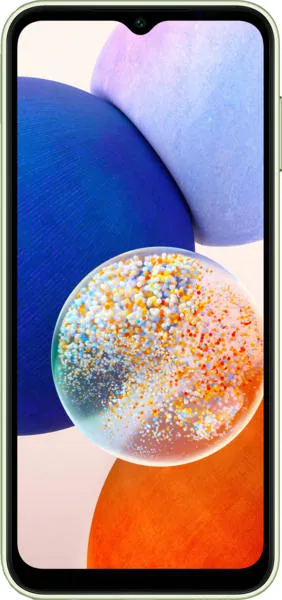
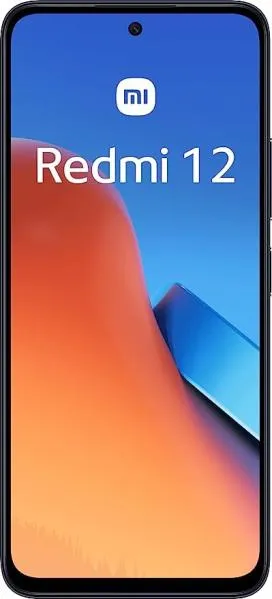
1. Specifications Comparison
| Feature | Samsung Galaxy A14 | Xiaomi Redmi 12 | Practical Impact |
|---|---|---|---|
| Design | |||
| Dimensions (mm) | 167.7 x 78 x 9.1 | 168.6 x 76.3 x 8.2 | Redmi 12 is slightly thinner and narrower. Negligible difference in daily use. |
| Weight (g) | 201 | 198.5 | Virtually identical weight. |
| Build | Unspecified | Unspecified | Build quality cannot be compared without more information. |
| Display | |||
| Size (inches) | 6.6 | 6.79 | Redmi 12 offers a slightly larger screen for more immersive content consumption. |
| Resolution (pixels) | 1080 x 2408 | 1080 x 2460 | Very similar resolutions; both offer sharp visuals at this size. |
| Panel Type | PLS LCD | IPS LCD | Both are LCD panels, but PLS LCD generally offers slightly better color accuracy and wider viewing angles compared to standard IPS. |
| Refresh Rate (Hz) | Unspecified | 90 | The 90Hz refresh rate on the Redmi 12 will result in noticeably smoother scrolling and animations compared to the A14, which likely has a standard 60Hz refresh rate. |
| Performance | |||
| Chipset | Mediatek Helio G80 | Mediatek Helio G88 | Both are entry-level chipsets, G88 offers marginal performance improvements. |
| CPU | Octa-core (2x2.0 GHz Cortex-A75 & 6x1.8 GHz Cortex-A55) | Octa-core (2x2.0 GHz Cortex-A75 & 6x1.8 GHz Cortex-A55) | Core configuration is identical, indicating similar CPU performance. |
| GPU | Mali-G52 MC2 | Mali-G52 MC2 | Same GPU, indicating similar graphical capabilities. |
| RAM | 4GB/6GB | 4GB/8GB | Redmi 12 offers a higher RAM configuration (8GB) enabling better multitasking. 4GB can be limiting for demanding users on both phones. |
| Camera | |||
| Main Camera (MP) | 50 | 50 | Megapixel count is the same, but sensor details for A14 are missing making a detailed comparison impossible. Redmi 12 lists specific sensor models, hinting at potentially better image quality. |
| Other Cameras | Macro, Depth, Selfie | Wide, Macro, Selfie | Redmi 12 replaces the depth sensor with a more useful wide-angle lens. |
| Battery | |||
| Capacity (mAh) | 5000 | 5000 | Identical battery capacity suggesting similar battery life. |
| Fast Charging | 15W | 18W | Redmi 12 supports slightly faster charging. |
2. Key Differences Analysis
Samsung Galaxy A14 Advantages:
- Potentially better display color accuracy: PLS LCD generally offers slightly richer colors and wider viewing angles than standard IPS.
Xiaomi Redmi 12 Advantages:
- Smoother Display: 90Hz refresh rate provides a noticeably smoother user experience.
- Larger Display: The 6.79-inch screen provides a more immersive experience for media consumption.
- Higher RAM Option: The 8GB RAM option provides significantly better multitasking capabilities compared to 4GB.
- Faster Charging: 18W charging will top up the battery quicker than the A14's 15W.
- More Versatile Camera System: The inclusion of a wide-angle lens provides more creative shooting options compared to the depth sensor on the A14. More detailed sensor information suggests potentially better image quality.
Trade-offs:
- Price: While both are mid-range, specific pricing needs to be compared for available configurations as it will vary based on region and retailer.
3. User Profiles & Recommendations
Samsung Galaxy A14: Users prioritizing slight color accuracy gains and on a stricter budget. Suitable for basic tasks like calling, messaging, and web browsing.
Xiaomi Redmi 12: Users prioritizing a smoother display, faster charging, larger screen, more RAM, and a versatile camera system. Suitable for users who multitask frequently, enjoy mobile gaming, and consume a lot of media on their phones.
4. Decision Framework
Key Questions for Buyers:
- What is your budget? Compare prices for similar storage configurations in your region.
- How important is display smoothness and size? A 90Hz refresh rate is a noticeable improvement for daily use. Larger screen is beneficial for media consumption.
- What is your primary phone usage? Heavy multitasking, gaming, and media consumption will benefit from higher RAM and larger display of the Redmi 12.
Scenario-Based Recommendations:
- Light User: For basic usage like calling, messaging, and light browsing, the Galaxy A14 might suffice if it's significantly cheaper.
- Power User: For demanding tasks, multitasking, gaming, and media consumption, the Redmi 12 is the clear winner due to its superior display, RAM options, and faster charging.
My Choice: Xiaomi Redmi 12
The Xiaomi Redmi 12 offers significant advantages in key areas like display (size and refresh rate), performance (RAM options), and camera versatility (wide-angle lens) for a potentially similar price. The 90Hz refresh rate alone makes a substantial difference in daily use, providing a much smoother and more responsive experience. The larger screen and higher RAM options further enhance the user experience for media consumption and multitasking. While lacking specific details on the Samsung A14's camera sensor, the Redmi 12 provides more information suggesting a potentially superior camera system. The slightly faster charging is a welcome bonus. Overall, the Redmi 12 provides a more compelling package for a broader range of users.
