
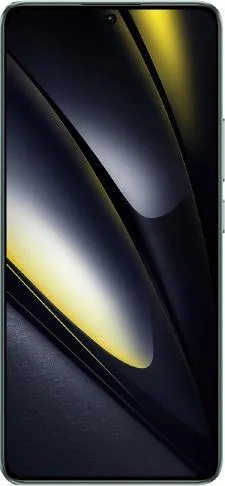
1. Specifications Comparison
| Feature | Samsung Galaxy A14 | Xiaomi Poco F6 | Practical Impact |
|---|---|---|---|
| Design | |||
| Dimensions (mm) | 167.7 x 78 x 9.1 | 160.5 x 74.5 x 8 | Poco F6 is slightly smaller and thinner, potentially more pocketable. |
| Weight (g) | 201 | 179 | Poco F6 is noticeably lighter, improving one-handed use. |
| Display | |||
| Display Type | PLS LCD | AMOLED | Poco F6's AMOLED offers deeper blacks, vibrant colors, and better power efficiency in dark mode. |
| Size (inches) | 6.6 | 6.67 | Negligible difference in screen size. |
| Resolution | 1080 x 2408 | 1220 x 2712 | Poco F6 has a sharper display with higher pixel density (446 ppi vs 400 ppi), resulting in clearer text and images. |
| Refresh Rate | Not specified | 120Hz | Poco F6's 120Hz refresh rate delivers smoother scrolling and animations, enhancing the overall feel. A14's refresh rate is unknown but likely 60Hz. |
| HDR | No | HDR10+, Dolby Vision | Poco F6 supports HDR content, resulting in a wider dynamic range and more realistic visuals when watching compatible videos. |
| Performance | |||
| Chipset | Mediatek Helio G80 (12nm) | Snapdragon 8s Gen 3 (4nm) | Poco F6's Snapdragon 8s Gen 3 significantly outperforms the Helio G80, enabling smoother multitasking, faster app loading, and better gaming performance. The 4nm process also means better power efficiency. |
| CPU | Octa-core (2x2.0 GHz Cortex-A75 & 6x1.8 GHz Cortex-A55) | Octa-core (1x3.0 GHz Cortex-X4 & 4x2.8 GHz Cortex-A720 & 3x2.0 GHz Cortex-A520) | Poco F6 boasts a more powerful and modern CPU architecture, translating to significantly faster processing speeds. |
| GPU | Mali-G52 MC2 | Adreno 735 | Poco F6's Adreno 735 provides a substantial leap in graphics performance, crucial for demanding games and graphic-intensive applications. |
| RAM | 4GB | 8/12GB | Poco F6 offers more RAM, enabling better multitasking and preventing apps from closing in the background. |
| Camera | |||
| Main Camera | 50MP | 50MP (Sony IMX882) | While both have 50MP sensors, the Poco F6 utilizes the superior Sony IMX882 sensor with larger pixel size and pixel binning, potentially capturing more detail and light in various conditions. |
| Video Recording | 1080p@30fps | Up to 4K@60fps with EIS | Poco F6 offers significantly better video recording capabilities with higher resolution and frame rates, along with Electronic Image Stabilization (EIS) for smoother footage. |
| Battery | |||
| Capacity | 5000mAh | 5000mAh | Similar battery capacity. |
| Charging | 15W Fast Charging | 90W Fast Charging | Poco F6's 90W fast charging drastically reduces charging time compared to the A14's 15W. |
2. Key Differences Analysis
Xiaomi Poco F6 Advantages:
- Significantly superior performance: The Snapdragon 8s Gen 3, coupled with more RAM, provides a vastly improved experience in speed, multitasking, and gaming.
- Higher quality display: The AMOLED display with 120Hz refresh rate and HDR support offers a more immersive and responsive visual experience.
- Faster charging: 90W fast charging drastically reduces downtime.
- Better camera capabilities: Improved sensor and video recording capabilities.
Samsung Galaxy A14 Advantages:
- Potentially lower price: While both are in the "medium price" range, the A14 likely sits at the lower end.
3. User Profiles & Recommendations
Xiaomi Poco F6: Users who prioritize performance, a high-quality display, fast charging, and good camera capabilities. Ideal for gamers, power users, and content consumers.
Samsung Galaxy A14: Budget-conscious users who primarily use their phones for basic tasks like calling, texting, browsing, and social media.
4. Decision Framework
Key Questions for Buyers:
- What is your budget? The Poco F6 is significantly more expensive.
- What are your primary phone usage patterns? For basic tasks, the A14 might suffice. For demanding tasks, the Poco F6 is necessary.
- How important is display quality and performance? The Poco F6 excels in these areas.
My Choice: Xiaomi Poco F6
While the Samsung Galaxy A14 offers a budget-friendly option, the Xiaomi Poco F6 is the clear winner for me. The significant difference in performance, the superior display, faster charging, and enhanced camera capabilities outweigh the price difference. The Poco F6 offers a much more future-proof and enjoyable user experience for the majority of users. The Snapdragon 8s Gen 3, AMOLED with 120Hz, and 90W charging are compelling features that significantly enhance daily usage. Even though the price is higher, the value proposition of the Poco F6 is significantly better in the long run.
