
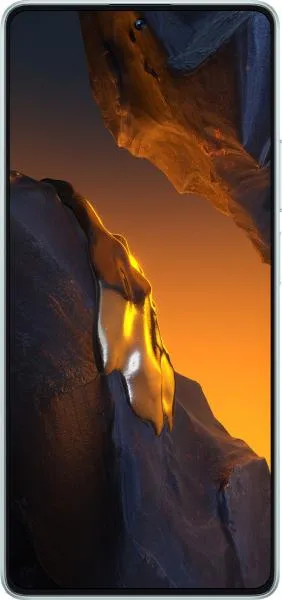
1. Specifications Comparison
| Feature | Category | Samsung Galaxy A14 | Xiaomi Poco F5 | Practical Impact |
|---|---|---|---|---|
| Dimensions (mm) | Design | 167.7 x 78 x 9.1 | 161.1 x 75 x 7.9 | Poco F5 is noticeably smaller and more pocketable. |
| Weight (g) | Design | 201 | 181 | Poco F5 is lighter, reducing hand fatigue during extended use. |
| Display Type | Display | PLS LCD | AMOLED | Poco F5 offers deeper blacks, more vibrant colors, and better power efficiency due to AMOLED technology. |
| Display Size (inches) | Display | 6.6 | 6.67 | Negligible difference in screen real estate. |
| Resolution (px) | Display | 1080 x 2408 | 1080 x 2400 | Virtually identical resolution; sharpness will be similar on both. |
| Refresh Rate (Hz) | Display | Not specified | 120 | Poco F5's 120Hz refresh rate provides a significantly smoother and more responsive user experience for scrolling, gaming, and animations. A14's lack of specification makes direct comparison impossible. |
| HDR | Display | No HDR | HDR10+, Dolby Vision | Poco F5 supports HDR content, resulting in a wider range of colors and better contrast in compatible videos and games. |
| Chipset | Performance | Mediatek Helio G80 (12nm) | Qualcomm Snapdragon 7+ Gen 2 (4nm) | Poco F5's Snapdragon 7+ Gen 2 offers significantly better CPU and GPU performance, leading to faster app loading, smoother multitasking, and improved gaming capabilities. The 4nm process also means better power efficiency. |
| CPU | Performance | Octa-core (2x2.0 GHz Cortex-A75 & 6x1.8 GHz Cortex-A55) | Octa-core (1x2.91 GHz Cortex-X2 & 3x2.49 GHz Cortex-A710 & 4x1.8 GHz Cortex-A510) | Poco F5's CPU architecture is more modern and powerful, particularly the Cortex-X2 core, resulting in snappier performance. |
| RAM | Performance | 4GB | 12GB | Poco F5's 12GB RAM allows for significantly more apps to run in the background without reloading, drastically improving multitasking performance. |
| Main Camera (MP) | Camera | 50 | 64 | Poco F5 has a higher resolution main camera sensor, potentially capturing more detail. However, image quality depends on factors beyond resolution. |
| Video Recording | Camera | 1080p@30fps | 4K@30fps, 1080p@120fps | Poco F5 offers superior video recording capabilities with 4K resolution and slow-motion at 120fps. |
| Optical Stabilization | Camera | No | Yes | Poco F5's optical image stabilization (OIS) will result in smoother videos and reduce blur in photos, especially in low-light conditions. |
| Battery Capacity (mAh) | Battery | 5000 | 5000 | Identical battery capacity suggests similar battery life, but actual usage will depend on other factors like display type and chipset efficiency. |
| Fast Charging (W) | Battery | 15W | 67W | Poco F5 offers drastically faster charging, minimizing downtime. |
2. Key Differences Analysis
Xiaomi Poco F5 Advantages:
- Significantly superior performance: The Snapdragon 7+ Gen 2 chipset and 12GB RAM provide a vastly smoother and faster user experience compared to the Galaxy A14.
- Higher quality display: AMOLED technology with 120Hz refresh rate and HDR support delivers vibrant colors, smooth scrolling, and better power efficiency.
- Faster charging: 67W fast charging significantly reduces charging time compared to the A14's 15W.
- Better camera features: OIS, 4K video recording, and a higher resolution main sensor give the Poco F5 an edge in photography and videography.
Samsung Galaxy A14 Advantages:
- Potentially lower price: While prices can fluctuate, the A14 generally falls into a lower price bracket than the Poco F5.
Trade-offs:
- Performance vs. Price: The Poco F5 offers a much better user experience but comes at a higher price.
- Display Technology: The A14's LCD might be preferable for users sensitive to PWM flickering sometimes associated with AMOLED displays.
3. User Profiles & Recommendations
Samsung Galaxy A14: Budget-conscious users who prioritize basic functionality like calling, texting, and web browsing over high performance or advanced features.
Xiaomi Poco F5: Users who demand a smooth and responsive experience for gaming, multitasking, media consumption, and photography. Suitable for power users and tech enthusiasts.
4. Decision Framework
Key Questions for Buyers:
- What is your budget? The Poco F5 commands a premium for its superior performance.
- What are your primary use cases? For basic tasks, the A14 suffices. For demanding tasks like gaming or heavy multitasking, the Poco F5 is necessary.
- How important is display quality and smoothness? The Poco F5's AMOLED display with 120Hz is a major differentiator.
Scenario-Based Recommendations:
- Limited Budget, Basic Usage: Galaxy A14
- Balanced Performance and Price: Consider other mid-range options potentially offering better value than the A14.
- Best Possible Performance: Xiaomi Poco F5
My Choice: Xiaomi Poco F5
The Xiaomi Poco F5 is the clear winner for me. While the Samsung Galaxy A14 might be suitable for extremely budget-conscious buyers with minimal performance demands, the Poco F5 offers a significantly better overall experience. The combination of a powerful processor, ample RAM, a high refresh rate AMOLED display, fast charging, and superior camera features justifies the higher price. The performance difference, particularly for gaming and multitasking, along with the superior display quality, would make a tangible difference in my daily usage. While subjective preferences for things like display technology exist, the objective performance advantages of the Poco F5 cannot be ignored.
