1. Specifications Comparison
| Feature | Samsung Galaxy A14 | Samsung Galaxy Tab S9 FE | Practical Impact |
|---|---|---|---|
| Design | |||
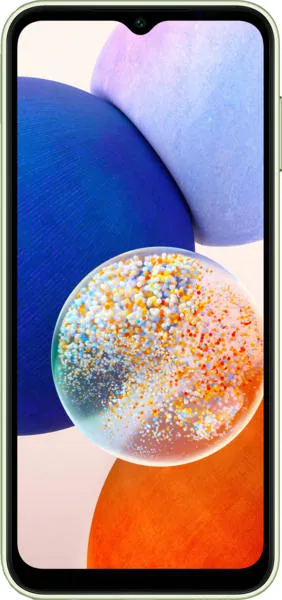
| Dimensions (mm) | 167.7 x 78 x 9.1 | 254.3 x 165.8 x 6.5 | The A14 is a typical smartphone size, pocketable and easy to handle one-handed. The Tab S9 FE is a large tablet, better suited for two-handed use and less portable. |
| Weight (g) | 201 | 523 | The A14 is significantly lighter and easier to carry around. The Tab S9 FE's weight is noticeable, especially during extended use. |
| Display | |||
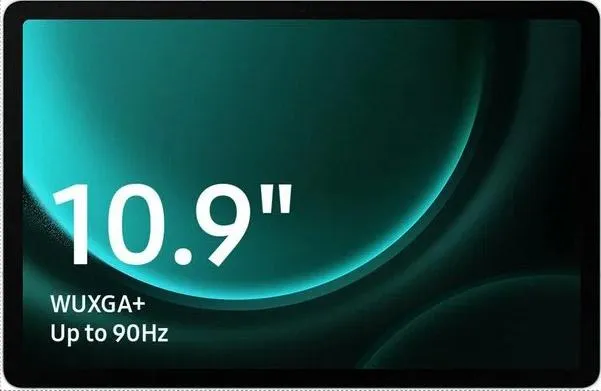
| Size (inches) | 6.6 | 10.9 | The Tab S9 FE offers a much larger screen for media consumption, multitasking, and creative tasks. The A14 is suitable for everyday use but less immersive. |
| Resolution (px) | 1080 x 2408 | 1440 x 2304 | Despite the lower resolution, the A14 has a higher pixel density (400 ppi vs 249 ppi) resulting in sharper text and images. The Tab S9 FE's lower ppi might show slight pixelation. |
| Refresh Rate (Hz) | Not specified | 90 | The 90Hz refresh rate on the Tab S9 FE provides smoother scrolling and animations compared to the A14 (likely 60Hz). This difference is noticeable in everyday use. |
| Display Type | PLS LCD | IPS LCD | Both are LCD panels, offering good color reproduction. PLS LCD generally offers slightly wider viewing angles and better power efficiency compared to standard IPS. |
| Performance | |||
| Chipset | Mediatek Helio G80 (12 nm) | Exynos 1380 (5 nm) | The Exynos 1380 in the Tab S9 FE is significantly more powerful, enabling smoother multitasking, faster app loading, and better gaming performance. |
| CPU | Octa-core (2x2.0 GHz Cortex-A75 & 6x1.8 GHz Cortex-A55) | Octa-core (4x2.4 GHz Cortex-A78 & 4x2.0 GHz Cortex-A55) | The Tab S9 FE has faster and more efficient CPU cores, translating to a noticeable performance advantage. |
| GPU | Mali-G52 MC2 | Mali-G68 MP5 | The Tab S9 FE's GPU is considerably more powerful, delivering significantly better graphics performance for gaming and demanding applications. |
| RAM | 4GB (Tested Model) | Up to 8GB | More RAM in the Tab S9 FE allows for better multitasking and smoother performance with multiple apps open. |
| Camera | |||
| Rear Camera | 50MP Main, 2MP Macro, 2MP Depth | 12MP Main | While the A14 boasts a higher resolution main sensor, the actual image quality depends on factors beyond resolution. The Tab S9 FE's camera is expected to be decent for a tablet but likely not as good as the A14. |
| Front Camera | 13MP | 8MP | The A14 likely offers better selfie quality with its higher resolution front camera. |
| Battery | |||
| Capacity (mAh) | 5000 | 8000 | The Tab S9 FE's significantly larger battery provides much longer usage time, crucial for a tablet. |
| Fast Charging | 15W | 45W | The Tab S9 FE supports much faster charging, significantly reducing downtime. |
2. Key Differences Analysis
Samsung Galaxy A14 Advantages:
- Portability: Significantly smaller and lighter, ideal for one-handed use and carrying in a pocket.
- Sharper Display: Higher pixel density leads to sharper text and images.
- Potentially Better Main Camera: Higher resolution main camera sensor.
Samsung Galaxy Tab S9 FE Advantages:
- Larger Display: More immersive experience for media consumption, multitasking, and creativity.
- Superior Performance: Much more powerful processor and GPU for smoother and faster operation.
- Longer Battery Life: Significantly larger battery capacity for extended usage.
- Faster Charging: 45W fast charging significantly reduces charging time.
- Higher Refresh Rate: Smoother scrolling and animations.
Trade-offs:
- The A14 sacrifices performance and battery life for portability.
- The Tab S9 FE sacrifices portability for a larger display and better performance.
3. User Profiles & Recommendations
Samsung Galaxy A14: Ideal for users who prioritize portability, affordability, and basic smartphone functionality. Suitable for calling, texting, social media browsing, casual photography, and light gaming.
Samsung Galaxy Tab S9 FE: Ideal for users who prioritize a large screen for media consumption, productivity tasks (e.g., document editing, note-taking), creative endeavors (e.g., drawing), and gaming. Less suitable for one-handed use and extended portability.
4. Decision Framework
Key Questions for Buyers:
- What is your primary use case for the device? (e.g., communication, media consumption, productivity)
- How important is portability? (e.g., pocket-sized vs. larger screen)
- What is your budget?
Scenario-Based Recommendations:
- Limited Budget, Primarily Communication: Samsung Galaxy A14
- Student Needing a Device for Note-Taking and Media Consumption: Samsung Galaxy Tab S9 FE
- On-the-Go Professional Requiring Portability and Productivity: Consider a smaller, high-performance smartphone. The Tab S9 FE might be suitable if a large screen is prioritized over portability.
My Choice: Samsung Galaxy Tab S9 FE
While I appreciate the portability of the A14, I would choose the Samsung Galaxy Tab S9 FE. The significantly improved performance, larger display with a higher refresh rate, and longer battery life are crucial factors for my usage. I prioritize a device for media consumption, reading, note-taking, and occasional gaming, making the Tab S9 FE a better fit. The trade-off in portability is acceptable considering the substantial gains in other areas. The faster charging is a welcome bonus, minimizing downtime. While NFC is missing, it's not a dealbreaker for me personally.
