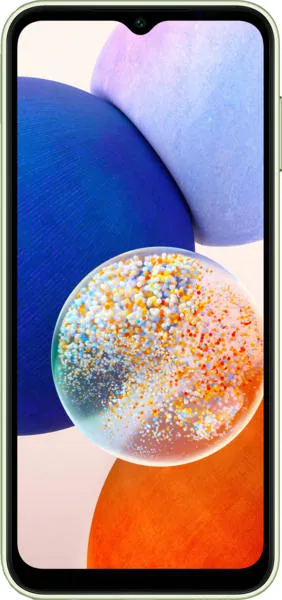
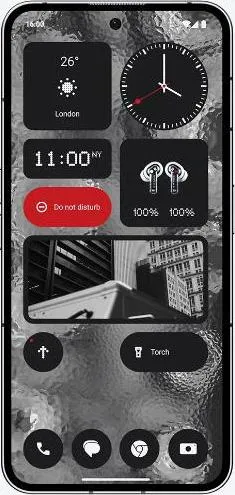
1. Specifications Comparison
| Feature | Samsung Galaxy A14 | Nothing Phone (2) | Practical Impact |
|---|---|---|---|
| Design | |||
| Dimensions (mm) | 167.7 x 78 x 9.1 | 162.1 x 76.4 x 8.6 | Nothing Phone (2) is slightly smaller and may feel more comfortable in hand. |
| Weight (g) | 201 | 201.2 | Negligible weight difference. |
| Build | Plastic | Glass front/back, aluminum frame | Nothing Phone (2) offers a more premium feel and potentially better durability. |
| Display | |||
| Size (inches) | 6.6 | 6.7 | Slightly larger screen on the Nothing Phone (2). |
| Resolution (px) | 1080 x 2408 | 1080 x 2412 | Virtually identical resolution, sharpness will be similar. |
| Type | PLS LCD | LTPO OLED | Nothing Phone (2)'s OLED offers deeper blacks, more vibrant colors, and better power efficiency due to individual pixel illumination. Its LTPO technology allows for a dynamic refresh rate up to 120Hz for smoother scrolling and animations while conserving battery when static. |
| Refresh Rate (Hz) | Unspecified | 120 | A higher refresh rate on the Nothing Phone (2) results in a significantly smoother and more responsive user experience. |
| Peak Brightness (nits) | Unspecified | 1600 | Nothing Phone (2) likely offers superior outdoor visibility. |
| Performance | |||
| Chipset | Mediatek Helio G80 (12nm) | Snapdragon 8+ Gen 1 (4nm) | Significant performance difference. Snapdragon 8+ Gen 1 is a flagship-level processor, offering much faster speeds, smoother multitasking, and better gaming performance compared to the mid-range Helio G80. |
| CPU | Octa-core (2x2.0 GHz Cortex-A75 & 6x1.8 GHz Cortex-A55) | Octa-core (1x3.0 GHz Cortex-X2 & 3x2.5 GHz Cortex-A710 & 4x1.80 GHz Cortex-A510) | The Nothing Phone (2)'s CPU architecture is significantly more powerful and efficient. |
| GPU | Mali-G52 MC2 | Adreno 730 | The Adreno 730 in the Nothing Phone (2) is a much more capable GPU, enabling demanding gaming and graphics-intensive tasks. |
| RAM (GB) | 4/6 | 8/12 | More RAM in Nothing Phone (2) allows for smoother multitasking and better performance with demanding apps. |
| Camera | |||
| Main Camera (MP) | 50 | 50 | Megapixel count is similar, but sensor quality and processing likely differ. Nothing Phone (2) utilizes a Sony IMX890 sensor known for its quality. |
| Ultrawide (MP) | N/A | 50 | Nothing Phone (2) offers an ultrawide lens for wider field of view shots. |
| Video | 1080p@30fps | Up to 4K@60fps with OIS/EIS | Nothing Phone (2) offers significantly better video recording capabilities with higher resolution and frame rates, along with optical and electronic image stabilization. |
| Battery | |||
| Capacity (mAh) | 5000 | 4700 | Slightly larger battery in the Galaxy A14. |
| Charging | 15W Fast Charging | 45W Fast Charging, Wireless Charging | Nothing Phone (2) charges much faster and supports wireless charging. |
2. Key Differences Analysis
Samsung Galaxy A14 Advantages:
- Lower Price: Significantly more affordable.
- Potentially Longer Battery Life: Slightly larger battery capacity.
Nothing Phone (2) Advantages:
- Significantly Better Performance: Flagship-level processor and more RAM.
- Superior Display: OLED with 120Hz refresh rate offers a much smoother and more visually appealing experience.
- More Versatile Camera: Higher quality sensors, ultrawide lens, and superior video recording capabilities.
- Faster Charging: 45W fast charging and wireless charging.
- Premium Build: Glass and aluminum construction.
3. User Profiles & Recommendations
Samsung Galaxy A14: Budget-conscious users who prioritize basic functionality: calling, texting, web browsing, and light social media usage.
Nothing Phone (2): Users who value performance, a premium display, a versatile camera, and fast charging. Ideal for gamers, power users, and content creators.
4. Decision Framework
Key Questions for Buyers:
- What is your budget? The Galaxy A14 is a budget-friendly option, while the Nothing Phone (2) is a more premium device.
- What are your primary use cases? For basic tasks, the A14 suffices. For demanding tasks and gaming, the Nothing Phone (2) is necessary.
- How important is display quality and smoothness? The Nothing Phone (2)'s OLED display with a 120Hz refresh rate is a major advantage.
My Choice: Nothing Phone (2)
While the Samsung Galaxy A14 offers excellent value for its price, the Nothing Phone (2) is the superior device overall. Its significantly faster performance, vastly better display, more versatile camera, faster charging, and more premium build make it a much more compelling option for me. The price difference is substantial, but the improvements in user experience across the board justify the cost. I prioritize a smooth and responsive experience, high-quality visuals, and good performance, all of which the Nothing Phone (2) delivers.
