
1. Specifications Comparison
| Feature | Samsung Galaxy A14 | Motorola Razr 50 Ultra | Practical Impact |
|---|---|---|---|
| Design | |||
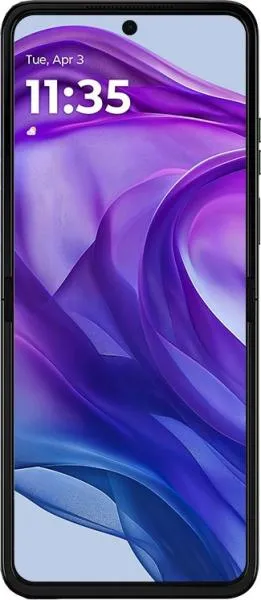
| Dimensions (mm) | 167.7 x 78 x 9.1 | 171.4 x 74 x 7.1 | Razr 50 Ultra is significantly thinner and slightly narrower but taller when unfolded. Its foldable design offers greater portability. |
| Weight (g) | 201 | 189 | Razr 50 Ultra is lighter despite its larger display, thanks to its advanced materials and foldable design. |
| Foldable | No | Yes | The Razr's foldable design allows for a large screen in a compact form factor, ideal for pocketability. |
| Display | |||
| Display Size (inches) | 6.6 | 6.9 | Razr offers a larger display for more immersive content consumption. |
| Resolution (px) | 1080 x 2408 | 1080 x 2640 | Both have similar pixel density, but Razr's taller aspect ratio provides more vertical screen real estate. |
| Display Type | PLS LCD | Foldable LTPO AMOLED | Razr's AMOLED offers superior contrast, deeper blacks, and brighter colors compared to the A14's LCD. LTPO allows for dynamic refresh rate adjustment, saving battery. The higher peak brightness (3000 nits) of the Razr ensures better visibility in sunlight. |
| Refresh Rate (Hz) | Unspecified | 165 | Higher refresh rate on the Razr results in smoother animations and a more responsive user interface. A14's unspecified refresh rate likely indicates a standard 60Hz display. |
| Performance | |||
| Chipset | Mediatek Helio G80 (12 nm) | Qualcomm Snapdragon 8s Gen 3 (4 nm) | Razr's Snapdragon 8s Gen 3 provides significantly faster processing speeds, enabling smoother multitasking, demanding gaming, and faster app loading. |
| CPU | Octa-core (2x2.0 GHz Cortex-A75 & 6x1.8 GHz Cortex-A55) | Octa-core (1x3.0 GHz Cortex-X4 & 4x2.8 GHz Cortex-A720 & 3x2.0 GHz Cortex-A520) | Razr boasts a more powerful and modern CPU architecture, translating to significant performance gains. |
| RAM (GB) | 4 | 12 | Razr's substantially larger RAM allows for seamless multitasking and keeps more apps open in the background without performance slowdown. |
| Camera | |||
| Main Camera (MP) | 50 | 50 | Similar megapixel count, but Razr likely utilizes a superior sensor and image processing due to its higher price point. |
| Additional Cameras | Macro, Depth, Selfie | Telephoto, Selfie | Razr offers a more versatile camera setup with a dedicated telephoto lens for optical zoom, replacing the less useful macro and depth sensors on the A14. |
| Video Recording | 1080p@30fps | Up to 4K@60fps with HDR, EIS, and 960fps slow-motion | Razr offers significantly better video recording capabilities with higher resolution, frame rates, HDR, and advanced stabilization. |
| Battery | |||
| Capacity (mAh) | 5000 | 4000 | A14 has a larger battery capacity, potentially offering longer battery life. |
| Fast Charging | 15W | 45W | Razr supports significantly faster charging, minimizing downtime. |
2. Key Differences Analysis
Samsung Galaxy A14 Advantages:
- Longer Battery Life (Potentially): The larger 5000mAh battery likely provides longer usage time.
- Lower Price: Positioned in the "medium price" range, it's likely more affordable.
Motorola Razr 50 Ultra Advantages:
- Significantly More Powerful: The Snapdragon 8s Gen 3 chip and 12GB RAM provide a vastly superior performance experience.
- Foldable Design: Offers a large screen in a compact, pocketable form factor.
- Superior Display: The LTPO AMOLED with a 165Hz refresh rate provides vibrant colors, deep blacks, smooth scrolling, and better outdoor visibility.
- More Versatile Camera System: The telephoto lens allows for optical zoom and higher quality photos/videos overall.
- Faster Charging: 45W fast charging significantly reduces charging time.
Trade-offs:
- Battery Life vs. Performance and Portability: A14 potentially sacrifices performance and portability for longer battery life. Razr balances performance and a compact design with a smaller battery.
3. User Profiles & Recommendations
Samsung Galaxy A14:
- Ideal User: Budget-conscious users prioritizing battery life for basic tasks like calling, texting, browsing, and social media.
- Use Cases: Everyday communication, light web browsing, social media consumption.
Motorola Razr 50 Ultra:
- Ideal User: Users seeking a premium, compact, and powerful device with a cutting-edge foldable design and high-quality display. Those who value performance, portability, and a versatile camera.
- Use Cases: Demanding gaming, content creation, multitasking, photography enthusiasts.
4. Decision Framework
Key Questions:
- What is your budget? The A14 is a more budget-friendly option.
- What level of performance do you need? For demanding tasks, the Razr is significantly better.
- How important is portability and form factor? The Razr's foldable design offers a unique advantage.
Scenario-Based Recommendations:
- Limited Budget, Basic Usage: Choose the A14.
- Prioritize Performance and Latest Technology: Choose the Razr 50 Ultra.
- Value Portability and Premium Features: Choose the Razr 50 Ultra.
My Choice: Motorola Razr 50 Ultra
While the Samsung Galaxy A14 offers potentially longer battery life at a lower price, the Motorola Razr 50 Ultra is the superior device overall. Its significantly faster processor, larger RAM, stunning foldable AMOLED display with a high refresh rate, more versatile camera system, and fast charging outweigh the benefits of the A14. I prioritize performance, a modern feature set, and the innovative form factor. The trade-off of a slightly smaller battery is acceptable given the Razr 50 Ultra's faster charging capabilities. The Razr 50 Ultra represents a significant leap in technology and user experience, making it the more compelling choice for me.
