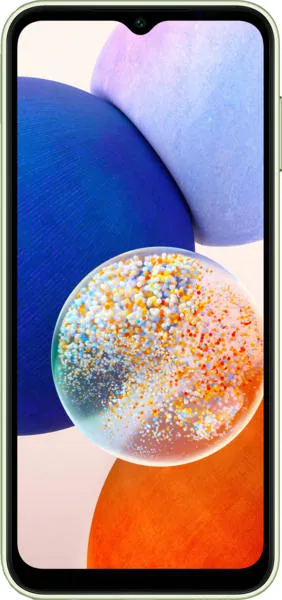
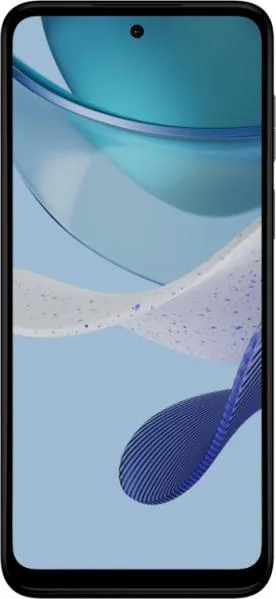
1. Specifications Comparison
| Feature | Samsung Galaxy A14 | Motorola Moto G (2023) | Practical Impact |
|---|---|---|---|
| Design | |||
| Dimensions (mm) | 167.7 x 78 x 9.1 | 164 x 75 x 8.4 | Moto G (2023) is slightly smaller and thinner, potentially offering better one-handed usability. |
| Weight (g) | 201 | 189 | Moto G (2023) is noticeably lighter, reducing hand fatigue during extended use. |
| Display | |||
| Display Size (inches) | 6.6 | 6.5 | Negligible difference in screen real estate. |
| Resolution (pixels) | 1080 x 2408 | 720 x 1600 | A14 has a significantly sharper display (400 ppi vs 270 ppi), resulting in crisper text and images. |
| Display Type | PLS LCD | IPS LCD | Both are LCD panels, but PLS LCD generally offers slightly better color reproduction and viewing angles than standard IPS. |
| Refresh Rate (Hz) | Not specified | 120 | The 120Hz refresh rate on the Moto G (2023) provides smoother animations and scrolling compared to the A14's unspecified refresh rate (likely 60Hz). |
| Performance | |||
| Chipset | Mediatek Helio G80 (12 nm) | Qualcomm Snapdragon 480+ 5G (8 nm) | Snapdragon 480+ 5G offers better performance and power efficiency due to its superior manufacturing process (8nm vs 12nm). |
| CPU | Octa-core (2x2.0 GHz Cortex-A75 & 6x1.8 GHz Cortex-A55) | Octa-core (2x2.2 GHz Kryo 460 & 6x1.8 GHz Kryo 460) | While both are octa-core, the Snapdragon 480+ in the Moto G (2023) is expected to deliver better overall performance, especially in demanding tasks. |
| GPU | Mali-G52 MC2 | Adreno 619 | Adreno 619 generally provides a smoother gaming experience compared to the Mali-G52 MC2. |
| RAM (GB) | 4 | 4 | Both phones have the same amount of RAM. |
| Camera | |||
| Main Camera (MP) | 50 | 48 | Slight difference in megapixel count, likely resulting in minimal real-world difference in image quality. Other factors like sensor size and processing play a larger role. |
| Front Camera (MP) | 13 | 8 | A14 has a higher resolution front camera, potentially offering better selfie quality. |
| Video Recording | 1080p@30fps | 1080p@30fps | Both phones offer the same video recording resolution and frame rate. |
| Battery | |||
| Capacity (mAh) | 5000 | 5000 | Both phones have the same battery capacity. |
| Fast Charging | 15W | 15W | Both phones offer the same fast charging speed. |
2. Key Differences Analysis
Samsung Galaxy A14 Advantages:
- Sharper Display: The significantly higher pixel density results in a noticeably clearer and more detailed display.
- Higher Resolution Selfie Camera: The 13MP front camera likely produces better quality selfies. Potentially better color reproduction due to PLS LCD technology.
Motorola Moto G (2023) Advantages:
- Smoother Performance: The more powerful Snapdragon chipset and higher refresh rate display provide a more fluid user experience.
- More Compact and Lightweight Design: Easier to hold and use with one hand.
- 5G Connectivity: Provides faster download and upload speeds in areas with 5G coverage. The A14 data shows many 5G bands but doesn't explicitly state it has 5G.
3. User Profiles & Recommendations
Samsung Galaxy A14: Users who prioritize a sharp display for media consumption and casual gaming, and value a higher-resolution selfie camera.
Motorola Moto G (2023): Users who prioritize smooth performance, a lightweight and compact design, and require 5G connectivity. Good for users who value responsive user experience for everyday tasks and light gaming.
4. Decision Framework
- Is 5G connectivity essential? If yes, the Moto G (2023) is the clear choice.
- Is display sharpness a top priority? If yes, the A14 offers a much crisper viewing experience.
- Which is more important: smooth performance or a high-resolution selfie camera? This will help determine which phone best suits individual needs.
My Choice: Motorola Moto G (2023)
While the A14's sharper display is tempting, the Moto G (2023)'s superior performance, smoother 120Hz display, lighter weight, and confirmed 5G connectivity make it a more compelling overall package for my needs. I prioritize a fluid user experience and future-proofing with 5G. The slightly lower resolution display is a trade-off I'm willing to make for the performance gains and other benefits.
