1. Specifications Comparison
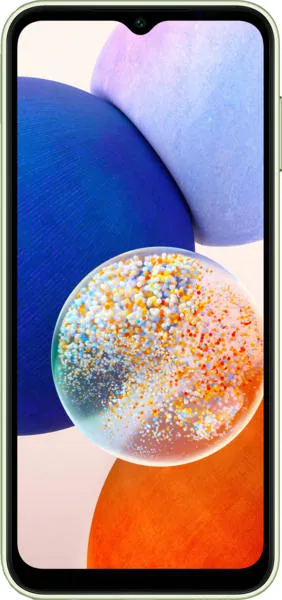
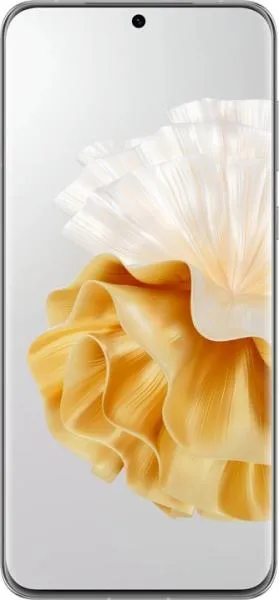
| Feature | Samsung Galaxy A14 | Huawei P60 Pro | Practical Impact |
|---|---|---|---|
| Design | |||
| Dimensions (mm) | 167.7 x 78 x 9.1 | 161 x 74.5 x 8.3 | P60 Pro is more compact and potentially easier to handle. |
| Weight (g) | 201 | 200 | Negligible weight difference. |
| Build Material | Not specified | Not specified | Cannot compare build quality and durability. |
| Display | |||
| Display Type | PLS LCD | LTPO OLED | P60 Pro offers superior contrast, deeper blacks, and potentially better power efficiency due to LTPO. |
| Display Size (inches) | 6.6 | 6.67 | Slight size difference, likely negligible in real-world usage. |
| Resolution | 1080 x 2408 | 1220 x 2700 | P60 Pro has a sharper display with higher pixel density. |
| Refresh Rate | Not specified | 120Hz | P60 Pro will offer smoother scrolling and animations. A14's refresh rate is unknown. |
| Performance | |||
| Chipset | Mediatek Helio G80 (12 nm) | Snapdragon 8+ Gen 1 4G (4 nm) | P60 Pro boasts significantly faster processing power, enabling smoother multitasking and demanding gaming. |
| CPU | Octa-core (2x2.0 GHz Cortex-A75 & 6x1.8 GHz Cortex-A55) | Octa-core (1x3.19 GHz Cortex-X2 & 3x2.75 GHz Cortex-A710 & 4x2.0 GHz Cortex-A510) | P60 Pro's CPU architecture is more powerful and efficient. |
| GPU | Mali-G52 MC2 | Adreno 730 | P60 Pro offers dramatically better graphics performance for gaming and visually intensive tasks. |
| RAM | 4GB | 8/12GB | P60 Pro offers more RAM, leading to better multitasking and app performance. |
| Camera | |||
| Main Camera | 50MP | 48MP with variable aperture (f/1.4-f4.0) | P60 Pro's variable aperture allows for greater control over depth of field and low-light performance. Sensor and image processing quality are key differentiators not fully captured by MP count. |
| Telephoto | No dedicated telephoto lens mentioned | 48MP with 3.5x Optical Zoom | P60 Pro offers optical zoom for superior image quality at longer distances. |
| Ultrawide | Not specified | 13MP | P60 Pro offers an ultrawide lens for capturing wider scenes. |
| Video Recording | 1080p@30fps | Up to 4K@60fps with EIS and 1080p@960fps slow-mo | P60 Pro offers significantly better video resolution, frame rates, and stabilization. |
| Battery | |||
| Capacity | 5000 mAh | 4815 mAh | Similar battery capacities, but real-world battery life depends heavily on optimization and usage. |
| Fast Charging | 15W | 88W | P60 Pro offers significantly faster charging speeds, minimizing downtime. |
| Wireless Charging | Not specified | 50W | P60 Pro offers fast wireless charging. |
2. Key Differences Analysis
Huawei P60 Pro Advantages:
- Superior Performance: Significantly faster processor, GPU, and more RAM.
- High-Quality Display: LTPO OLED with 120Hz refresh rate offers better visuals and smoother experience.
- Advanced Camera System: Variable aperture, optical zoom, and higher quality video recording capabilities.
- Faster Charging: 88W wired and 50W wireless charging.
Samsung Galaxy A14 Advantages:
- Potentially Lower Price: Belongs to a medium price range compared to the high-end P60 Pro.
- Larger Battery Capacity (marginally): 5000 mAh vs 4815 mAh, but real-world usage will vary.
3. User Profiles & Recommendations
Samsung Galaxy A14: Budget-conscious users who prioritize basic smartphone functionality (calling, texting, web browsing, social media).
Huawei P60 Pro: Users who demand top-tier performance, a premium display, excellent camera capabilities, and fast charging. Suitable for demanding tasks like gaming, content creation, and photography.
4. Decision Framework
Key Questions:
- What is your budget? The P60 Pro is significantly more expensive.
- What are your primary smartphone usage patterns? Basic tasks vs. demanding applications and gaming.
- How important are camera quality and features to you? The P60 Pro has a clear advantage in this area.
My Choice: Huawei P60 Pro
While the Samsung Galaxy A14 offers good value for its price range, the Huawei P60 Pro is the clear winner for me. Its superior performance, stunning display, and advanced camera system make it a compelling device. I value a smooth user experience, high-quality photos and videos, and fast charging, all of which the P60 Pro delivers. While the price is higher, the significant upgrade in features and overall experience justifies the cost. The lack of 5G in the P60 Pro is a drawback, but the overall package is still highly attractive.
