
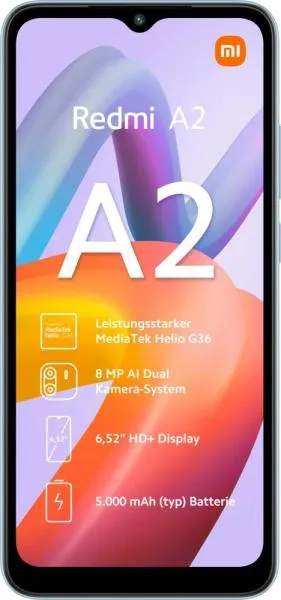
Samsung Galaxy A04 vs. Xiaomi Redmi A2+: A Budget Battle Royale
Hello fellow tech explorers! Today, we're diving deep into the world of budget smartphones, dissecting the Samsung Galaxy A04 and the Xiaomi Redmi A2+ to see which device offers the best bang for your buck. Both phones aim to deliver a solid smartphone experience without breaking the bank, but subtle differences in their specifications can significantly impact your daily usage. Let's get started!
1. Specifications Breakdown
| Feature | Samsung Galaxy A04 | Xiaomi Redmi A2+ | Real-World Implications |
|---|---|---|---|
| Design | |||
| Dimensions (mm) | 164.4 x 76.3 x 9.1 | 164.9 x 76.8 x 9.1 | Virtually identical in size and feel. |
| Weight (g) | 192 | 192 | Negligible weight difference; both feel substantial in hand. |
| Display | |||
| Size (inches) | 6.5 | 6.52 | Nearly identical screen real estate. |
| Resolution | 720 x 1600 | 720 x 1600 | Same resolution; expect similar sharpness and clarity. |
| Type | PLS LCD | IPS LCD | Both are LCD panels; expect decent color reproduction but limited viewing angles. |
| Performance | |||
| Chipset | Helio P35 | Helio G36 | The G36 offers a slight performance edge in gaming and multitasking. |
| CPU | Octa-core (4x2.3 GHz Cortex-A53 & 4x1.8 GHz Cortex-A53) | Octa-core (4x2.2 GHz Cortex-A53 & 4x1.7 GHz Cortex-A53) | Similar CPU architectures, but the A04 boasts slightly higher clock speeds on some cores. |
| GPU | PowerVR GE8320 | PowerVR GE8320 | Same GPU; expect comparable graphics performance. |
| RAM | 4GB | 3GB | The A04's extra gig of RAM should provide smoother multitasking. |
| Camera | |||
| Rear Camera | 50MP + 2MP | 8MP + 0.3MP | The A04 boasts a significantly higher resolution main sensor. |
| Front Camera | 5MP | 5MP | Identical front-facing cameras. |
| Battery Life | |||
| Capacity | 5000 mAh | 5000 mAh | Identical battery capacities; expect similar longevity depending on usage. |
| Charging | USB Type-C | microUSB | A04 offers the more modern and versatile USB-C port. |
| Other | |||
| OS | Android 12 | Android 12 | Both run on a recent version of Android. |
| Fingerprint Sensor | No | Yes | Redmi A2+ offers added security and convenience with a fingerprint sensor |
2. Key Insights
The Samsung Galaxy A04 differentiates itself with its higher-resolution main camera and slightly faster processor. In real-world terms, this translates to potentially better photos and a slightly smoother user experience, particularly when multitasking. The A04 also features the more modern USB-C port. However, the Redmi A2+ counters with a fingerprint sensor for enhanced security and potentially better gaming performance due to its slightly newer Helio G36 chipset.
3. User Profiles and Recommendations
Samsung Galaxy A04: Best suited for users who prioritize camera quality and a clean Android experience. Casual photographers and social media enthusiasts will appreciate the 50MP main camera.
Xiaomi Redmi A2+: Ideal for budget-conscious gamers who value a fingerprint sensor. The slightly more powerful GPU and dedicated gaming features might provide a better mobile gaming experience.
4. Buying Decision Framework
- What is your primary use case? Photography, gaming, general use?
- How important is camera quality to you?
- Do you prioritize a fingerprint sensor for security?
Scenario-based Recommendations:
- Casual User: Either phone would suffice, but the Redmi A2+'s fingerprint sensor might offer a more convenient unlock experience.
- Photographer: The Galaxy A04's 50MP camera is the clear winner.
- Gamer: The Redmi A2+'s Helio G36 chip might offer a slight edge in gaming.
My Choice: Samsung Galaxy A04
While the Redmi A2+ offers a fingerprint sensor and a potentially better gaming experience, I would choose the Samsung Galaxy A04. The deciding factor for me is the significantly better camera setup. A 50MP sensor, even in a budget phone, can capture significantly more detail and offer greater flexibility for editing and cropping compared to the 8MP sensor on the Redmi A2+. The slightly faster processor and the inclusion of USB-C also contribute to a more future-proof device. While a fingerprint sensor is nice, I personally prioritize camera quality and a clean, modern connection standard in my everyday usage. The potential difference in gaming performance is negligible for my needs.
