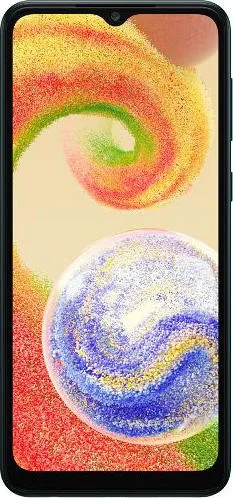
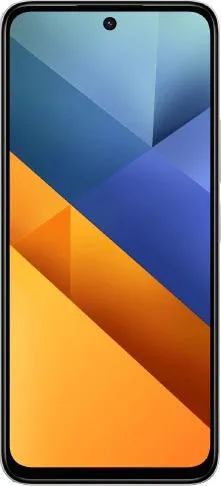
Samsung Galaxy A04 vs. Xiaomi Poco M6 4G: A Deep Dive for the Discerning Buyer
Hello, fellow tech explorers! Alex Griffin here, ready to dissect the Samsung Galaxy A04 and the Xiaomi Poco M6 4G. We'll go beyond the spec sheets to uncover what these phones really offer in terms of daily use. Let's get started!
1. Specifications Breakdown
| Feature | Samsung Galaxy A04 | Xiaomi Poco M6 4G | Real-World Implications |
|---|---|---|---|
| Design | |||
| Dimensions (mm) | 164.4 x 76.3 x 9.1 | 168.6 x 76.3 x 8.3 | Poco M6 is slightly larger and thinner. Negligible difference in hand feel for most users. |
| Weight (g) | 192 | 205 | Poco M6 is a bit heavier; likely due to larger battery and display. |
| Display | |||
| Size (inches) | 6.5 | 6.79 | Poco M6 offers a significantly larger screen for more immersive media consumption. |
| Resolution | 720 x 1600 | 1080 x 2460 | Poco M6 boasts much sharper visuals and text due to higher resolution (FHD+ vs. HD+). |
| Refresh Rate (Hz) | N/A | 90 | Poco M6's 90Hz display provides smoother scrolling and animations. A noticeable advantage. |
| Display Type | PLS LCD | IPS LCD | Both are LCD panels, but Poco M6's LTPS technology may offer slightly better color accuracy and power efficiency. |
| Performance | |||
| Chipset | Helio P35 | Helio G91 Ultra | Poco M6 has a significantly more powerful processor, resulting in much faster performance for demanding tasks and gaming. |
| CPU | Octa-core (4x2.3 GHz Cortex-A53 & 4x1.8 GHz Cortex-A53) | Octa-core (2x2.0 GHz Cortex-A75 & 6x1.8 GHz Cortex-A55) | Poco M6's CPU architecture is more modern and efficient, leading to better multi-tasking and responsiveness. |
| RAM (GB) | 4 | 6/8 | Poco M6 offers more RAM, enabling smoother multitasking and less frequent app reloading. |
| Camera | |||
| Main Camera (MP) | 50 | 108 | Poco M6 boasts a much higher resolution main camera, potentially capturing more detail. |
| Selfie Camera (MP) | 5 | 13 | Poco M6 offers a higher resolution selfie camera. |
| Battery Life | |||
| Capacity (mAh) | 5000 | 5030 | Negligible difference in battery capacity; real-world usage will depend on optimization. |
| Other | |||
| NFC | No | Yes | Poco M6 supports contactless payments and data transfer via NFC. |
| OS | Android 12 | Android 14 | Poco M6 ships with a more recent Android version, offering newer features and potentially longer software support. |
2. Key Insights
- Performance Disparity: The Poco M6's Helio G91 Ultra chipset decisively outperforms the Galaxy A04's Helio P35. This translates to a significantly smoother experience in demanding apps, games, and multitasking.
- Display Delight: The Poco M6's larger, higher-resolution display with a 90Hz refresh rate provides a vastly superior visual experience. The difference in sharpness, fluidity, and immersion is substantial.
- Camera Considerations: While megapixels aren't everything, the Poco M6's 108MP main camera has the potential to capture more detail. Real-world image quality will depend on factors beyond resolution, such as sensor size and processing.
- Software Advantage: The Poco M6's Android 14 OS gives it a head start in terms of features and security updates compared to the Galaxy A04's Android 12.
3. User Profiles and Recommendations
- Samsung Galaxy A04: Best suited for users on an extremely tight budget who prioritize basic communication and light tasks like browsing and social media. Not recommended for gaming or demanding applications.
- Xiaomi Poco M6 4G: Ideal for users who want a well-rounded smartphone with a great display, solid performance, and decent camera capabilities without breaking the bank. Excellent for media consumption, gaming, and everyday multitasking.
4. Buying Decision Framework
- What is your budget? The Galaxy A04 is significantly cheaper, making it attractive for budget-conscious buyers.
- What are your primary use cases? For basic communication and light tasks, the A04 might suffice. However, if you value performance, a great display, and gaming, the Poco M6 is the clear winner.
- How important is software and future updates? The Poco M6, running Android 14, offers a longer software support horizon.
My Choice: I would choose the Xiaomi Poco M6 4G. While the Galaxy A04 is more affordable, the Poco M6 offers a significantly superior user experience across the board – performance, display, camera, and software. The price difference is justified by the tangible benefits in daily use. I value a smooth, responsive phone with a great screen, and the Poco M6 delivers on those fronts. The inclusion of NFC is a welcome bonus for contactless payments. The A04 feels like a compromise device, while the Poco M6 offers a well-rounded package for a modest investment.
