
1. Specifications Comparison
| Feature | Realme C55 | Xiaomi Redmi Note 13 | Practical Impact |
|---|---|---|---|
| Design | |||
| Dimensions (mm) | 165.6 x 75.9 x 7.9 | 161.1 x 75 x 7.6 | Redmi Note 13 is slightly smaller and thinner. |
| Weight (g) | 189.5 | 174.5 | Redmi Note 13 is noticeably lighter, improving one-hand usage. |
| Display | |||
| Display Type | IPS LCD | AMOLED | AMOLED offers deeper blacks, better contrast, and potentially better power efficiency. |
| Display Size (inches) | 6.72 | 6.67 | Negligible size difference. |
| Resolution | 1080 x 2400 | 1080 x 2400 | Same resolution, but Redmi Note 13 has slightly higher pixel density due to smaller size. |
| Refresh Rate (Hz) | 90 | 120 | Redmi Note 13's 120Hz display provides smoother scrolling and animations. |
| Peak Brightness (nits) | 680 | Unknown | Realme C55's known peak brightness suggests better outdoor visibility. Missing Redmi Note 13 data limits comparison. |
| Performance | |||
| Chipset | Mediatek Helio G88 (12nm) | Mediatek Dimensity 6080 (6nm) | Redmi Note 13's 6nm chipset should offer better performance and power efficiency. |
| CPU | Octa-core (2x2.0 GHz A75 & 6x1.8 GHz A55) | Octa-core (2x2.4 GHz A76 & 6x2.0 GHz A55) | Redmi Note 13 has faster and more powerful CPU cores, leading to better multitasking and app performance. |
| GPU | Mali-G52 MC2 | Mali-G57 MC2 | Redmi Note 13 has a more powerful GPU, beneficial for gaming and graphically demanding tasks. |
| RAM (GB) | 6/8 | 6/8/12 | Both offer various RAM options, with Redmi Note 13 offering a higher 12GB configuration for demanding users. |
| Camera | |||
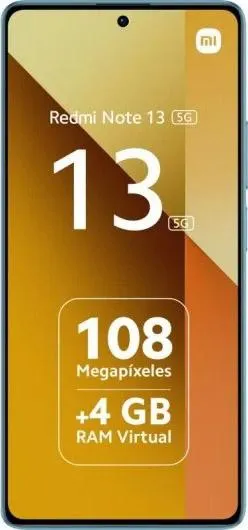
| Main Camera (MP) | 64 | 108 | Redmi Note 13 boasts higher resolution, potentially capturing more detail. |
| Ultrawide | No | Yes (8MP) | Redmi Note 13 offers ultrawide photography for broader perspectives. |
| Selfie Camera (MP) | 8 | 16 | Redmi Note 13's higher resolution selfie camera should produce better quality self-portraits. |
| Battery | |||
| Capacity (mAh) | 5000 | 5000 | Same battery capacity. |
| Fast Charging (W) | 33 | 33 | Same fast charging speed. |
| Battery Type | Li-Ion | Li-Polymer | Li-Polymer batteries generally degrade slower than Li-Ion, but real-world impact depends on usage and charging habits. |
2. Key Differences Analysis
Realme C55 Advantages:
- Potentially Brighter Display: Higher peak brightness could be advantageous in direct sunlight. However, lacking Redmi Note 13 data makes a definite conclusion impossible.
Redmi Note 13 Advantages:
- Superior Performance: Newer and more efficient chipset, faster CPU and GPU provide smoother overall experience, especially in demanding tasks.
- Higher Refresh Rate Display: Smoother and more responsive visual experience.
- Better Camera System: Higher resolution main and selfie cameras, plus the addition of an ultrawide lens, offer greater versatility.
- AMOLED Display: Superior contrast, deeper blacks, and potentially better power efficiency.
- Potentially Longer Lasting Battery: Li-Po batteries generally age better.
- 5G Connectivity: Future-proofs the device for faster network speeds.
Trade-offs:
- Price: While both are budget-friendly, the Redmi Note 13 likely costs more given its superior specs. Exact price comparison requires specific regional pricing data.
3. User Profiles & Recommendations
Realme C55: Budget-conscious users who prioritize basic functionality, decent battery life, and good outdoor visibility. Suitable for light usage, social media, and casual photography.
Redmi Note 13: Users seeking a well-rounded phone with better performance, smoother display, versatile camera system, and 5G connectivity. Suitable for gaming, multitasking, content consumption, and mobile photography enthusiasts.
4. Decision Framework
Key Questions:
- What is your budget? The Redmi Note 13 likely commands a higher price.
- What are your primary use cases? Gaming, multitasking, and photography benefit from Redmi Note 13's superior hardware.
- How important is future-proofing? 5G connectivity on Redmi Note 13 ensures relevance for longer.
Scenario-Based Recommendations:
- Tight budget, basic usage: Realme C55.
- Balanced performance and price, future-proof device: Redmi Note 13.
My Choice: Xiaomi Redmi Note 13
While missing information on the Redmi Note 13's screen brightness prevents a complete assessment, the Redmi Note 13 is the clear winner for me. The significantly improved performance thanks to the Dimensity 6080, the smoother 120Hz AMOLED display, the more versatile camera system with a 108MP main sensor and ultrawide lens, and the inclusion of 5G connectivity make it a far more compelling device. The slightly higher price is justifiable for the substantial upgrade in features and overall user experience. Even if the Realme C55 has a slightly brighter screen, the overall advantages of the Redmi Note 13 are too significant to ignore. The Redmi Note 13 offers a better long-term value proposition due to its superior hardware and future-proof features.
