
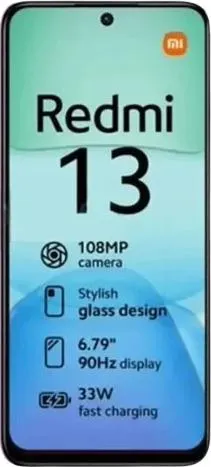
1. Specifications Comparison
| Feature | Realme C55 | Xiaomi Redmi 13 | Practical Impact |
|---|---|---|---|
| Design | |||
| Dimensions (mm) | 165.6 x 75.9 x 7.9 | 168.6 x 76.3 x 8.3 | Redmi 13 slightly larger and thicker. Negligible difference in everyday use. |
| Weight (g) | 189.5 | 205 | C55 noticeably lighter, reducing hand fatigue during extended use. |
| Display | |||
| Size (inches) | 6.72 | 6.79 | Redmi 13 marginally larger; minimal difference in viewable content. |
| Resolution (px) | 1080 x 2400 | 1080 x 2460 | Virtually identical pixel density, resulting in similar sharpness. |
| Type | IPS LCD, 90Hz | IPS LCD, 90Hz | Both offer smooth scrolling and animations due to 90Hz refresh rate. Redmi 13 uses LTPS technology, potentially offering slightly better color reproduction and viewing angles. |
| Peak Brightness | 680 nits | Not specified | C55's higher peak brightness ensures better visibility in sunlight. Unable to compare without Redmi 13's peak brightness value. |
| Performance | |||
| Chipset | Helio G88 (12nm) | Helio G91 Ultra (12nm) | G91 Ultra should offer slightly improved performance in demanding tasks and gaming due to higher clock speeds (though frequency for G91 Ultra not provided for GPU comparison). |
| CPU | Octa-core (2x2.0 GHz...) | Octa-core (2x2.0 GHz...) | Similar CPU configurations; real-world performance differences might be minimal. |
| GPU | Mali-G52 MC2 | Mali-G52 MC2 | Same GPU, but performance can differ due to clock speed variations. Redmi 13 GPU frequency of 850MHz suggests potentially lower graphics performance than C55. |
| RAM | 6/8GB | 6/8GB | Both offer ample RAM for multitasking; performance differences depend on specific configuration (e.g., 6GB vs. 8GB). |
| Camera | |||
| Main Camera | 64MP | 108MP | Redmi 13's higher resolution potentially offers more detail in photos, but image quality depends on sensor size and processing. |
| Selfie Camera | 8MP | 13MP | Redmi 13 likely produces better selfie photos due to higher resolution. |
| Video | 1080p@30/60fps | 1080p@30fps | C55 offers 60fps recording for smoother videos. |
| Battery | |||
| Capacity (mAh) | 5000 | 5030 | Negligible difference in battery capacity. |
| Charging | 33W Fast Charging | 33W Fast Charging | Similar charging speeds. |
2. Key Differences Analysis
Realme C55 Advantages:
- Lighter and more comfortable to hold.
- Brighter display for better outdoor visibility.
- 60fps video recording.
Xiaomi Redmi 13 Advantages:
- Slightly larger display.
- Potentially better color reproduction and viewing angles due to LTPS display technology. (though subjective and needs real world comparison)
- Higher resolution main camera.
- Higher resolution selfie camera.
- Reverse charging capability.
Trade-offs:
- Redmi 13: Potentially lower GPU performance due to lower clock speed. This might impact gaming performance.
- C55: Lower resolution cameras. Might produce less detailed photos compared to Redmi 13.
3. User Profiles & Recommendations
Realme C55: Suitable for users who prioritize a lightweight phone, excellent outdoor visibility, and smooth video recording. Good for casual gaming and everyday tasks.
Xiaomi Redmi 13: Suitable for users who want a large display, potentially higher quality photos, and the convenience of reverse charging. Ideal for social media enthusiasts and those who prioritize camera quality.
4. Decision Framework
Key Questions for Buyers:
- Is camera quality a top priority? If so, the Redmi 13's 108MP main camera and 13MP selfie camera are compelling.
- Do you frequently use your phone outdoors in bright sunlight? The C55's brighter display might be crucial.
- Is a lightweight and comfortable phone important? The C55's lower weight could be a deciding factor.
My Choice:
I would choose the Realme C55. While the Redmi 13 boasts a higher resolution main camera and a slightly larger display, the C55's lighter weight, brighter display, and 60fps video recording are more significant factors for my personal preferences. I value comfortable one-handed use and often use my phone outdoors, making the C55's lighter weight and brighter display particularly appealing. Additionally, the potential for lower GPU performance in the Redmi 13 is a concern. The price difference, if any, between similar configurations (e.g., 8GB/256GB) would also influence my decision, especially considering the C55 is listed as "medium price" and the Redmi 13 as "low price." Ultimately, the C55 better suits my usage patterns and priorities.
