
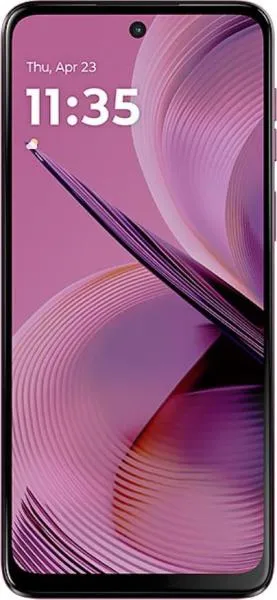
1. Specifications Comparison
| Feature | Realme C55 | Motorola Moto G55 | Practical Impact |
|---|---|---|---|
| Design | |||
| Dimensions (mm) | 165.6 x 75.9 x 7.9 | 161.6 x 73.8 x 8.1 | Moto G55 is slightly shorter, narrower, and thicker but lighter overall. Negligible difference in everyday use. |
| Weight (g) | 189.5 | 179 | Moto G55 feels noticeably lighter in hand. |
| Display | |||
| Size (inches) | 6.72 | 6.49 | Realme C55 offers a slightly larger screen for more immersive content consumption. |
| Resolution | 1080 x 2400 | 1080 x 2400 | Identical resolution, resulting in similar sharpness on both devices. |
| Refresh Rate (Hz) | 90 | 120 | Moto G55's 120Hz refresh rate provides smoother animations and scrolling compared to 90Hz on the Realme C55. |
| Display Type | IPS LCD | IPS LCD | Both use IPS LCD technology, expecting similar color accuracy and viewing angles. |
| Peak Brightness (nits) | 680 | Not specified | Realme C55's specified peak brightness suggests better visibility in sunlight. Moto G55 performance in bright conditions is unclear. |
| Performance | |||
| Chipset | Mediatek Helio G88 (12nm) | Mediatek Dimensity 7025 (6nm) | Moto G55's 6nm chipset should offer significantly better performance and power efficiency compared to the 12nm Helio G88. |
| CPU | Octa-core (2x2.0 GHz Cortex-A75 & 6x1.8 GHz Cortex-A55) | Octa-core (2x2.5 GHz Cortex-A78 & 6x2.0 GHz Cortex-A55) | Moto G55 boasts faster and more powerful CPU cores, translating to smoother multitasking and demanding app usage. |
| GPU | Mali-G52 MC2 | IMG BXM-8-256 | Moto G55's GPU should deliver superior gaming performance, though specific benchmarks are needed for definitive comparison. |
| RAM (GB) | 6/8 (depending on version) | 8 | Moto G55 offers more RAM in this comparison, improving multitasking and app loading speeds. |
| Camera | |||
| Main Camera (MP) | 64 | 50 | Realme C55 has a higher resolution main sensor, but megapixel count doesn't solely determine image quality. Sensor size and processing are crucial. |
| Ultrawide | No | Yes (8MP) | Moto G55 offers ultrawide photography for capturing wider scenes. |
| Selfie Camera (MP) | 8 | 16 | Moto G55 has a higher resolution selfie camera, potentially producing more detailed self-portraits. |
| Video Recording | 1080p@30/60fps | 1080p@30/60fps | Similar video recording capabilities on paper. |
| Optical Image Stabilization | No | Yes | Moto G55 benefits from OIS, resulting in steadier videos and potentially sharper low-light photos. |
| Battery | |||
| Capacity (mAh) | 5000 | 5000 | Identical battery capacity. Real-world battery life depends on factors like chipset efficiency and display usage. |
| Fast Charging (W) | 33 | 30 | Negligible difference in charging speeds. |
2. Key Differences Analysis
Realme C55 Advantages:
- Slightly larger display: Offers a more immersive viewing experience.
- Higher resolution main camera: Potentially captures more detail in ideal lighting conditions (requires further sensor analysis).
- Potentially brighter display: Could be more readable in direct sunlight.
Motorola Moto G55 Advantages:
- Significantly more powerful processor: Smoother overall performance, better multitasking, and improved gaming.
- Higher refresh rate display: Smoother scrolling and animations.
- Ultrawide camera: More versatile photography options.
- Optical Image Stabilization: Steadier videos and potentially improved low-light photography.
- More RAM: Enhanced multitasking capabilities.
- More recent Android version: Likely to receive longer software updates and security patches.
- 5G connectivity: Future-proofed for faster data speeds.
3. User Profiles & Recommendations
Realme C55: Budget-conscious users prioritizing a large display for media consumption and casual gaming.
Motorola Moto G55: Users who value smooth performance, versatile camera features (ultrawide, OIS), and longer software support. Suitable for moderate to heavy usage, including gaming and multitasking.
4. Decision Framework
Key Questions for Buyers:
- What is your budget? The Realme C55 is likely more affordable.
- What are your performance expectations? For demanding tasks and gaming, the Moto G55 is significantly better.
- Which camera features are most important? Ultrawide and OIS are significant advantages for the Moto G55.
My Choice: Motorola Moto G55
While the Realme C55 offers a slightly larger display, the Moto G55's superior performance, more versatile camera system with OIS, newer Android version with longer update support, and 5G connectivity make it a significantly better overall package. The slightly higher price is justified by these substantial improvements in user experience. The performance difference due to the chipset and higher refresh rate alone would sway me towards the Moto G55, as these aspects significantly impact daily usage.
