
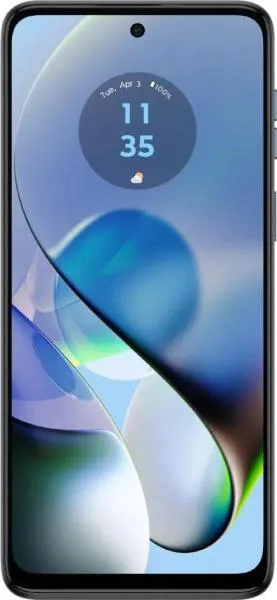
1. Specifications Comparison
| Feature | Realme C55 | Motorola Moto G54 | Practical Impact |
|---|---|---|---|
| Design | |||
| Dimensions (mm) | 165.6 x 75.9 x 7.9 | 161.6 x 73.8 x 8 | Moto G54 is slightly smaller and may feel more comfortable in hand. |
| Weight (g) | 189.5 | 177 | Moto G54 is noticeably lighter, reducing hand fatigue during extended use. |
| Display | |||
| Size (inches) | 6.72 | 6.5 | Realme C55 offers a slightly larger screen for more immersive media consumption. |
| Resolution | 1080 x 2400 | 1080 x 2400 | Both have the same sharp Full HD+ resolution. |
| Refresh Rate (Hz) | 90 | 120 | Moto G54's higher refresh rate results in smoother scrolling and animations, enhancing the overall feel. |
| Display Type | IPS LCD | IPS LCD | Both use IPS LCD technology, offering good color reproduction and viewing angles. |
| Peak Brightness (nits) | 680 | Not specified | Realme C55's higher peak brightness ensures better visibility in direct sunlight. Missing Moto G54 data prevents full comparison. |
| Performance | |||
| Chipset | Mediatek Helio G88 (12nm) | Mediatek Dimensity 7020 (6nm) | Moto G54's 6nm chipset offers significant performance and efficiency advantages over the 12nm Helio G88. Expect smoother multitasking and better battery life. |
| CPU | Octa-core (2x2.0 GHz A75 & 6x1.8 GHz A55) | Octa-core (2x2.2 GHz A78 & 6x2.0 GHz A55) | Moto G54 has faster and more powerful CPU cores (Cortex-A78 vs A75) leading to noticeably improved performance in demanding tasks and gaming. |
| GPU | Mali-G52 MC2 | IMG BXM-8-256 | Moto G54 likely has a more powerful GPU. However, lacking specific benchmark data limits definitive comparison. |
| RAM (GB) | 6/8 | 8/12 | Moto G54 offers higher RAM configurations, beneficial for heavy multitasking and demanding applications. |
| Camera | |||
| Main Camera (MP) | 64 | 50 | Realme C55 has a higher resolution main sensor. However, megapixels alone don't determine image quality. Missing sensor details for both prevent detailed analysis. |
| Features | Digital Zoom, Dual Camera, Night Mode | OIS, 4K Video, Ultra Stable Video, Night Mode | Moto G54 boasts Optical Image Stabilization (OIS) for significantly improved video stability and low-light performance. It also offers 4K video recording, absent in the Realme C55. |
| Battery | |||
| Capacity (mAh) | 5000 | 5000 | Both have the same battery capacity. |
| Fast Charging (W) | 33 | 15 | Realme C55 offers significantly faster charging. |
2. Key Differences Analysis
Realme C55 Advantages:
- Faster Charging: Significantly faster charging speeds for less downtime.
- Slightly Larger Display: Provides a more immersive experience for media consumption.
- Higher Resolution Main Camera: Potentially better detail capture in photos, but dependent on other sensor characteristics not provided.
Motorola Moto G54 Advantages:
- Superior Performance: More powerful and efficient processor for smoother overall operation and potentially longer battery life.
- Higher Refresh Rate Display: Smoother scrolling and animations for a more responsive user experience.
- Optical Image Stabilization: Drastically improves video stability and low-light photography.
- 4K Video Recording: Enables higher resolution video capture.
3. User Profiles & Recommendations
Realme C55: Budget-conscious users prioritizing fast charging and a large display for media consumption. Suitable for casual gaming and everyday tasks.
Motorola Moto G54: Users seeking better overall performance, smoother user experience, and superior camera features, particularly video recording. Suitable for more demanding tasks, gaming, and content creation.
4. Decision Framework
Key Questions for Buyers:
- What is your budget?
- What are your primary smartphone usage patterns (e.g., gaming, photography, social media)?
- Which features are most important to you (e.g., performance, camera quality, battery life, charging speed)?
Scenario-Based Recommendations:
- Limited Budget, Casual User: Realme C55 offers excellent value.
- Prioritizing Performance and Camera: Moto G54 is the better choice.
- Heavy Multitasker or Gamer: Moto G54's superior processor and RAM are recommended.
My Choice: Motorola Moto G54
While the Realme C55 offers a larger display and faster charging, the Moto G54's significantly better performance, superior camera features (especially OIS and 4K video), and smoother 120Hz display make it the more compelling device overall. The performance difference due to the chipset and CPU will be noticeable in day-to-day usage, making the Moto G54 a more future-proof investment. The slightly smaller size and slower charging are acceptable trade-offs for the significant gains in other areas. A more powerful phone generally leads to a better user experience in the long run.
