
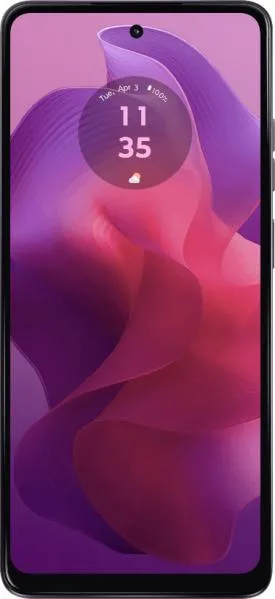
1. Specifications Comparison
| Feature | Realme C55 | Motorola Moto G24 | Practical Impact |
|---|---|---|---|
| Design | |||
| Dimensions (mm) | 165.6 x 75.9 x 7.9 | 163.5 x 74.5 x 8 | Realme C55 is slightly taller and wider. Negligible difference in thickness. |
| Weight (g) | 189.5 | 181 | Moto G24 is slightly lighter, potentially more comfortable for extended use. |
| Display | |||
| Size (inches) | 6.72 | 6.56 | Realme C55 has a slightly larger display. |
| Resolution | 1080 x 2400 | 720 x 1612 | Significant difference: Realme C55 offers much sharper visuals and text due to higher resolution (Full HD+ vs HD+). |
| Pixel Density (PPI) | 392 | 269 | Sharper and clearer images and text on the Realme C55. Moto G24's display may appear pixelated in comparison. |
| Refresh Rate | 90Hz | 90Hz | Both offer smooth scrolling and animations. |
| Peak Brightness (nits) | 680 | 537 | Realme C55 should be more visible in bright sunlight. |
| Display Type | IPS LCD | IPS LCD | Similar color accuracy and viewing angles expected. |
| Performance | |||
| Chipset | Helio G88 | Helio G85 | Marginally faster CPU on the G88, but real-world performance difference likely negligible. |
| CPU | Octa-core (2x2.0 GHz A75 & 6x1.8 GHz A55) | Octa-core (2x2.0 GHz A75 & 6x1.7 GHz A55) | Very similar CPU configurations. Performance differences likely minimal in everyday tasks. |
| GPU | Mali-G52 MC2 | Mali-G52 MC2 | Same GPU, but the G88's slightly higher clock speed may offer a minor gaming advantage for the Realme C55. |
| RAM (Listed Example) | 8GB/256GB | 8GB/128GB | More RAM and storage in the listed Realme C55 configuration, enabling smoother multitasking and more space for apps and files. Different variants exist for both phones. |
| OS | Android 13 | Android 14 | Moto G24 comes with a newer Android version out of the box, offering potential software features and security updates. |
| Camera | |||
| Main Camera | 64MP | 50MP | Realme C55 has a higher resolution main sensor. Image quality depends on factors beyond resolution, including sensor size and processing. |
| Other Cameras | 2MP Depth, 8MP Selfie | 8MP Selfie, 2MP Macro, 2MP Depth | Moto G24 adds a dedicated macro lens, but its usefulness depends on implementation quality. |
| Video Recording | 1080p@30/60fps | 1080p@30fps | Realme C55 can record 1080p video at 60fps for smoother footage. |
| Battery | |||
| Capacity (mAh) | 5000 | 5000 | Both phones have the same battery capacity, suggesting similar battery life. Real-world usage will vary. |
| Fast Charging | 33W | 15W | Significant difference: Realme C55 charges significantly faster. |
2. Key Differences Analysis
Realme C55 Advantages:
- Sharper Display: Significantly higher resolution display.
- Faster Charging: 33W fast charging vs 15W.
- Higher Resolution Main Camera: 64MP vs 50MP.
- 60fps Video Recording: Smoother video capture.
Motorola Moto G24 Advantages:
- Newer Android Version: Comes with Android 14, potentially offering longer software support and newer features.
- Lower Price: Positioned in a lower price bracket.
- Dedicated Macro Lens: May appeal to users interested in close-up photography, though quality is undetermined.
- Gyroscope Sensor: Enables features like image stabilization and VR experiences, absent in Realme C55.
3. User Profiles & Recommendations
Realme C55: Users who prioritize display quality, faster charging, and smoother video recording. Suitable for media consumption, gaming, and casual photography.
Motorola Moto G24: Budget-conscious users who prioritize a newer Android version and don't heavily rely on media consumption. Potentially good for basic tasks, communication, and light photography.
4. Decision Framework
Key Questions for Buyers:
- What is your budget? The Moto G24 is generally more affordable.
- How important is display quality? The Realme C55's sharper display is a major advantage.
- Do you need fast charging? The Realme C55 charges considerably faster.
Scenario-Based Recommendations:
- Limited Budget: Moto G24
- Media Consumption Focus: Realme C55
- Fast Charging Essential: Realme C55
My Choice: Realme C55
While the Moto G24 offers a newer Android version and a lower price, the Realme C55's superior display, faster charging, and better video recording capabilities are more compelling to me. The significantly sharper resolution is a crucial factor for a better user experience in everyday tasks and media consumption. The faster charging significantly reduces downtime. Although the Moto G24 having a newer OS version is a plus, the tangible benefits of the C55's display and charging outweigh the software advantage for my personal needs. I would be willing to pay slightly more for the improved user experience offered by the Realme C55.
