
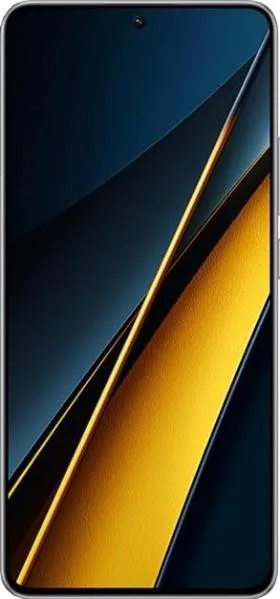
1. Specifications Comparison
| Feature | Realme C53 | Xiaomi Poco X6 Pro | Practical Impact |
|---|---|---|---|
| Design | |||
| Dimensions (mm) | 167.3 x 76.7 x 7.5 | 160.5 x 74.3 x 8.3 | Poco X6 Pro is slightly shorter, narrower, and thicker. Realme C53 is noticeably thinner. |
| Weight (g) | 182 | 186 | Negligible weight difference in real-world usage. |
| Display | |||
| Display Type | IPS LCD | AMOLED | Poco X6 Pro offers significantly better contrast, deeper blacks, and potentially better power efficiency with its AMOLED display. |
| Display Size (inches) | 6.74 | 6.67 | Negligible size difference; both offer large screen experiences. |
| Resolution | 1080 x 2400 | 1220 x 2712 | Poco X6 Pro has a sharper display with higher pixel density, resulting in crisper text and images. |
| Refresh Rate (Hz) | 90 | 120 | Poco X6 Pro provides a smoother, more fluid user experience, especially noticeable in scrolling and gaming. |
| Peak Brightness (nits) | 560 | 1800 | Poco X6 Pro is significantly brighter, offering better outdoor visibility and HDR performance. Its HDR10+ and Dolby Vision support also enhance visual quality. |
| Performance | |||
| Chipset | Unisoc Tiger T612 (12 nm) | Mediatek Dimensity 8300 Ultra (4 nm) | Poco X6 Pro boasts a vastly more powerful and efficient processor, enabling significantly better performance in demanding tasks and gaming, as well as improved battery life. |
| CPU | Octa-core (2x1.8 GHz Cortex-A75 & 6x1.8 GHz Cortex-A55) | Octa-core (1x3.35 GHz Cortex-A715 & 3x3.20 GHz Cortex-A715 & 4x2.20 GHz Cortex-A510) | The Poco X6 Pro's CPU architecture and clock speeds translate to much faster processing and smoother multitasking. |
| GPU | Mali-G57 | Mali G615-MC6 | Poco X6 Pro offers a more powerful GPU, resulting in significantly better gaming performance and graphics rendering. |
| RAM | 6GB/8GB | 8GB/12GB | Poco X6 Pro offers more RAM in its configurations, leading to better multitasking and app performance. |
| Camera | |||
| Main Camera (MP) | 50 | 64 | Poco X6 Pro has a higher resolution main sensor. Image quality differences will depend on sensor size and processing, which aren't fully detailed here. |
| Front Camera (MP) | 8 | 16 | Poco X6 Pro has a higher resolution front camera, potentially offering better selfie quality. |
| Video Recording | 1080p@30fps | 4K@30fps with EIS | Poco X6 Pro supports significantly higher resolution video recording with Electronic Image Stabilization (EIS) for smoother footage. |
| Camera Features | Basic | OIS, Ultra Stable Video, Night Mode | The Poco X6 Pro offers superior camera features like Optical Image Stabilization for steady photos and videos, and dedicated Night Mode for low-light photography. |
| Battery | |||
| Capacity (mAh) | 5000 | 5000 | Identical battery capacities. Actual battery life will depend on software optimization and chipset efficiency, favoring the Poco X6 Pro. |
| Other | |||
| NFC | No | Yes | Poco X6 Pro supports contactless payments and data transfer via NFC. |
| OS | Android 13 | Android 14 | Poco X6 Pro comes with a newer Android version out of the box, offering potential feature and security advantages. It also has longer promised OS support up to Android 17. |
2. Key Differences Analysis
Realme C53 Advantages:
- Thinner and Lighter (marginally): More pocketable for some users.
- Lower Price: Offers a more budget-friendly option.
Xiaomi Poco X6 Pro Advantages:
- Significantly Superior Performance: The Dimensity 8300 Ultra vastly outperforms the Unisoc Tiger T612.
- Much Better Display: AMOLED technology, higher resolution, refresh rate, and brightness. HDR10+ and Dolby Vision support.
- Enhanced Camera System: Higher resolution sensors, OIS, 4K video recording, and more advanced features.
- Newer OS with longer support: Android 14 with promised updates to Android 17.
- NFC: Enables contactless payments and data transfer.
Trade-offs:
- Price: The Poco X6 Pro is noticeably more expensive.
- Slight Thickness: The Poco X6 Pro is slightly thicker than the Realme C53
3. User Profiles & Recommendations
Realme C53:
- Budget-conscious users: Prioritize affordability over high-end features.
- Basic smartphone users: Primarily use their phone for calling, texting, social media, and light browsing.
Xiaomi Poco X6 Pro:
- Performance-focused users: Demand smooth multitasking, gaming, and demanding application usage.
- Multimedia enthusiasts: Enjoy high-quality content consumption, including videos and games.
- Photography enthusiasts: Value advanced camera features and high-quality image/video capture.
- Tech-savvy users: Appreciate the latest software and features.
4. Decision Framework
Key Questions:
- What is your budget? The price difference is significant.
- What are your primary smartphone usage patterns? Basic use vs. demanding tasks/gaming/multimedia.
- Which features are most important to you? Display quality, performance, camera, battery life, NFC.
Scenario-based Recommendations:
- Tight Budget, Basic Use: Realme C53
- Moderate Budget, Balanced Needs: Consider the Poco X6 Pro if within budget; otherwise explore other mid-range options.
- Performance and Features Priority: Xiaomi Poco X6 Pro
My Choice: Xiaomi Poco X6 Pro
While the Realme C53 offers a budget-friendly option, the Xiaomi Poco X6 Pro is the clear winner for me. The significantly improved performance, superior display, enhanced camera features, newer Android version with longer update support, and the inclusion of NFC justify the higher price. The minor trade-off in thickness is negligible compared to the significant gains in overall user experience. I prioritize a smooth and responsive phone with a great display and camera, and the Poco X6 Pro delivers on all fronts. The longer software support also ensures the phone will remain relevant for a longer period.
