
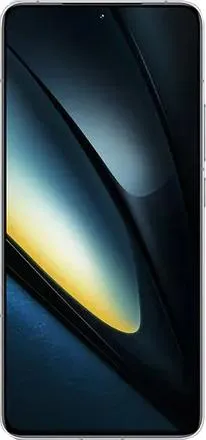
1. Specifications Comparison
| Feature | Realme C53 | Xiaomi Poco F6 Pro | Practical Impact |
|---|---|---|---|
| Design | |||
| Dimensions (mm) | 167.3 x 76.7 x 7.5 | 160.9 x 75 x 8.2 | Poco F6 Pro is slightly shorter, narrower, but thicker. Realme C53 is noticeably lighter. |
| Weight (g) | 182 | 209 | C53 is more comfortable for extended use and one-handed operation. |
| Build Material | Not specified | Not specified | Cannot compare build quality and durability without this information. |
| Display | |||
| Display Type | IPS LCD | AMOLED | Poco F6 Pro offers significantly better contrast, deeper blacks, and more vibrant colors. |
| Display Size (inches) | 6.74 | 6.67 | Negligible difference in screen real estate. |
| Resolution | 1080 x 2400 | 1440 x 3200 | Poco F6 Pro boasts much sharper visuals due to higher resolution. |
| Refresh Rate (Hz) | 90 | 120 | Poco F6 Pro provides smoother scrolling and animations. |
| Peak Brightness (nits) | 560 | 4000 | Poco F6 Pro is far more visible in direct sunlight. |
| HDR | No | HDR10+, Dolby Vision | Poco F6 Pro supports HDR content for a superior viewing experience with compatible content. |
| Performance | |||
| Chipset | Unisoc Tiger T612 (12 nm) | Qualcomm Snapdragon 8 Gen 2 (4 nm) | Poco F6 Pro offers vastly superior performance in demanding tasks, gaming, and multitasking. |
| CPU | Octa-core (2x1.8 GHz A75 & 6x1.8 GHz A55) | Octa-core (1x3.2 GHz X3 & 2x2.8 GHz A715 & 2x2.8 GHz A710 & 3x2.0 GHz A510) | Significant performance difference; Poco F6 Pro handles demanding applications with ease. |
| GPU | Mali-G57 | Adreno 740 | Poco F6 Pro delivers a significantly better gaming experience and handles graphics-intensive tasks smoothly. |
| RAM | 6GB/8GB | 12GB/16GB | Poco F6 Pro offers significantly more RAM, enabling smoother multitasking and preventing app closures in the background. |
| Camera | |||
| Main Camera | 50MP | 50MP (OV50E) | While both have the same resolution, the Poco F6 Pro utilizes a superior sensor (Omnivision OV50E) likely resulting in better image quality. |
| Video Recording | 1080p@30fps | Up to 8K@24fps | Poco F6 Pro offers substantially better video recording capabilities with higher resolution and frame rates. |
| Other Features | Optical Image Stabilization, Ultra Stable Video, Night Mode | Poco F6 Pro offers significantly more advanced camera features for superior image and video quality. | |
| Battery | |||
| Capacity (mAh) | 5000 | 5000 | Similar battery capacity. Real-world battery life will depend on usage and optimization. |
| Charging Speed | Not Specified | Not Specified | Cannot compare charging speeds without this information. |
2. Key Differences Analysis
Realme C53 Advantages:
- Lighter and Thinner: More comfortable for one-handed use and portability.
- Lower Price: More budget-friendly.
Xiaomi Poco F6 Pro Advantages:
- Significantly More Powerful: Superior performance for gaming, multitasking, and demanding applications.
- Higher Quality Display: Brighter, sharper, and more vibrant AMOLED screen with HDR support.
- More Advanced Camera System: Better image quality, video recording capabilities, and features like OIS.
- Faster Refresh Rate: Smoother scrolling and animations.
- More RAM: Better multitasking and performance.
- Newer OS with Longer Support: Android 14 with guaranteed updates to 17.
- NFC: Enables contactless payments and other NFC functionalities.
3. User Profiles & Recommendations
Realme C53: Budget-conscious users who prioritize basic functionality, calling, messaging, social media, and light web browsing.
Xiaomi Poco F6 Pro: Users who demand high performance for gaming, content creation, multitasking, and a premium multimedia experience. Users who value a high-quality display and camera.
4. Decision Framework
Key Questions for Buyers:
- What is your budget? The Realme C53 is significantly more affordable.
- What are your primary smartphone usage patterns? For basic tasks, the C53 suffices. For demanding tasks and gaming, the Poco F6 Pro is necessary.
- How important are display quality, camera performance, and overall speed? The Poco F6 Pro significantly outperforms the C53 in these areas.
My Choice: Xiaomi Poco F6 Pro
While the Realme C53 offers an attractive price point, the Xiaomi Poco F6 Pro is the clear winner for me. Its superior performance, stunning display, advanced camera features, and future-proofed software make it a significantly better long-term investment. The price difference is justified by the substantial upgrade in overall user experience. The smoother refresh rate, vastly improved graphical capabilities, and the promise of longer software updates solidify my decision. While the C53 is a decent budget option, the Poco F6 Pro provides a flagship-level experience at a mid-range price. I value performance, a quality display, and a good camera, making the Poco F6 Pro the better choice despite the higher price.
