1. Specifications Comparison
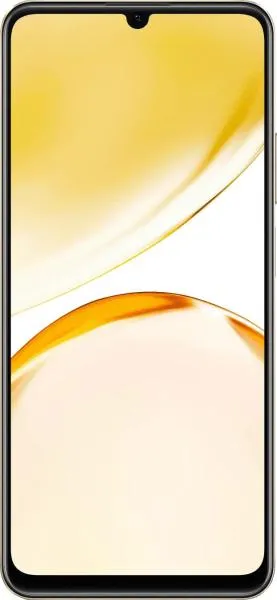
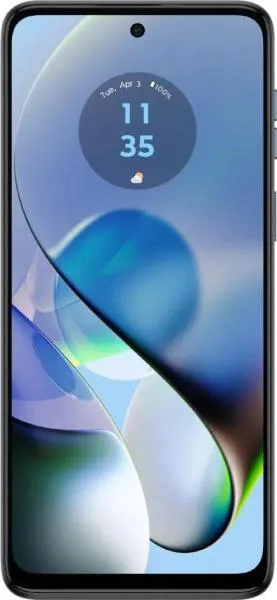
| Feature | Realme C53 | Motorola Moto G54 | Practical Impact |
|---|---|---|---|
| Design | |||
| Dimensions (mm) | 167.3 x 76.7 x 7.5 | 161.6 x 73.8 x 8 | Moto G54 is slightly smaller and may feel more comfortable in hand. |
| Weight (g) | 182 | 177 | Negligible weight difference. |
| Display | |||
| Display Size (inches) | 6.74 | 6.5 | C53 offers a larger screen for media consumption but may be less pocketable. |
| Resolution (pixels) | 1080 x 2400 | 1080 x 2400 | Same resolution, but G54 has a slightly higher pixel density due to smaller size, resulting in sharper images. |
| Refresh Rate (Hz) | 90 | 120 | G54's 120Hz display will feel smoother for scrolling and gaming. |
| Display Type | IPS LCD | IPS LCD | Both use IPS LCD technology; expect good color accuracy and viewing angles but lower contrast than OLED. |
| Performance | |||
| Chipset | Unisoc Tiger T612 (12 nm) | Mediatek Dimensity 7020 (6 nm) | G54's Dimensity 7020 is significantly more powerful, offering better performance for demanding tasks and gaming. The 6nm process also suggests better power efficiency. |
| CPU | Octa-core (2x1.8 GHz Cortex-A75 & 6x1.8 GHz Cortex-A55) | Octa-core (2x2.2 GHz Cortex-A78 & 6x2.0 GHz Cortex-A55) | G54 has faster and more powerful CPU cores, resulting in noticeable performance improvements. |
| GPU | Mali-G57 | IMG BXM-8-256 | G54's GPU is more capable for gaming and graphics-intensive applications. |
| RAM (GB) | 6/8 | 8/12 | Both offer ample RAM for multitasking, but G54's higher RAM options provide headroom for future-proofing. |
| Camera | |||
| Main Camera (MP) | 50 | 50 | Megapixel count is similar, but image quality depends on sensor size and processing, which is not fully detailed here. |
| Selfie Camera (MP) | 8 | 16 | G54 has a significantly better selfie camera for higher resolution photos and potentially better video calls. |
| Video Recording | 1080p@30fps | 1080p@30/60fps | G54 offers more video recording options, including 60fps for smoother footage. |
| Optical Stabilisation | No | Yes | G54's optical stabilization will result in significantly smoother videos and less blurry photos in low light. |
| Battery | |||
| Capacity (mAh) | 5000 | 5000 | Similar battery capacity, but actual battery life depends on software optimization and chipset efficiency. G54's more efficient processor might provide longer battery life. |
| Other | |||
| NFC | No | Yes | G54 supports contactless payments and data transfer via NFC. |
2. Key Differences Analysis
Realme C53 Advantages:
- Larger Display: Better for media consumption.
Motorola Moto G54 Advantages:
- Significantly Better Performance: Smoother multitasking, better gaming, faster app loading.
- Higher Refresh Rate Display: Smoother and more responsive user interface.
- Better Cameras: Higher resolution selfie camera, optical image stabilization for photos and videos, 60fps video recording.
- NFC: Enables contactless payments and other NFC functionalities.
- More Powerful GPU: Better gaming experience.
Trade-offs:
- C53: Larger display but lower performance, lacks key features like NFC.
- G54: Smaller display but significantly better overall performance and features.
3. User Profiles & Recommendations
Realme C53: Budget-conscious users who prioritize a large display for media consumption and basic tasks like browsing and social media. Not suitable for demanding users or gamers.
Motorola Moto G54: Users who want a well-rounded phone with good performance, a smooth display, a capable camera system, and features like NFC. Suitable for moderate gaming, multitasking, and everyday use.
4. Decision Framework
Key Questions:
- What is your budget? Both are mid-range, but specific pricing should be compared.
- What is your primary use case? (e.g., media consumption, gaming, photography)
- Which features are essential to you? (e.g., NFC, high refresh rate display, performance)
Scenario-Based Recommendations:
- Limited Budget, Basic Use: Realme C53
- Balanced Performance and Features: Motorola Moto G54
My Choice: Motorola Moto G54
While the Realme C53 offers a larger display, the Motorola Moto G54 provides a significantly better overall package. The performance difference due to the superior processor and GPU is substantial, impacting daily usability and future-proofing. The inclusion of NFC, a higher refresh rate display, optical image stabilization, and a better selfie camera makes the G54 a more versatile and capable device. The slightly smaller display size is a minor trade-off for the substantial gains in performance and features. Even if the price is a bit higher, the G54 provides better value in the long run due to its superior capabilities and longevity.
