1. Specifications Comparison
| Feature | Realme 11 Pro+ | Google Pixel 8a | Practical Impact |
|---|---|---|---|
| Design | |||
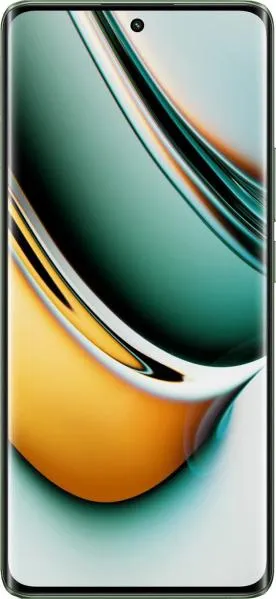
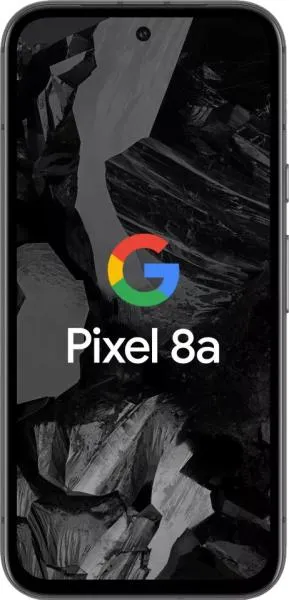
| Dimensions (mm) | 161.6 x 73.9 x 8.2 | 152.1 x 72.7 x 8.9 | Pixel 8a is noticeably smaller and slightly thicker. More pocketable, but potentially less screen real estate. |
| Weight (g) | 183 | 188 | Negligible weight difference in real-world usage. |
| Display | |||
| Size (inches) | 6.7 | 6.1 | Realme offers a significantly larger display for more immersive content consumption. |
| Resolution (px) | 1080 x 2412 | 1080 x 2400 | Nearly identical sharpness; difference is imperceptible. |
| Type | AMOLED, 1B colors | OLED | Realme's AMOLED with 1B colors likely offers richer, more vibrant visuals compared to the standard OLED. |
| Refresh Rate (Hz) | 120 | 120 | Both offer smooth scrolling and animations. |
| Peak Brightness (nits) | 950 | 2000 (unverified from spec sheet) | Pixel 8a's claimed 2000 nits peak brightness (needs verification as it's significantly higher than typical OLEDs) would provide superior outdoor visibility. |
| Performance | |||
| Chipset | Mediatek Dimensity 7050 (6 nm) | Google Tensor G3 (4 nm) | Tensor G3, built on a smaller process node, should offer better performance and power efficiency. It's also optimized for AI tasks. |
| CPU | Octa-core (2x2.6 GHz Cortex-A78 & 6x2.0 GHz Cortex-A55) | Nona-core (1x3.0 GHz Cortex-X3 & 4x2.45 GHz Cortex-A715 & 4x2.15 GHz Cortex-A510) | Pixel 8a boasts a more powerful and modern CPU architecture, leading to faster app loading, smoother multitasking, and better handling of demanding tasks. |
| GPU | Mali-G68 MC4 | Immortalis-G715s MC10 | Pixel 8a's GPU should deliver significantly better gaming performance and graphics rendering. |
| RAM (GB) | 8 (in this variant) | 8 (in this variant) | Same RAM capacity in the compared variants. |
| OS Updates | Up to Android 15 | Up to Android 21 | Pixel 8a will receive significantly longer software updates and security patches, ensuring a longer lifespan and up-to-date features. |
| Camera | |||
| Main Camera (MP) | 200 | 64 | Realme boasts higher resolution, but Pixel's computational photography prowess often outperforms higher megapixel counts. Image quality comparison requires real-world testing. |
| Ultrawide (MP) | 8 | 13 | Pixel 8a has a higher resolution ultrawide, potentially capturing more detail. |
| Selfie Camera (MP) | 32 | 13 | Realme has a much higher resolution selfie camera. |
| Battery | |||
| Capacity (mAh) | 5000 | 4492 | Realme has a larger battery capacity, suggesting potentially longer battery life. However, real-world usage depends on optimization and chip efficiency. |
2. Key Differences Analysis
Realme 11 Pro+ Advantages:
- Larger Display: More immersive experience for media consumption and gaming.
- Higher Resolution Main & Selfie Camera: Potentially more detailed photos, although real-world results depend on processing.
- Larger Battery: Potentially longer battery life.
Google Pixel 8a Advantages:
- Significantly More Powerful Processor and GPU: Smoother performance for demanding tasks and gaming.
- Longer Software Support: Guaranteed updates and security patches for a longer period.
- Superior Camera Software: Pixel's computational photography generally produces excellent image quality.
- More Compact Form Factor: Easier to handle and carry.
3. User Profiles & Recommendations
Realme 11 Pro+: Users prioritizing a large display, long battery life, and high-resolution cameras on a budget. Suitable for media consumption, casual gaming, and social media.
Google Pixel 8a: Users prioritizing performance, software updates, camera quality (especially in challenging conditions), and a compact form factor. Suitable for power users, gamers, photography enthusiasts, and those who value long-term software support.
4. Decision Framework
Key Questions for Buyers:
- What screen size do you prefer? Larger screen for immersive content or smaller for one-handed use?
- How important is long-term software support and performance? Prioritize Pixel 8a if these are crucial.
- What is your budget and camera usage? Realme offers a compelling price-to-spec ratio, but Pixel excels in computational photography.
Scenario-Based Recommendations:
- Heavy User/Gamer: Pixel 8a
- Media Consumption Focused: Realme 11 Pro+
- Budget-Conscious Buyer: Realme 11 Pro+ (depending on specific pricing)
- Photography Enthusiast: Pixel 8a
My Choice: Google Pixel 8a
While the Realme 11 Pro+ offers a larger display and battery, the Google Pixel 8a's superior performance, significantly longer software support, and renowned camera capabilities make it the better overall choice for me. The more powerful Tensor G3 chip ensures smooth performance for years to come, and the commitment to long-term updates is crucial for security and new features. While I appreciate a large display, the Pixel 8a's more compact size is preferable for daily use. The slightly smaller battery is likely offset by the Tensor G3's efficiency. Ultimately, I prioritize a phone that will remain fast, secure, and up-to-date for an extended period.
