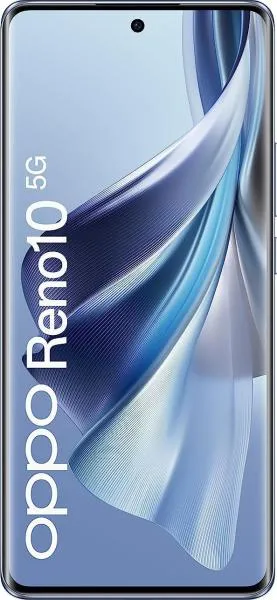

1. Specifications Comparison
| Feature | Oppo Reno10 | Motorola Razr 50 | Practical Impact |
|---|---|---|---|
| Design | |||
| Dimensions (mm) | 162.4 x 74.2 x 8 | 171.3 x 74 x 7.3 | Razr 50 is taller and slightly thinner when unfolded, but significantly thicker when folded due to its foldable design. Reno10 is more pocketable in traditional sense. |
| Weight (g) | 185 | 188.4 | Negligible weight difference in practical use. |
| Foldable | No | Yes | Razr 50 offers a compact folded size for portability, but introduces a potential crease and durability concerns. Reno10 offers a traditional, potentially more robust design. |
| Display | |||
| Size (inches) | 6.7 | 6.9 | Razr 50 offers a slightly larger screen area for media consumption. |
| Type | AMOLED, 120Hz | Foldable LTPO AMOLED, 120Hz | Both offer smooth scrolling and vibrant colors. Razr 50's LTPO panel potentially offers better power efficiency due to variable refresh rate. Foldable display offers unique form factor but potential crease visibility. |
| Peak Brightness (nits) | 950 | 3000 | Razr 50 significantly brighter, ensuring better outdoor visibility. |
| Resolution | 1080x2412 | 1080x2640 | Similar pixel density due to Razr 50's larger size; both offer sharp visuals. Razr's slightly taller aspect ratio might be better for scrolling content. |
| Performance | |||
| Chipset | Mediatek Dimensity 7050 (6 nm) | Mediatek Dimensity 7300X (4 nm) | Razr 50's newer and more efficient 4nm chipset likely provides better performance and battery life. |
| CPU | Octa-core (2x2.6 GHz Cortex-A78 & 6x2.0 GHz Cortex-A55) | Octa-core (4x2.5 GHz Cortex-A78 & 4x2.0 GHz Cortex-A55) | Razr 50 likely offers faster processing speeds due to higher clock speeds and more powerful CPU cores. |
| GPU | Mali-G68 MC4 | Mali-G615 MC2 | While architectural differences exist, determining the superior GPU requires further benchmarks. Expect Razr 50 to handle graphics slightly better due to newer chipset. |
| RAM | 8GB | 12GB | Razr 50's larger RAM enables better multitasking and app switching. |
| Storage | 256GB | 512GB | Razr 50 offers double the storage, beneficial for users who store lots of media or apps. |
| Battery | |||
| Capacity (mAh) | 5000 | 4200 | Reno10 has a significantly larger battery capacity, potentially leading to longer battery life despite Razr's more efficient chipset. |
| Camera | |||
| Video Capabilities | 4K@30fps, 1080p up to 480fps | 4K@30fps, 1080p up to 60fps | Reno10 offers more versatile slow-motion video recording options. Detailed camera sensor specifications are needed for comprehensive comparison. |
2. Key Differences Analysis
Oppo Reno10 Advantages:
- Larger Battery: Potentially longer battery life.
- More versatile slow-motion video: Caters to specific content creation needs.
- Potentially More Durable: Traditional slab design might be less prone to damage compared to a foldable.
Motorola Razr 50 Advantages:
- Foldable Design: Compact when folded, offering unique portability.
- More Powerful Performance: Newer, more efficient chipset and more RAM.
- Brighter Display: Superior outdoor visibility.
- Larger Storage: More space for apps and media.
3. User Profiles & Recommendations
Oppo Reno10: Users prioritizing battery life, traditional smartphone experience, and specific slow-motion video recording capabilities. Suitable for users on a tighter budget who don't need the latest performance.
Motorola Razr 50: Users valuing portability, novelty of a foldable design, and demanding performance for gaming or multitasking. Ideal for users who want a compact phone without sacrificing screen size.
4. Decision Framework
Key Questions for Buyers:
- Importance of portability vs. battery life? A foldable phone offers portability, but might compromise on battery capacity.
- Preference for a traditional or novel design? Foldable phones introduce potential crease and durability concerns.
- Performance needs and budget? The Razr 50 offers superior performance, but likely at a higher price point than the Reno10.
My Choice: Motorola Razr 50
While the Oppo Reno10 offers a larger battery and more versatile slow-motion video, the Motorola Razr 50's foldable design, significantly improved performance, brighter display, and larger storage are more compelling to me. The portability offered by the Razr 50, along with its modern chipset and ample RAM, outweighs the battery life concerns. The brighter display is a significant advantage for outdoor use. I'm willing to adapt to potential foldable phone quirks and slightly shorter battery life for the unique form factor and overall performance boost. The increased storage is also valuable for my usage. Finally, as both are in the "medium price" range, the price difference might not be significant enough to outweigh the Razr 50's advantages.
