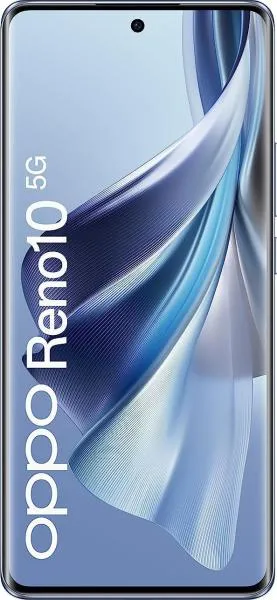

1. Specifications Comparison
| Feature | Oppo Reno10 | Google Pixel 9 Pro | Practical Impact |
|---|---|---|---|
| Design | |||
| Dimensions | 162.4 x 74.2 x 8 mm | 152.8 x 72 x 8.5 mm | Pixel 9 Pro is slightly smaller and thinner but heavier. Reno10 might feel lighter in hand. |
| Weight | 185 g | 199 g | Pixel 9 Pro's extra weight might be due to higher quality materials or a larger battery despite lower capacity. Reno 10 will be more comfortable to hold for long periods. |
| Display | |||
| Size | 6.7" | 6.3" | Reno10 offers a larger screen for media consumption, while Pixel 9 Pro's smaller size might be preferable for one-handed use. |
| Type | AMOLED, 120Hz | LTPO OLED, 120Hz | Both offer smooth scrolling and animations. LTPO on Pixel allows for more granular refresh rate control, potentially saving battery. |
| Resolution | 1080 x 2412 | 1280 x 2856 | Pixel 9 Pro has a sharper display with higher pixel density (495 ppi vs 394 ppi), resulting in clearer text and images. |
| Peak Brightness | 950 nits | 3000 nits | Pixel 9 Pro offers significantly higher peak brightness, ensuring excellent outdoor visibility even in direct sunlight. |
| Performance | |||
| Chipset | Dimensity 7050 (6 nm) | Google Tensor G4 (4 nm) | Tensor G4, being newer and built on a smaller process node, is likely to offer significantly better performance and power efficiency. |
| CPU | Octa-core (2x2.6 GHz Cortex-A78 & 6x2.0 GHz Cortex-A55) | Octa-core (1x3.1 GHz Cortex-X4 & 3x2.6 GHz Cortex-A720 & 4x1.92 GHz Cortex-A520) | Tensor G4's architecture, featuring a powerful Cortex-X4 core, suggests a substantial performance advantage over Dimensity 7050. |
| GPU | Mali-G68 MC4 | Mali-G715 MC7 | Pixel 9 Pro's GPU should offer noticeably better graphics performance for demanding games and applications. |
| RAM | 8GB | 16GB | Pixel 9 Pro's double the RAM enables smoother multitasking and better handling of demanding apps. |
| Battery | |||
| Capacity | 5000 mAh | 4700 mAh | While Reno10 has a slightly larger battery, the Tensor G4's efficiency could result in comparable or even better battery life for the Pixel 9 Pro. |
| Camera | No detailed specs available | No detailed specs available | Comparison not possible |
| Software | |||
| OS | Android 13 | Android 14 | Pixel 9 Pro launches with the latest Android version and will receive longer software updates directly from Google. |
2. Key Differences Analysis
Oppo Reno10 Advantages:
- Larger Display: More immersive experience for media consumption.
- Potentially Lighter: More comfortable for extended use.
- Lower Price: Offers good value for its specifications.
Google Pixel 9 Pro Advantages:
- Significantly Higher Performance: Smoother operation, better gaming, faster app loading.
- Sharper Display: Clearer visuals, more detailed images and text.
- Much Brighter Display: Excellent outdoor visibility.
- More RAM: Superior multitasking, handles demanding apps with ease.
- Longer Software Support: Guaranteed updates for a longer period.
- More Advanced Camera Features: 8K video recording, HDR, OIS, EIS.
3. User Profiles & Recommendations
Oppo Reno10: Budget-conscious users who prioritize a large display for media consumption and casual gaming.
Google Pixel 9 Pro: Users who demand top-tier performance, the latest software, a long support cycle, a bright and beautiful display, and cutting-edge camera technology. Power users, gamers, and photography enthusiasts would appreciate the Pixel 9 Pro.
4. Decision Framework
Key Questions for Buyers:
- What is your budget? The Pixel 9 Pro is significantly more expensive.
- What are your performance requirements? For demanding tasks, the Pixel 9 Pro is the clear winner.
- How important is software support and camera quality to you? Pixel offers longer updates and advanced camera features.
My Choice: Google Pixel 9 Pro
While the Oppo Reno10 offers a larger display and potentially lower price, the Pixel 9 Pro's superior performance, brighter and sharper display, longer software support, and advanced camera capabilities make it the better overall device for me. The performance difference between the Dimensity 7050 and Tensor G4, coupled with double the RAM, would result in a significantly better user experience in the long run. I prioritize performance, software updates, and a high-quality display, making the Pixel 9 Pro the clear choice despite the higher price. The significantly brighter display is crucial for outdoor use, and the promise of extended software updates ensures a longer device lifespan. While I acknowledge the Reno10's appeal for budget-conscious buyers, the Pixel 9 Pro's advantages in crucial areas outweigh the price difference for my personal needs.
