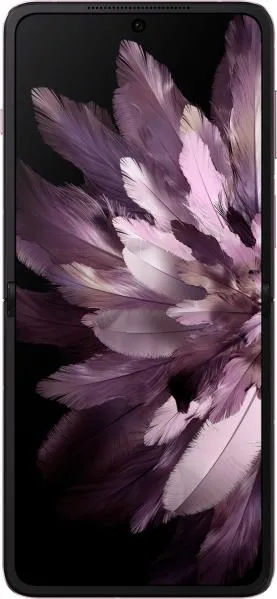
1. Specifications Comparison
| Feature | Oppo Find N3 Flip | Phone 8 | Practical Impact |
|---|---|---|---|
| Design | |||
| Form Factor | Foldable | Standard | Flip phone offers portability and novelty; standard phone is more familiar. |
| Dimensions (mm) | 166.4 x 75.8 x 7.8 | 162 x 75.1 x 8.7 | Folded, the Flip is significantly smaller; unfolded, sizes are comparable but Flip is thinner. |
| Weight (g) | 198 | 191 | Negligible weight difference in real-world usage. |
| Display | |||
| Size (inches) | 6.8 | 6.78 | Virtually identical screen real estate. |
| Type | Foldable LTPO AMOLED | LTPO AMOLED | Foldable display allows for compact storage; Phone 8 has a potentially more durable traditional screen. |
| Resolution | 1080 x 2520 | 1264 x 2780 | Phone 8 has a sharper display due to higher resolution. |
| Peak Brightness (nits) | 1600 | 6000 | Phone 8 offers significantly better outdoor visibility in bright sunlight. |
| Refresh Rate (Hz) | 120 | 120 | Both offer smooth scrolling and animations. |
| Performance | |||
| Chipset | Mediatek Dimensity 9200 (4 nm) | Qualcomm Snapdragon 7+ Gen 3 (4 nm) | Both are powerful chips, but benchmarks would be needed to determine real-world performance differences. |
| CPU | Octa-core (1x3.05 GHz Cortex-X3 & 3x2.85 GHz Cortex-A715 & 4x1.80 GHz Cortex-A510) | Octa-core (1x2.8 GHz Cortex-X4 & 4x2.6 GHz Cortex-A720 & 3x1.9 GHz Cortex-A520) | Slight architectural differences; real-world performance depends on optimization and specific tasks. |
| GPU | Immortalis-G715 MC11 | Adreno 732 | Gaming performance differences require further benchmarking. |
| RAM | 12GB | 12GB | Both offer ample RAM for multitasking. |
| Storage | 512GB | 512GB | Identical storage capacity for both phones. |
| Battery | |||
| Capacity (mAh) | 4300 | 5500 | Phone 8 likely offers significantly longer battery life. |
| Camera | |||
| Video Capabilities | 4K@30fps (EIS), 1080p@ various fps (EIS) | 4K@30/60fps (OIS, EIS), 1080p@ various fps (OIS, EIS) | Phone 8 boasts OIS for potentially smoother video recording and higher frame rate 4K recording. Detailed camera sensor specifications are missing for a comprehensive comparison. |
2. Key Differences Analysis
Oppo Find N3 Flip Advantages:
- Portability: The foldable design offers significant portability advantages.
- Novelty: The flip form factor is unique and can be a conversation starter.
Phone 8 Advantages:
- Larger Battery: The 5500mAh battery likely provides significantly longer usage time.
- Brighter Display: The 6000 nit peak brightness ensures excellent outdoor visibility.
- Sharper Display: Higher resolution results in clearer images and text.
- Potentially Superior Video Recording: OIS and higher frame rate 4K recording suggest better video quality.
Trade-offs:
- Foldability vs. Durability: The Flip's foldable screen might be more prone to damage compared to the Phone 8's traditional screen.
- Battery Life vs. Portability: The Flip prioritizes portability over battery life.
3. User Profiles & Recommendations
Oppo Find N3 Flip: Ideal for users who prioritize portability and novelty. Suitable for those who value a compact phone that easily fits in pockets or small bags.
Phone 8: Suitable for users who prioritize battery life, screen quality, and potentially superior video recording capabilities. Good for power users, content consumers, and those who spend considerable time outdoors.
4. Decision Framework
Key Questions for Buyers:
- How important is portability to you?
- How much do you value battery life?
- What is your budget? (Missing price information limits specific recommendations based on value.)
Scenario-Based Recommendations:
- Frequent Traveler: Oppo Find N3 Flip for its compact size.
- Heavy Media Consumer: Phone 8 for its larger battery and brighter, sharper display.
- Budget-Conscious User: Requires price information to determine the best value option.
My Choice: Phone 8
While the Oppo Find N3 Flip's foldable design is intriguing, the Phone 8's superior battery life, significantly brighter and sharper display, and potentially better video recording capabilities are more compelling to me. I prioritize a phone that can handle a full day of use without needing a recharge, offers a great viewing experience in various lighting conditions, and captures high-quality videos. The slight increase in size and the traditional form factor are acceptable trade-offs for these advantages. The lack of specific camera sensor details prevents a definitive camera quality assessment, but the presence of OIS on the Phone 8 suggests an advantage in video stabilization. Ultimately, the Phone 8 seems to offer a more well-rounded package for my needs.
