
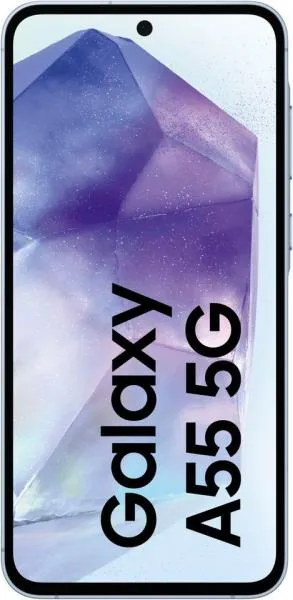
Oppo Find N2 Flip vs. Samsung Galaxy A55: A Tech Journalist's Deep Dive
Let's dissect the Oppo Find N2 Flip and Samsung Galaxy A55, two compelling mid-range smartphones with distinct personalities. We'll go beyond the spec sheets to understand what these devices offer in real-world scenarios.
1. Specifications Breakdown
| Feature | Oppo Find N2 Flip | Samsung Galaxy A55 | Real-World Implications |
|---|---|---|---|
| Design | |||
| Form Factor | Foldable | Traditional Slab | Find N2 Flip offers portability and a unique form factor; A55 provides a familiar, widely-accepted design. |
| Dimensions (mm) | 166.2 x 75.2 x 7.5 | 161.1 x 77.4 x 8.2 | Find N2 Flip is more compact when folded; A55 is thinner when unfolded. |
| Weight (g) | 191 | 213 | Find N2 Flip is noticeably lighter, improving one-handed use. |
| Display | |||
| Type | Foldable LTPO AMOLED | Super AMOLED | Both offer vibrant colors and deep blacks; LTPO potentially allows for more granular refresh rate control. |
| Size (inches) | 6.8 | 6.6 | Find N2 Flip provides a larger main screen for immersive content. |
| Resolution (px) | 1080 x 2520 | 1080 x 2340 | Find N2 Flip has a slightly higher resolution, resulting in sharper text and images. |
| Refresh Rate (Hz) | 120 | 120 | Both offer smooth scrolling and animations. |
| Performance | |||
| Chipset | Dimensity 9000+ | Exynos 1480 | Find N2 Flip boasts a more powerful processor, promising superior performance in demanding tasks. |
| CPU | Octa-core (X2, A710, A510) | Octa-core (A78, A55) | Find N2 Flip's CPU architecture suggests a performance advantage, especially in single-core operations. |
| GPU | Mali-G710 MC10 | Xclipse 530 | Find N2 Flip likely offers better gaming and graphics performance. |
| RAM (GB) | 8 | 8/12 | A55 offers a 12GB RAM option for enhanced multitasking. |
| Camera | |||
| Main Camera (MP) | 50 | 50 | Comparable main camera resolution; real-world image quality will depend on sensor and processing. |
| Selfie Camera (MP) | 32 | 32 | Comparable selfie camera resolution. |
| Battery Life | |||
| Capacity (mAh) | 4300 | 5000 | A55 has a significantly larger battery, likely resulting in longer battery life. |
2. Key Insights
The Find N2 Flip is a statement piece, prioritizing innovation and portability with its foldable design and powerful chipset. Its compact size when folded and lighter weight enhance daily usability. The Galaxy A55, on the other hand, focuses on fundamentals with a larger battery, potentially longer software updates (Android 14 to 18 vs. 13 to 17), and a more conventional design.
3. User Profiles and Recommendations
Find N2 Flip: Ideal for users who value cutting-edge technology, portability, and a unique form factor. The powerful chipset makes it suitable for demanding tasks and gaming.
Galaxy A55: Best suited for users who prioritize battery life, a reliable user experience, and a more budget-friendly option. Its longer software support makes it a good long-term investment. The superior camera features, including optical image stabilization and a wider range of video recording capabilities, will appeal to photography and videography enthusiasts.
4. Buying Decision Framework
- Is a foldable design a priority? If yes, the Find N2 Flip is the clear choice.
- How important is battery life? If all-day battery is crucial, the Galaxy A55's larger battery likely wins.
- What's your budget? The Find N2 Flip generally commands a higher price due to its foldable technology.
My Choice: Samsung Galaxy A55
While the Find N2 Flip is undeniably cool, the Galaxy A55 better suits my needs. As a tech journalist, I need reliable all-day battery life, and the A55's 5000mAh battery delivers that. The slightly longer software update cycle also provides peace of mind. Although I appreciate the Find N2 Flip's innovation, the A55's combination of practicality, performance, and price makes it the more compelling choice for me. While not as flashy, the A55 offers a more robust and well-rounded feature set for everyday use. The improved camera system on the A55, particularly the inclusion of optical image stabilization, is a significant advantage for capturing high-quality photos and videos. This feature is essential for documenting events and capturing clear visuals for my articles.
