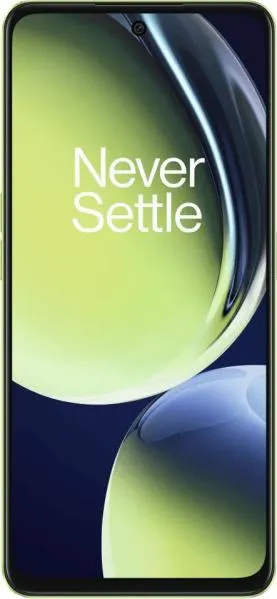
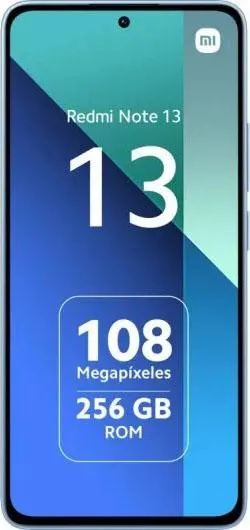
1. Specifications Comparison
| Feature | OnePlus Nord CE 3 Lite | Xiaomi Redmi Note 13 4G | Practical Impact |
|---|---|---|---|
| Design | |||
| Dimensions (mm) | 165.5 x 76 x 8.3 | 162.3 x 75.6 x 8 | Redmi Note 13 4G is slightly smaller and lighter. Negligible difference in practical use. |
| Weight (g) | 195 | 188.5 | Redmi Note 13 4G is slightly lighter. Negligible difference in practical use. |
| Fingerprint Sensor | Side-mounted | Under-display | Preference based, side-mounted often faster, under-display more modern looking. |
| Display | |||
| Display Type | IPS LCD | AMOLED | AMOLED offers deeper blacks, vibrant colors, and better power efficiency in dark mode. LCD might be preferable in bright sunlight. |
| Display Size (inches) | 6.72 | 6.67 | Negligible difference in screen real estate. |
| Resolution | 1080 x 2400 | 1080 x 2400 | Same resolution, sharpness will be similar. |
| Refresh Rate (Hz) | 120 | 120 | Both offer smooth scrolling and animations. |
| Peak Brightness (nits) | 680 | 1800 | Redmi Note 13 4G significantly brighter, improving outdoor visibility. |
| Performance | |||
| Chipset | Snapdragon 695 5G | Snapdragon 685 4G | 695 offers slightly better CPU performance and 5G connectivity; 685 is a capable 4G chip. |
| CPU | Octa-core (2x2.2 GHz & 6x1.7 GHz) | Octa-core (4x2.8 GHz & 4x1.9 GHz) | Redmi might have a slight edge in multi-core performance due to faster Cortex-A73 cores. |
| GPU | Adreno 619 | Adreno 610 | 619 provides a slight advantage in graphics performance. |
| RAM (GB) | 8 | 8 | Same RAM capacity, multitasking performance should be similar. |
| Camera | |||
| Main Camera (MP) | 108 | 108 | Similar resolution, image quality depends on sensor and processing. |
| Other Cameras | 2MP Depth, 2MP Macro | 2MP Depth, 8MP Wide Angle + Macro | Redmi offers a usable ultrawide lens, a significant advantage over OnePlus' macro lens. |
| Video Recording | 1080p@30fps | 1080p@30fps | Same video resolution and frame rate. Redmi lists 60fps slow-motion, OnePlus lists 120fps. |
| Battery | |||
| Capacity (mAh) | 5000 | 5000 | Same battery capacity, actual battery life depends on optimization and usage. |
2. Key Differences Analysis
OnePlus Nord CE 3 Lite Advantages:
- 5G Connectivity: Future-proofs the device.
- Slightly better GPU: Minor advantage in gaming and graphics-intensive tasks.
Xiaomi Redmi Note 13 4G Advantages:
- AMOLED Display: Superior contrast, colors, and power efficiency in dark mode.
- Significantly Brighter Display: Excellent outdoor visibility.
- Ultrawide Camera: Adds versatility for landscape and group photos.
- Potentially Lower Price: Depending on configuration and market.
Trade-offs:
- OnePlus: 5G connectivity comes at the cost of potentially higher price and slightly lower CPU performance compared to Redmi's Cortex-A73 cores.
- Redmi: Lack of 5G might be a limitation for some users. Slightly less powerful GPU.
3. User Profiles & Recommendations
OnePlus Nord CE 3 Lite: Users who prioritize 5G connectivity, decent performance, and a long-lasting battery. Suitable for general use, light gaming, and future-proofing.
Xiaomi Redmi Note 13 4G: Users who prioritize display quality, camera versatility (ultrawide lens), and value for money. Best for content consumption, social media, casual photography, and users who don't need 5G yet.
4. Decision Framework
Key Questions for Buyers:
- Is 5G essential now or in the near future?
- Do you prioritize display quality and camera versatility over raw performance?
- What is your budget?
Scenario-Based Recommendations:
- Limited Budget, No 5G Needed: Redmi Note 13 4G is the better value option.
- 5G is Crucial: OnePlus Nord CE 3 Lite is the clear choice.
- Balanced Needs, Moderate Budget: The decision becomes more subjective, leaning towards Redmi for its superior display and camera versatility.
My Choice: Xiaomi Redmi Note 13 4G
Reasoning: While 5G is becoming increasingly important, it's not essential for everyone. The Redmi Note 13 4G offers a significantly better display experience with its AMOLED panel and superior brightness. The inclusion of an ultrawide camera adds considerable versatility for everyday photography. The slightly lower CPU and GPU performance compared to the OnePlus Nord CE 3 Lite is unlikely to be noticeable in everyday use for my needs. Considering these factors, along with the potentially lower price, the Redmi Note 13 4G provides a more compelling overall package for my personal use. I prioritize display quality and camera versatility over a slight bump in processing power and future 5G connectivity, which I don't need immediately.
