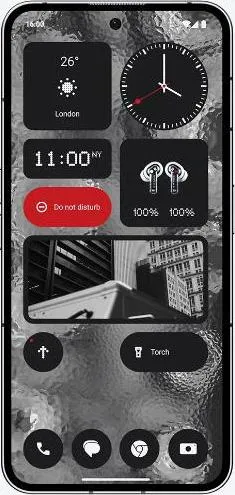

1. Specifications Comparison
| Feature | Category | Nothing Phone (2) | ZTE nubia Z60 Ultra | Practical Impact |
|---|---|---|---|---|
| Dimensions | Design | 162.1 x 76.4 x 8.6 mm (201.2g) | 164 x 76.4 x 8.8 mm (246g) | The Z60 Ultra is slightly larger and noticeably heavier. The extra weight might be a factor for prolonged use. |
| Build | Design | Build materials are not specified, preventing a comparison of durability and premium feel. | ||
| Display Type | Display | 6.7" LTPO OLED, 1B colors, 120Hz, HDR10+ | 6.8" AMOLED, 1B colors, 120Hz, HDR10 | Both offer smooth scrolling and vibrant colors. The LTPO display on the Nothing Phone (2) allows for dynamic refresh rate adjustment, potentially saving battery. Missing HDR standard specification for Z60 Ultra prevents detailed comparison. |
| Resolution | Display | 1080 x 2412 (394 ppi) | 1116 x 2480 (400 ppi) | The Z60 Ultra offers a slightly sharper display due to the higher resolution, but the difference is negligible in real-world usage. |
| Peak Brightness | Display | 1600 nits | 1500 nits | The Nothing Phone (2) should offer slightly better visibility in direct sunlight. |
| Chipset | Performance | Snapdragon 8+ Gen 1 (4nm) | Snapdragon 8 Gen 3 (4nm) | The Z60 Ultra boasts a newer, more powerful processor, likely resulting in faster performance and better power efficiency. |
| CPU | Performance | Octa-core (1x3.0 GHz Cortex-X2 & 3x2.5 GHz Cortex-A710 & 4x1.80 GHz Cortex-A510) | Octa-core (1x3.3 GHz Cortex-X4 & 3x3.2 GHz Cortex-A720 & 2x3.0 GHz Cortex-A720 & 2x2.3 GHz Cortex-A520) | The newer core architecture in the Z60 Ultra promises significant performance gains in demanding tasks and multitasking. |
| GPU | Performance | Adreno 730 | Adreno 750 | The Z60 Ultra's Adreno 750 GPU should provide a noticeable improvement in gaming performance and graphics-intensive applications. |
| RAM/Storage | Performance | 256GB/12GB, 512GB/12GB | 256GB/12GB | Both phones offer ample RAM and storage for smooth multitasking and storing large files. The Nothing Phone (2) provides a 512GB storage option for users needing more space. |
| Battery Capacity | Battery | 4700 mAh | 6000 mAh | The Z60 Ultra's significantly larger battery capacity should translate to much longer battery life. |
| Charging Speed | Battery | Not specified | Not specified | Charging speed comparison is impossible without this information. |
| Main Camera | Camera | Not specified | Not specified | Camera performance comparison is impossible without detailed sensor and lens information. |
| Video Recording | Camera | Up to 4K@60fps (HDR, OIS, EIS) | Up to 8K@30fps (HDR, EIS), 4K@120fps (HDR, EIS) | The Z60 Ultra offers higher resolution video recording capabilities (8K and 4K@120fps), providing more detailed footage and slow-motion options. |
| OS | Software | Android 13 (upgradable to 16) | Android 14 | The Z60 Ultra ships with a newer Android version, offering potential features and performance improvements. The long-term support for both is unclear without knowing guaranteed update durations. |
2. Key Differences Analysis
Nothing Phone (2) Advantages:
- Lighter and more compact: Easier to handle and carry.
- Brighter Display: Potentially better outdoor visibility.
- More storage options: 512GB option available for users needing extensive storage.
- Potentially longer software support: Confirmed updates up to Android 16.
ZTE nubia Z60 Ultra Advantages:
- Significantly more powerful processor and GPU: Superior performance for demanding tasks and gaming.
- Much larger battery capacity: Significantly longer battery life.
- Higher resolution video recording: More detailed videos and slow-motion options.
- Newer Android version out-of-the-box: Access to the latest features and optimizations.
3. User Profiles & Recommendations
Nothing Phone (2): Users prioritizing a lightweight, compact phone with a bright display and confirmed software updates. Suitable for everyday tasks, moderate gaming, and content consumption.
ZTE nubia Z60 Ultra: Power users demanding top-tier performance for gaming, video editing, and multitasking. Ideal for users who prioritize long battery life and high-quality video recording.
4. Decision Framework
Key Questions:
- What is your budget and how important is performance? The Z60 Ultra likely commands a higher price for its superior performance.
- How important is battery life and portability? The Z60 Ultra offers significantly longer battery life but is heavier and larger.
- What are your primary use cases? Gaming and demanding tasks favor the Z60 Ultra, while everyday use with a focus on portability favors the Nothing Phone (2).
My Choice: ZTE nubia Z60 Ultra
While the Nothing Phone (2) offers a compelling design and confirmed software updates, the ZTE nubia Z60 Ultra's superior performance, significantly longer battery life, and advanced video recording capabilities are decisive factors for me. The newer Snapdragon 8 Gen 3 chip offers a substantial performance leap that outweighs the slight increase in size and weight. I prioritize performance and battery life, making the Z60 Ultra the better choice for my needs. However, if confirmed future OS updates for the Z60 Ultra are fewer than the Nothing Phone (2), that might sway my decision. A clear statement of guaranteed software updates is crucial for long-term value.
