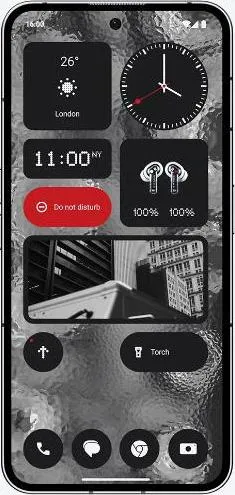
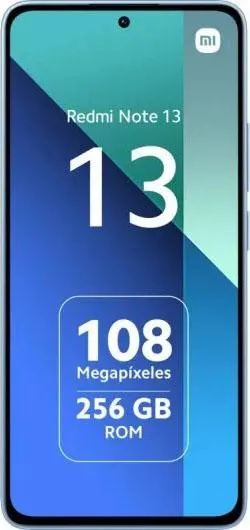
1. Specifications Comparison
| Feature | Category | Nothing Phone (2) | Xiaomi Redmi Note 13 4G | Practical Impact |
|---|---|---|---|---|
| Dimensions | Design | 162.1 x 76.4 x 8.6 mm | 162.3 x 75.6 x 8.0 mm | Virtually identical in size and feel. |
| Weight | Design | 201.2 g | 188.5 g | The Redmi is noticeably lighter, reducing hand fatigue during extended use. |
| Build | Design | Glass front/back, aluminum frame | Missing Information | Build materials impact durability and premium feel. We can't compare without details on Redmi's build. |
| Display Type | Display | LTPO OLED, 1B colors | AMOLED | Both offer vibrant colors and deep blacks. LTPO allows for dynamic refresh rate adjustment on the Nothing Phone (2), potentially saving battery. |
| Display Size | Display | 6.7" | 6.67" | Negligible difference in screen real estate. |
| Resolution | Display | 1080 x 2412 | 1080 x 2400 | Nearly identical pixel density, resulting in similar sharpness. |
| Refresh Rate | Display | 120Hz | 120Hz | Both offer smooth scrolling and animations. |
| Peak Brightness | Display | 1600 nits | 1800 nits | The Redmi might offer slightly better visibility in direct sunlight. |
| Chipset | Performance | Snapdragon 8+ Gen 1 (4nm) | Snapdragon 685 (6nm) | The 8+ Gen 1 in the Nothing Phone (2) offers significantly faster CPU and GPU performance, impacting gaming, multitasking, and app loading speeds. |
| CPU | Performance | Octa-core (1x3.0 GHz Cortex-X2 & 3x2.5 GHz Cortex-A710 & 4x1.80 GHz Cortex-A510) | Octa-core (4x2.8 GHz Cortex-A73 & 4x1.9 GHz Cortex-A53) | The Nothing Phone (2) has a more powerful and modern CPU architecture. |
| GPU | Performance | Adreno 730 | Adreno 610 | The Adreno 730 provides a substantial advantage in graphics performance for demanding games and applications. |
| RAM | Performance | 12GB | 8GB | The Nothing Phone (2)'s extra RAM enables smoother multitasking and better handling of demanding applications. |
| Storage | Performance | 256GB/512GB | 128GB/256GB | Both offer ample storage, but the Nothing Phone (2) provides a higher maximum capacity. |
| Battery Capacity | Battery | 4700 mAh | 5000 mAh | The Redmi has a slightly larger battery, potentially offering longer battery life. However, real-world usage will depend on software optimization and display power consumption. |
| Main Camera Details | Camera | Missing Information | Missing Information | Cannot compare camera quality without detailed sensor specifications (e.g., sensor size, megapixels, aperture). |
| Video Capabilities | Camera | 4K@30/60fps, 1080p@30/60fps (with HDR, OIS, EIS) | 1080p@30fps | The Nothing Phone (2) offers superior video recording capabilities with higher resolution, frame rate options, and stabilization features. |
2. Key Differences Analysis
Nothing Phone (2) Advantages:
- Significantly more powerful: The Snapdragon 8+ Gen 1 offers a substantial performance advantage for demanding tasks and gaming.
- Superior Video Recording: More resolution and frame rate options, coupled with OIS and EIS, result in better video quality.
- More RAM: Better multitasking and performance with demanding apps.
- LTPO Display: More power efficient.
Xiaomi Redmi Note 13 4G Advantages:
- Potentially Longer Battery Life: Larger battery capacity.
- Lighter Weight: More comfortable for extended use.
- Possibly Lower Price: Although both are mid-range, the Redmi is likely more affordable.
3. User Profiles & Recommendations
Nothing Phone (2): Users who prioritize performance, smooth multitasking, high-quality video recording, and a premium display experience. Ideal for mobile gaming, content creation, and power users.
Xiaomi Redmi Note 13 4G: Users who prioritize battery life, affordability, and a lightweight design for everyday tasks like browsing, social media, and communication. Suitable for budget-conscious users and those who value all-day battery life.
4. Decision Framework
Key Questions:
- What is your budget? The Redmi Note 13 4G is likely more affordable.
- What are your primary smartphone usage patterns? Gaming and demanding tasks benefit from the Nothing Phone (2)'s power. Basic usage prioritizes battery life offered by Redmi.
- How important is camera quality to you? We lack information to compare, further highlighting the importance of complete specs.
My Choice: Nothing Phone (2)
While lacking complete camera specs makes a fully informed decision challenging, the Nothing Phone (2)'s superior performance and display are compelling. The Snapdragon 8+ Gen 1 offers a future-proof experience, ensuring smooth performance for years to come. The LTPO display's efficiency and high brightness are also significant advantages. While the Redmi Note 13 4G boasts a larger battery and lighter weight, these benefits don't outweigh the performance gap for my personal use. I prioritize a smooth and responsive user experience, making the Nothing Phone (2) the better choice. I am willing to accept a slightly heavier phone and potentially shorter battery life for the substantial performance gains. The lack of camera detail for the Redmi makes it impossible to fully evaluate its potential, further solidifying my choice of the Nothing Phone (2).
