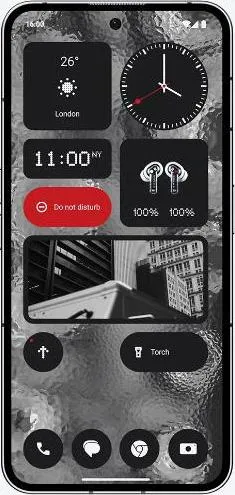
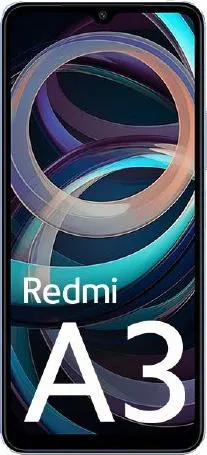
1. Specifications Comparison
| Feature | Nothing Phone (2) | Xiaomi Redmi A3 | Practical Impact |
|---|---|---|---|
| Design | |||
| Dimensions | 162.1 x 76.4 x 8.6 mm | 168.3 x 76.3 x 8.3 mm | Redmi A3 is slightly taller and thicker. Negligible difference in width. |
| Weight | 201.2 g | 193 g | Nothing Phone (2) is slightly heavier. |
| Build Materials | Not specified | Not specified | Cannot compare build quality and durability. |
| Display | |||
| Display Type | LTPO OLED, 1B colors, 120Hz | IPS LCD, 90Hz | Nothing Phone (2) will have significantly better contrast, deeper blacks, and smoother scrolling thanks to OLED and 120Hz. |
| Resolution | 1080 x 2412 | 720 x 1650 | Nothing Phone (2) offers much sharper visuals. |
| Peak Brightness | 1600 nits | 500 nits | Nothing Phone (2) will be far more visible in direct sunlight. |
| Performance | |||
| Chipset | Snapdragon 8+ Gen 1 (4 nm) | Mediatek Helio G36 (12 nm) | Nothing Phone (2) offers dramatically superior processing power for demanding tasks and gaming. |
| CPU | Octa-core (1x3.0 GHz Cortex-X2 & 3x2.5 GHz Cortex-A710 & 4x1.80 GHz Cortex-A510) | Octa-core (4x2.2 GHz Cortex-A53 & 4x1.6 GHz Cortex-A53) | Significant performance difference; Nothing Phone (2) will be much faster and more responsive. |
| GPU | Adreno 730 | PowerVR GE8320 | Nothing Phone (2) offers a vastly superior gaming and graphics rendering experience. |
| RAM | 12GB | 4GB/6GB | Nothing Phone (2) allows for more apps to run in the background and better multitasking. |
| Storage | 256GB/512GB | 128GB | More storage options on the Nothing Phone (2). |
| Camera | |||
| Rear Camera | Not specified | Not specified | Camera quality cannot be compared. |
| Video | 4K@30/60fps, 1080p@30/60fps (HDR, OIS, EIS) | 1080p@30fps | Nothing Phone (2) offers higher resolution video recording with stabilization. |
| Battery | |||
| Capacity | 4700 mAh | 5000 mAh | Redmi A3 has a slightly larger battery, but real-world battery life depends on other factors like display and chipset efficiency. |
2. Key Differences Analysis
Nothing Phone (2) Advantages:
- Significantly more powerful: The Snapdragon 8+ Gen 1 outperforms the Helio G36 by a large margin, resulting in a smoother user experience, better gaming, and faster app loading.
- Superior display: The 120Hz LTPO OLED offers smoother scrolling, richer colors, deeper blacks, and higher brightness than the Redmi A3's 90Hz IPS LCD.
- More RAM and Storage: Better multitasking and more space for apps and files.
Xiaomi Redmi A3 Advantages:
- Larger Battery: Potentially longer battery life, but real-world usage will vary.
- Lower Price: The Redmi A3 is positioned in the low price range, making it more budget-friendly.
3. User Profiles & Recommendations
Nothing Phone (2): Ideal for users who prioritize performance, a high-quality display, and smooth multitasking. Suitable for demanding tasks, gaming, and content consumption.
Xiaomi Redmi A3: Best suited for budget-conscious users who primarily use their phone for basic tasks like calling, texting, browsing, and social media. Less suitable for demanding games or heavy multitasking.
4. Decision Framework
Key Questions for Buyers:
- What is your budget? The Redmi A3 is significantly more affordable.
- What are your primary phone usage patterns? Heavy users and gamers will appreciate the Nothing Phone (2)'s performance.
- How important is display quality? The Nothing Phone (2)'s OLED display is a significant upgrade.
Scenario-Based Recommendations:
- Tight budget, basic usage: Redmi A3
- Prioritize performance and display: Nothing Phone (2)
- Balanced needs and moderate budget: Consider other options in the mid-range segment.
My Choice: Nothing Phone (2)
While the Redmi A3 offers a larger battery and lower price, the Nothing Phone (2)'s superior performance, vastly improved display, and greater RAM/storage make it a far more compelling device for my needs. I prioritize a smooth and responsive user experience, and the Snapdragon 8+ Gen 1, coupled with the 120Hz OLED display, delivers exactly that. The price difference is justified by the significant jump in quality and capabilities. The slightly smaller battery is a trade-off I'm willing to make for the significant performance gains. I often use my phone for demanding tasks, and the Redmi A3 simply wouldn't provide the necessary power or fluidity.
